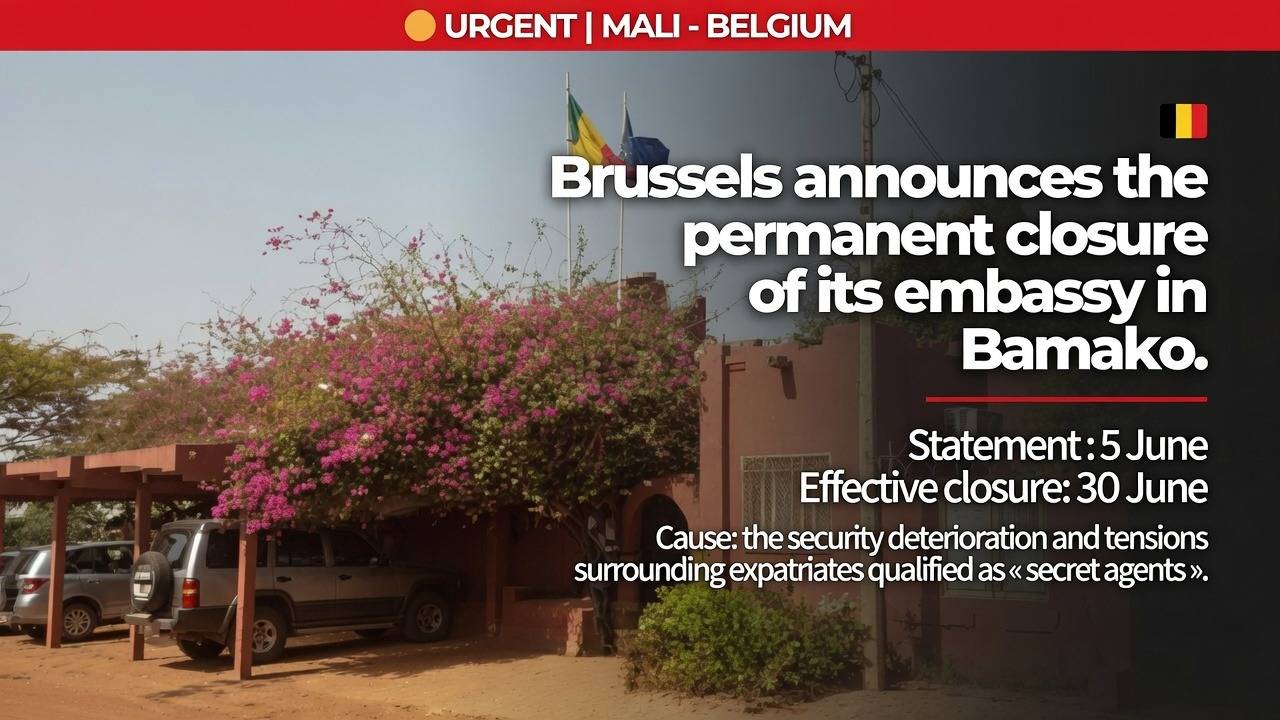
After years of close collaboration, Belgium has formally announced the permanent closure of its embassy in Bamako, a decision set to take effect on June 30. This move marks a significant turning point in the diplomatic landscape of West Africa, reflecting the deepening challenges faced by international partners in the region.
End of an era in malian-belgian relations
In an official statement released on June 5, Belgium’s Foreign Ministry confirmed what many had anticipated: the definitive withdrawal of its diplomatic mission from Mali. By the end of the month, the Belgian flag will be lowered for the last time, ending decades of cooperation in humanitarian aid, cultural exchanges, and economic development. For Bamako, this departure is more than symbolic—it represents the loss of a key European ally that has played a vital role in funding critical projects across northern and central Mali.
The timing of this withdrawal could not be more consequential. Belgium was among the last Western nations maintaining a full diplomatic presence in Mali, and its exit underscores the accelerating disengagement of traditional partners. With Mali increasingly turning toward new strategic alliances, the void left by Belgium further isolates the country on the global stage.
Security crises and the retreat of foreign missions
The Belgian government cited an untenable security environment as the primary reason for its decision. Since the withdrawal of French forces from Operation Barkhane and the departure of the UN peacekeeping mission (MINUSMA), the Sahel region has seen a surge in militant activity. Terrorist groups have intensified attacks along major highways and near urban centers, creating an atmosphere of instability that makes diplomatic operations unsustainable.
For Belgium, the safety of its staff and citizens could no longer be assured beyond June 30. The absence of reliable security guarantees and the persistent political instability made it impossible to continue full-scale embassy operations. The risks, according to Belgian authorities, had become too great to justify maintaining a permanent diplomatic presence.
Rise in espionage accusations and diplomatic strain
Beyond the security crisis, another critical factor has accelerated Belgium’s withdrawal: the growing climate of suspicion gripping Bamako. Over recent months, the Malian transitional government has escalated its rhetoric against Western expatriates, particularly those involved in development projects. Experts, aid workers, and consultants have faced arbitrary arrests, often labeled as “secret agents” by authorities.
This systematic branding of foreign professionals as intelligence operatives has fostered a pervasive sense of paranoia. The prolonged detention of several European civilians—without clear charges or adherence to consular protocols—has left Belgium with no choice but to prioritize the safety of its citizens. The judicial and administrative hostility has made on-the-ground operations virtually impossible.
Consequences for ordinary malians
The closure of the Belgian embassy will have immediate and tangible repercussions for the Malian population, particularly in vulnerable communities. The embassy has long administered vital aid programs, including initiatives for clean water access, maternal health, and primary education. The suspension or transfer of these funds to neighboring countries will leave many without critical support.
For Malian citizens, the closure also complicates access to Schengen visas for education, medical treatment, or business purposes. Applicants will now need to navigate the already overburdened embassy systems of other European nations or travel to distant neighboring countries to complete their paperwork.
Mali’s growing diplomatic isolation
Belgium’s decision to shutter its embassy is not an isolated incident but a symptom of a broader rift between Bamako and the European Union. By severing ties with long-standing partners and escalating arrests under espionage pretexts, the Malian government is doubling down on a confrontational strategy.
While this hardline approach resonates with parts of the local sovereignist movement, it comes at a steep cost. The loss of Belgium—a moderate voice within the EU—further entrenches Mali’s international isolation, precisely when economic and security challenges demand global cooperation. Without pragmatic partnerships, the path forward looks increasingly precarious for a nation already grappling with compounded crises.