In the span of a decade, Benin’s healthcare landscape has undergone a radical transformation. Spearheaded by President Patrice Talon’s administration and the Ministry of Health, the sector has been reimagined around four core pillars: governance, infrastructure, technical capability, and sanitation. Gone are the days of opaque medical evacuations abroad—replaced by state-of-the-art referral hospitals, stringent regulations, and a commitment to universal healthcare that places the Beninese patient at the heart of national priorities. This is the story of a revolution that is saving lives.
The bold reset of Benin’s healthcare system
Not long ago, Benin’s health system was synonymous with chronic challenges: crumbling infrastructure, a lack of cutting-edge equipment, frequent strikes, and an unchecked proliferation of unregulated medical facilities. Upon taking office, the administration under President Patrice Talon made a decisive break from the past, opting for a sweeping overhaul instead of piecemeal solutions.
Today, the fruits of this political will are visible across the country. Through bold legislative reforms and substantial investments, Benin is steadily emerging as a leading medical hub in West Africa.
Governance and regulation: the end of lax oversight
The first pillar of this transformation was structural discipline. To ensure robust oversight, the government established the Health Sector Regulatory Authority (ARS), a powerful body tasked with setting standards, monitoring care quality, and certifying healthcare facilities. One of its most impactful decisions was banning public health workers from private practice—an unprecedented move that restored dignity to public hospitals and ensured physicians were present where they were most needed.
The crackdown extended to illegal medical practices. Hundreds of unlicensed clinics and cabinets, which had long endangered patients, were shut down, sending a clear message: healthcare in Benin is no longer a commercial transaction but a matter of national security.
Building the hospitals of tomorrow
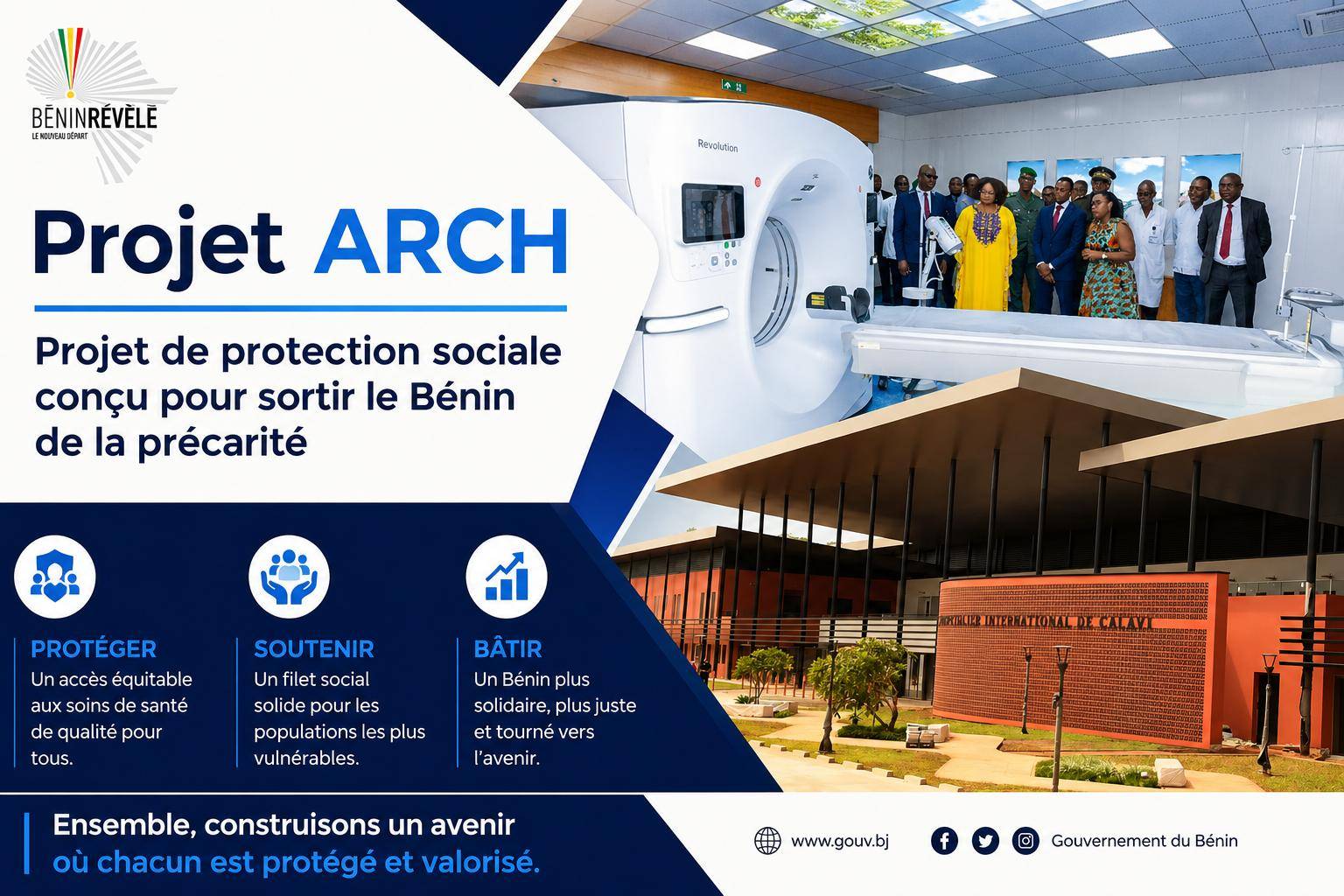
The infrastructure revolution is undeniable. At the forefront stands the International Hospital Center of Calavi (CHIC) in Abomey-Calavi, soon to be joined by the Togbin hospital complex. These architectural and medical marvels rival European and Asian standards, designed to deliver top-tier care and symbolize Benin’s regained health sovereignty.
« With the CHIC, we no longer need to look abroad for treatment. Benin is finally giving its people the dignity they deserve, » shared a health official in Cotonou.
Modernization isn’t limited to new construction. Historic facilities like the Hubert Koutoukou Maga National University Hospital (CNHU-HKM) in Cotonou, the Lagune Mother and Child University Hospital (CHU-MEL), and regional hospitals have undergone comprehensive upgrades to bring quality care closer to every household.
Cutting-edge technical capabilities: the price of medical excellence
Upgrading technical capabilities was essential to curb the financial and human toll of overseas medical evacuations. The government spared no expense, allocating over 198 billion FCFA in the health budget and mobilizing an additional 275 billion FCFA for major projects.
The overhaul included advanced imaging systems—multi-slice CT scanners (up to 64 slices), MRI machines, and digital radiology tables—for precise diagnostics. Operating rooms and intensive care units received high-performance ventilators, multiparametric monitors, ergonomic surgical tables, and minimally invasive surgery tools. Laboratories and maternity wards were automated, with modern neonatal incubators and 4D ultrasound machines enhancing care.
The CHIC: a 115 billion FCFA technological powerhouse
At the heart of this national strategy lies the International Hospital Center of Calavi (CHIC). Its total funding of 175 million euros (approximately 115 billion FCFA) was secured through a historic financial partnership, enabling the installation of revolutionary technology in West Africa.
The hospital boasts ultra-modern oncology facilities, including linear particle accelerators for targeted radiotherapy and laminar flow hoods for safe chemotherapy preparation. Its cardiac and interventional surgery units feature digitized angiography rooms for coronary procedures and operating theaters equipped with heart-lung machines for open-heart surgeries.
The CHIC’s imaging suite includes 3 Tesla MRI machines with exceptional resolution and fully automated molecular biology platforms for rapid diagnosis of complex conditions. Thanks to this arsenal, advanced cancer treatments and major cardiovascular interventions are now available in Cotonou and Calavi, sparing families the upheaval and exorbitant costs of medical travel abroad.
Universal healthcare: no one left behind
A reform is only meaningful if it benefits all. The social pillar of President Talon’s policy addresses this by massively recruiting healthcare professionals—doctors, nurses, midwives, and technicians—to fill medical deserts in rural areas.
The ARCH project (Human Capital Strengthening Insurance) extends subsidized or free coverage to vulnerable populations across all municipalities. Simultaneously, the revitalized National Community Health Policy deploys village-based health workers to ensure prevention and primary care reach the most remote communities.
The 21st-century Benin also embraces innovation. Digital health services and telemedicine platforms now enable patients in rural areas to consult specialists in Cotonou without leaving their villages.
Tangible results for Beninese citizens
The impact is palpable. Public trust in hospitals has surged, wait times have shortened, and the availability of essential medicines has improved thanks to the restructuring of the Essential Medicines Procurement Center (CAME). Transparency is now a cornerstone, with rigorous central monitoring of all initiatives. The country’s first national health sector report, developed with WHO support, provides clear evidence of progress: declining maternal and infant mortality rates, and improved efficiency in public health spending.
The road ahead
The journey Benin has undertaken in just a few years is nothing short of remarkable. By addressing structural, material, and ethical flaws simultaneously, the Talon administration has laid the foundation for a modern, equitable, and high-performing healthcare system.
Challenges remain, particularly in maintaining high-tech equipment and ensuring continuous staff training. Yet the trajectory is unmistakably positive. Benin has demonstrated that with political vision, fiscal discipline, and a deep love for the nation, transforming a country’s healthcare system is not a distant dream but an unfolding reality.