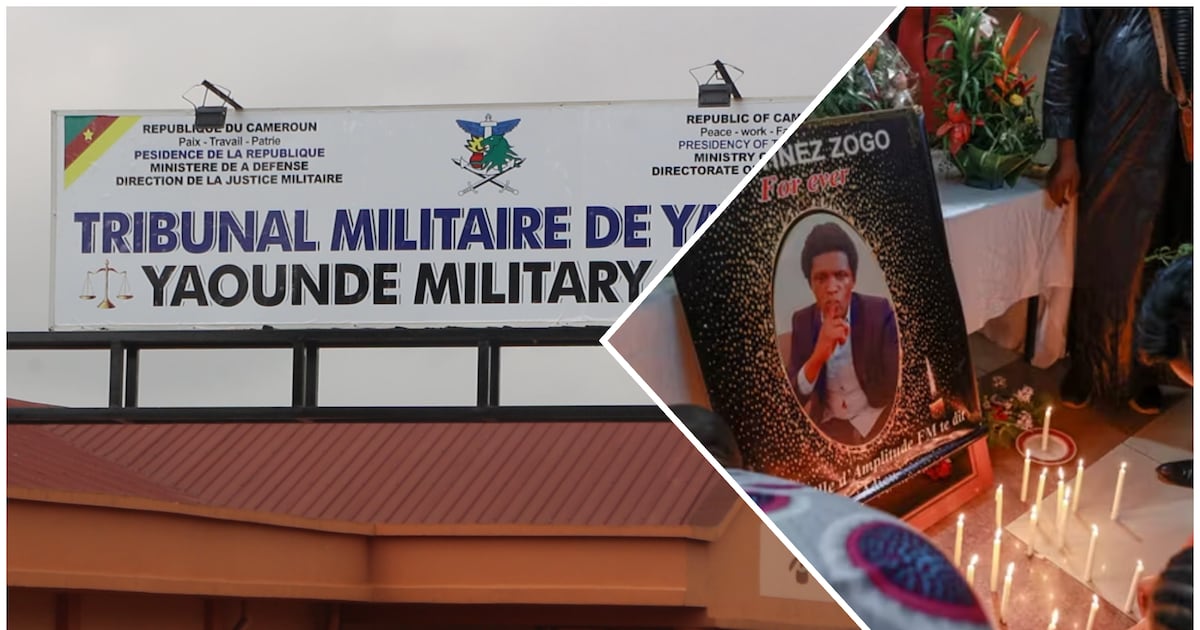
Tribunal military de Yaoundé exposes brutal digital evidence
The trial took a dramatic turn during hearings on June 1 and 2, 2026 at the Military Tribunal of Yaoundé, where forensic expert Professor Georges Bell Bitjoka presented irrefutable digital proof linking high-profile suspects to the torture and murder of investigative journalist Martinez Zogo.
As the 32nd witness for the prosecution, Professor Bitjoka specialized in cybersecurity and forensic analysis of digital devices. His meticulous examination of phone records and cloud storage belonging to accused individuals uncovered a hidden trove of evidence—including three previously unseen videos documenting Zogo’s final moments.
The courtroom fell silent as the first footage was played on June 1, revealing harrowing images of Zogo bound, bloodied, and begging for mercy. His left ear had been partially severed, a grim detail that sent shockwaves through the chamber. The emotional weight of the footage forced an abrupt halt to the proceedings before the remaining clips could be shown.
Digital footprint exposes high-level conspiracy
Professor Bitjoka’s report confirmed that the videos were extracted from a Google Cloud account belonging to Sergeant Godje Oumarou Vincent, a fugitive former agent of the Direction Générale de la Recherche Extérieure (DGRE). His analysis also traced a web of communications between Justin Danwe, a former DGRE operations director, and other key figures in the case.
Financial trails emerged as well. Prosecutors pointed to a 35 million FCFA transaction allegedly linked to the operation, exposing what appears to be a coordinated effort to silence the journalist. While preliminary data suggests some connections, Professor Bitjoka cautioned that 30% of relevant files from Léopold Maxime Eko Eko—former DGRE chief—and businessman Jean-Pierre Amougou Belinga had been deliberately erased, complicating the investigation.
Cross-examination intensifies legal battle
On June 2, the trial resumed under a heavy atmosphere, with defense attorneys aggressively challenging the forensic expert’s methodology. They argued that the evidence lacked completeness and raised concerns over potential biases in the data extraction process. Professor Bitjoka defended his approach, emphasizing that he had adhered strictly to technical protocols without injecting personal interpretations.
Legal representatives for Martinez Zogo’s family expressed guarded optimism, acknowledging the breakthrough nature of the digital findings while questioning whether all available evidence had been fully uncovered. The tribunal adjourned late into the night, with the next round of hearings scheduled for June 22 and 23, 2026.
The case continues to unravel layers of a complex conspiracy, with digital forensics playing a pivotal role in exposing the truth behind one of Cameroon’s most shocking crimes against press freedom.