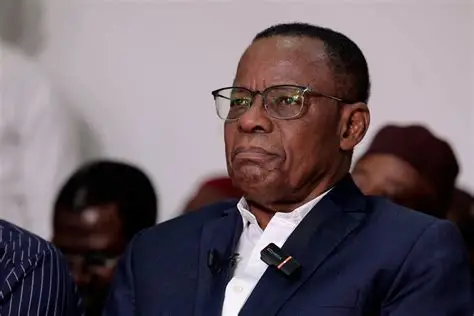
Maurice Kamto, leader of Cameroon’s Movement for the Renaissance of Cameroon, accuses authorities of undermining constitutional principles through the recent extension of local councilors’ terms.
In a bold legal and political move, Maurice Kamto, president of the MRC, has declared his intention to challenge the legitimacy of the decree issued by the Cameroonian Head of State on May 4, 2026. The decree extended the mandate of municipal councilors, a decision Kamto argues blatantly violates constitutional provisions and democratic norms. He contends that the executive branch overstepped its authority by encroaching on legislative prerogatives, particularly through the modification of electoral laws without proper parliamentary oversight.
At the heart of Kamto’s argument lies the disputed amendment to the electoral code. The new legislation, enacted on April 14, 2026, grants the President the power to extend municipal mandates beyond the previously established 18-month limit. However, Kamto points out a critical flaw: the law lacks any clause specifying retroactive application. This omission, he asserts, directly contravenes the constitutional principle of non-retroactivity, which ensures that laws only apply to future events and not past actions.
Under the former legal framework, municipal mandates were set to expire by August 9, 2026. Instead, the presidential decree extended them until February 27, 2026—a move Kamto describes as a clear violation of constitutional safeguards. He emphasizes that the decree’s retroactive effect disregards the foundational principle that laws should not apply to events preceding their enactment.
Kamto, a constitutional law scholar, has taken decisive action. He maintains that as of June 1, 2026, municipal councils across Cameroon are operating in a state of legal vacancy. He urges local executives to acknowledge this vacancy and take all necessary legal steps to address it. Furthermore, he has formally petitioned the Constitutional Council, demanding it compel the President to organize municipal elections promptly. The question remains whether the Council will uphold this challenge, given its history of dismissing similar petitions on procedural grounds.
Kamto warns that the current legal framework has plunged Cameroon’s institutions into dysfunction, undermining both transparency and democratic governance. His legal challenge represents a pivotal moment in the nation’s ongoing struggle to reconcile executive power with constitutional integrity.