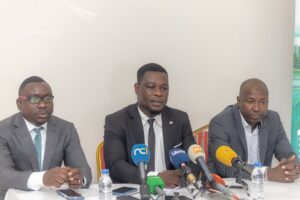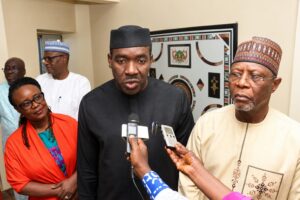
The contentious debate surrounding constitutional amendments has taken a significant judicial turn in the Democratic Republic of Congo (DRC). On June 4, 2026, in Kinshasa, leaders of the Coalition Article 64 (C64) convened to present an assertive assessment of their ‘dead city’ operation, which had commenced the previous day. They asserted that numerous major urban centers across the nation had heeded their call, directly refuting official accounts that sought to confine the mobilization solely to the capital. This widespread action served as a crucial real-world test of the opposition’s capacity to influence the institutional agenda championed by the presidential majority.
Opposition broadens its campaign against constitutional revision
Formed around the principle of defending Article 64 of the Congolese Basic Law – which enshrines citizens’ right to thwart any seizure of power by force or in violation of the Constitution – the C64 brings together various influential figures opposed to the proposed reform. Among them, opposition leader Delly Sesanga spoke, commending the strong participation observed in cities beyond Kinshasa. The coalition has firmly established itself as a primary political vehicle for challenging the constitutional overhaul initiated by the presidential camp.
While discussions about constitutional revision are not new, they have gained intense momentum as key figures within the ruling majority have increasingly emphasized the necessity of adapting the fundamental text. The opposition views this as a strategic maneuver designed to pave the way for a potential third term for Félix Tshisekedi, who was first elected in 2018 and re-elected in late 2023. The current Congolese Constitution explicitly limits presidential mandates to two consecutive terms, a symbolic safeguard inherited from the post-Mobutu transition era and consistently invoked as a democratic bulwark.
Filing a complaint against Félix Tshisekedi marks a qualitative shift
The most impactful announcement from the conference was the impending filing of a formal complaint targeting the head of state and those the coalition identifies as his accomplices. The specific charge, ‘attempted overthrow of the constitutional order,’ is far from trivial. It directly invokes the most severe criminal penalties associated with attacks on state institutions. By shifting the discourse to the judicial arena, the C64 aims to transform a political protest into a legal case, potentially engaging other critical actors such as magistrates, the bar association, and civil society organizations.
This legal initiative undoubtedly carries profound symbolic weight. Few in Kinshasa anticipate a swift resolution or immediate success for a procedure directed against the sitting president. Nevertheless, the action firmly establishes a clear narrative in the public sphere: that of a government suspected of preparing an institutional power grab. For Delly Sesanga and his allies, the objective is as much about drawing a definitive red line as it is about compelling the majority to clarify its true intentions regarding presidential term limits and the actual scope of the envisioned constitutional revision.
Tense political climate ahead of key milestones
The Democratic Republic of Congo finds itself navigating a sensitive political period. The government must contend with a deteriorating security situation in the East, characterized by the persistent activity of the M23 group and significant diplomatic pressure related to the Rwandan dossier. Internally, the constitutional revision introduces an additional fault line between Kinshasa and a fragmented opposition, which is actively seeking to coalesce around clear and easily understood calls to action. The C64 is banking on this clarity to broaden its public appeal and influence.
The actual impact of the ‘dead city’ operation remains a point of contention. Authorities have, thus far, downplayed its scale, while organizers assert its success extended well beyond the capital. Without consolidated independent data, any assessment remains open to interpretation. Crucially, the coalition’s ability to sustain pressure over time and to rally additional political figures, along with provincial relays, will ultimately determine its leverage in the power dynamic with the Tshisekedi administration. This ongoing debate about presidential term limits in the DRC mirrors broader pan-African news and discussions on African politics across the continent, highlighting a recurring theme in regional governance standards.