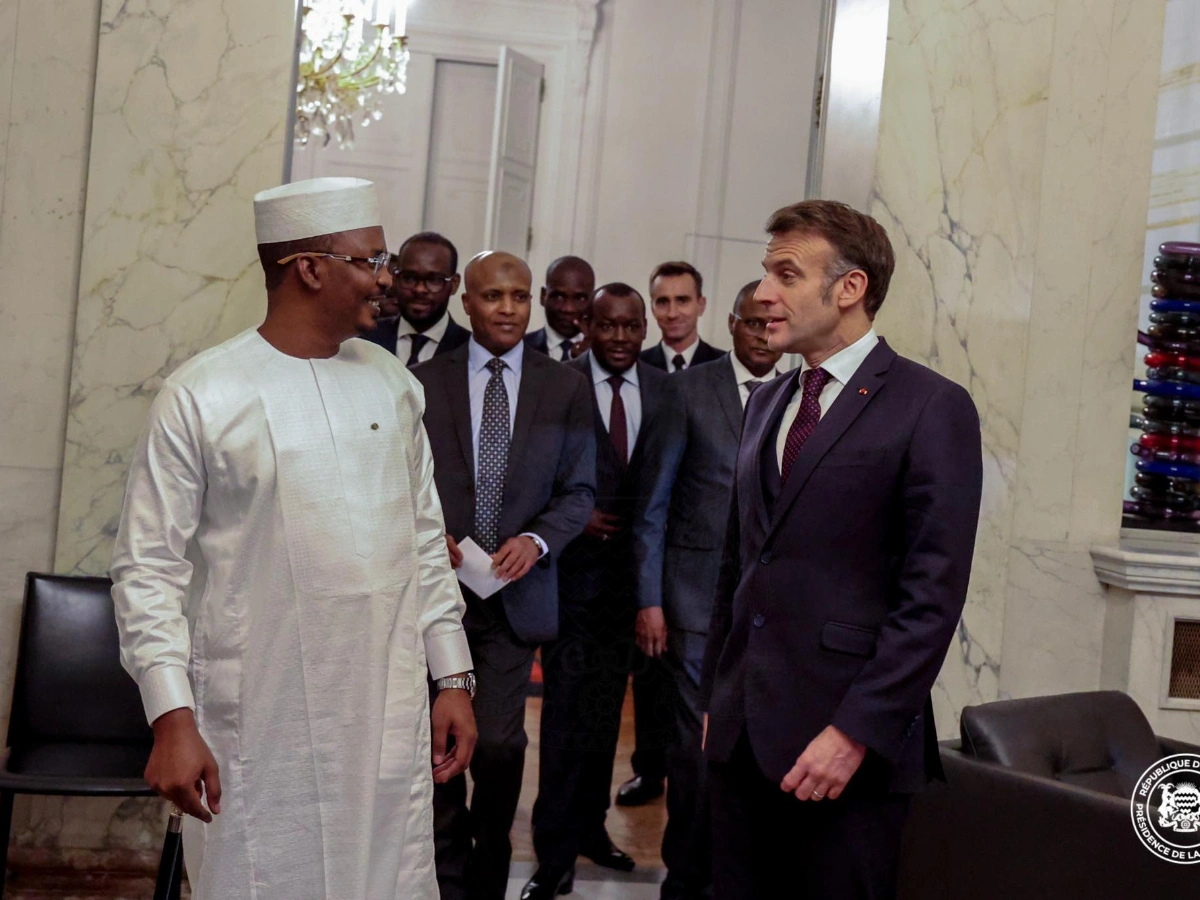
A report published on 8 June 2026 has sparked widespread debate after revealing that several French officers have returned to N’Djamena since mid-April to revive military cooperation between France and Chad, less than two years after the historic decision that ended the French military presence in the country.
While Paris insists it does not plan to redeploy permanent forces on Chadian soil, the mere resumption of military cooperation and intelligence sharing raises serious questions about the impact on President Mahamat Idriss Déby Itno’s image and the credibility of the political discourse he has championed since coming to power.
A contradiction with the sovereignty and pan-Africanist narrative
In the months following the departure of French forces, President Déby presented that decision as a victory for national sovereignty and a reclamation of the state’s strategic independence. He linked it to a discourse of emancipation from foreign dependence and the strengthening of balanced partnerships, in line with the growing pan-African momentum in the region.
Now, resuming military cooperation with Paris, even in a limited form, could be seen as a retreat from one of the most emblematic sovereign decisions promoted by the regime. This is especially true since Chadian authorities repeatedly justified ending the military agreements by citing a lack of tangible results and strong public pressure demanding the withdrawal of French troops.
A risk to Chad’s regional standing
Over the past two years, Chad has managed to solidify its image as an influential regional security power, capable of addressing threats through cooperation with neighbours and diversification of international partnerships. President Déby has also positioned himself as a regional mediator and a key actor in stabilisation efforts in the Sahel and Central Africa.
However, returning under the umbrella of French intelligence could undermine that image, suggesting that N’Djamena ultimately failed to break free from its traditional partner despite its rhetoric of strategic autonomy.
An additional critical factor is that the decision to end the French military presence also responded to popular demand, expressed through several protests demanding France’s departure from Chad. Any rapprochement with Paris risks provoking discontent among a significant portion of the public, who viewed the French withdrawal as a sovereign achievement not to be reversed.
France: the same country that politically opposed Déby and hosted the opposition
The paradox is that France, now returning as a security partner, has in the past two years been one of the main sources of pressure on Déby’s regime.
In July 2024, accusations against the Chadian president and several family members were reported by French justice as part of investigations into suspected embezzlement of public funds and spending on luxury hotels, high-end vehicles, and expensive clothing. These cases were revived in March 2026, accompanied by recurring speculation about a possible freeze of assets and accounts linked to the presidential family.
Returning to cooperation with a state that used its judicial and media institutions to personally target the head of state’s image raises legitimate questions about the degree of political trust that can exist between the two parties.
Meanwhile, in October 2025, France hosted in Nantes the largest gathering of Chadian political and politico-military opposition. Nearly twenty organisations and movements participated, aiming to coordinate their political, diplomatic, and military efforts against the authorities in N’Djamena.
Paris also played a notable role in the Succès Masra affair, notably through the involvement of French lawyers in his defence, steps to facilitate his transfer to France for medical care, and media coverage of the case in the French parliament and various European and international institutions.
Between security imperatives and political cost
Nobody denies that Chad faces growing security challenges around Lake Chad and along its eastern and northern borders. But the question now is whether the potential security benefits of a rapprochement with Paris justify the political and symbolic cost.
President Déby has built much of his legitimacy on a discourse centred on sovereignty, independence, and rejection of any form of foreign dependence. Any resumption of military cooperation with France could weaken the credibility of that discourse and give his political opponents an opportunity to question the sincerity of the sovereignist project he has promoted for years.
Ultimately, how can a return to a political, media, and judicial partner that hosted the opposition, criticised the regime, and attempted to pressure it on multiple files be justified to the public as an indispensable partner for the future of national security?