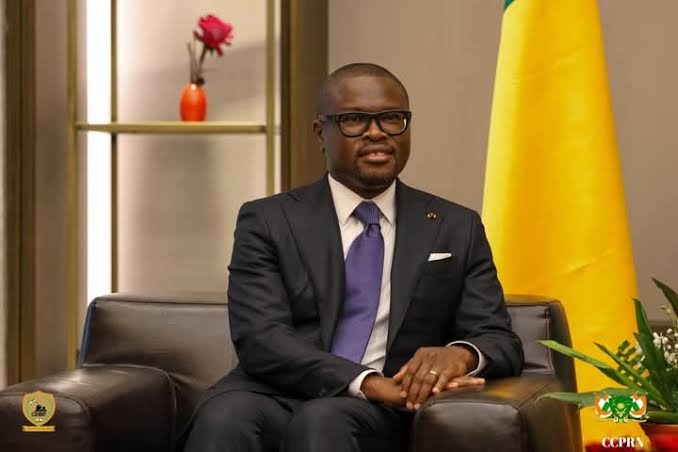
In a pivotal ceremony held at the presidential palace, Gabon’s transition to new fiscal leadership took center stage. Edith Laure Mbiguidi Oyaya officially assumed her role as head of the Direction générale des impôts (DGI), accompanied by her core team. The gathering marked not just a handover but a clear directive from President Brice Clotaire Oligui Nguema, who elevated tax mobilization to the forefront of national development ambitions.
Tax administration as a catalyst for economic rebirth
The Head of State underscored how fiscal health directly fuels the government’s ability to deliver on infrastructure, education, healthcare, and economic sovereignty. With Libreville seeking to diminish its reliance on oil revenues, broadening the tax base and enhancing collection efficiency have become mission-critical. The DGI is no longer just a revenue collector—it is now positioned as a strategic instrument for fiscal governance and macroeconomic stability.
During the meeting, President Oligui Nguema stressed the dual imperatives facing the new leadership: operational excellence and ethical rigor. Cracking down on tax evasion, modernizing administrative processes, and ensuring transparent treatment of taxpayers emerged as non-negotiable priorities. The objective? To reshape an often-criticized institution into a facilitator of business growth and investor confidence.
Edith Laure Mbiguidi Oyaya inherits a fiscal legacy under scrutiny
Her appointment arrives amid Gabon’s efforts to stabilize public finances following periods of liquidity strain and engagements with international lenders. The incoming DGI chief steps into an institution whose performance will determine the sustainability of national debt and the government’s room for maneuver in public investment. Success will hinge not only on available tools but also on political backing in the face of entrenched internal resistance.
The newly appointed executives are tasked with advancing critical initiatives: digitizing tax declarations, securing transparent payment trails, refining fiscal policies for extractive industries, and aligning with standards set by the Communauté économique et monétaire de l’Afrique centrale (CEMAC). While these reforms have been discussed for years, their accelerated implementation has become indispensable to validate the President’s economic renewal narrative. The DGI is also advancing technical partnerships, including engagements with the International Monetary Fund, to reinforce credibility.
Taxation stands at the heart of Gabon’s national transformation agenda
Since assuming office in mid-2023 and securing re-election in April 2025, President Oligui Nguema has consistently framed fiscal sovereignty as a cornerstone of his political vision. The official discourse links economic transformation, social justice, and equitable redistribution—all of which demand higher, better-distributed tax revenues. The strategy includes boosting contributions from high-value sectors while easing burdens on lower-income households.
Yet the path forward remains intricate. Gabon’s economy retains a sizable informal sector, a narrow taxpayer base, and lingering dependence on hydrocarbons—whose price volatility continues to shape fiscal outcomes. Expanding the tax base will require a balanced approach: incentives for businesses to formalize, streamlined procedures, and targeted enforcement. The DGI director must navigate the tension between immediate revenue gains and long-term structural reforms, all under the watchful eye of an administration eager to showcase quick wins.
The presidential audience also sent a strong signal to international partners. By publicly endorsing the new fiscal leadership, the Head of State aims to reassure stakeholders about Libreville’s commitment to credible tax governance. The trajectory of non-oil revenues will be closely monitored as an early indicator of the government’s economic program’s robustness.