For countless Burkinabè, accessing healthcare was once an insurmountable challenge. The financial barrier separating patients from life-saving treatment felt like an invisible wall—one that too often proved impossible to breach. But since March 13, 2024, the government has taken decisive action to dismantle this obstacle. By slashing fees for critical medical exams and eliminating required deposits for dialysis in public health facilities, authorities have fundamentally reshaped healthcare accessibility across the nation.
From privilege to right: the human impact of healthcare reform
In the bustling halls of Burkina Faso’s public hospitals, tension and urgency permeate the air. For years, medical care was a luxury reserved for those who could afford it—an unaffordable luxury for many. Exorbitant fees and mandatory deposits turned essential treatment into an unattainable dream for far too many families.
At the Centre Hospitalier Universitaire de Bogodogo in Ouagadougou, Madi Diallo shares a heartbreaking story that echoes the struggles of thousands. “Three years ago, my sister urgently needed dialysis. We were required to pay a deposit of 500,000 FCFA—an amount we simply couldn’t raise. She passed away before treatment could begin,” he recounts, his voice heavy with grief. Today, that deposit is no longer required. “This change is long overdue for people like us.”
measurable change: how government policy is transforming healthcare access
In response to these systemic barriers, Burkinabè authorities launched a bold reform initiative aimed at making healthcare economically accessible. Since March 2024, public health facilities nationwide have significantly reduced fees for essential medical exams, bringing tangible relief to patients and their families.
Dr. Robert Lucien Jean Claude Kargougou, Minister of Health, outlined the reform’s key provisions following the March 13, 2024 Council of Ministers meeting:
- CT scans reduced from 50,000 FCFA to 25,000 FCFA
- MRI costs lowered from 100,000 FCFA to 40,000 FCFA
- Mandatory dialysis deposit of 500,000 FCFA completely abolished
The policy has been widely welcomed, particularly by vulnerable populations who previously faced financial exclusion from diagnostic exams and specialized care.
real-world results: hospitals confirm the reform’s effectiveness
On July 22, 2025, the Centre Hospitalier Universitaire de Bogodogo was already crowded by dawn. Patients waited anxiously at reception desks, their faces reflecting both hope and impatience. Here, the impact of the reforms was undeniable.
Élodie Nikiéma Ouédraogo arrived for a pelvic MRI. “The cost is now extremely affordable,” she shares. “I paid just 40,000 FCFA—including consumables—whereas elsewhere this exam can cost up to 150,000 FCFA or more.” The savings, exceeding 100,000 FCFA, freed up resources for other essential needs, including her participation in community savings groups.
Seydou Nombré, Director General of the CHU de Bogodogo, confirmed the reforms are fully implemented: “The MRI cost has been set at 40,000 FCFA, and most importantly, the 500,000 FCFA deposit for dialysis has been eliminated. Patients no longer need to make any upfront payment. Emergency dialysis now costs just 2,500 FCFA.”
Beyond Ouagadougou, the reform’s benefits are evident in regional centers. At the Centre Hospitalier Régional de Ziniaré in the Oubritenga region, Director Mady Zorné reported a 38% increase in CT scans performed since the reform’s implementation. “Since this measure was introduced, referrals to the capital have dropped significantly,” he notes.
The Director emphasized the clinical impact: “Practitioners now have access to necessary imaging exams to make accurate diagnoses. This accessibility enhances the entire healthcare delivery chain.”
dialysis: a lifeline for chronic kidney patients
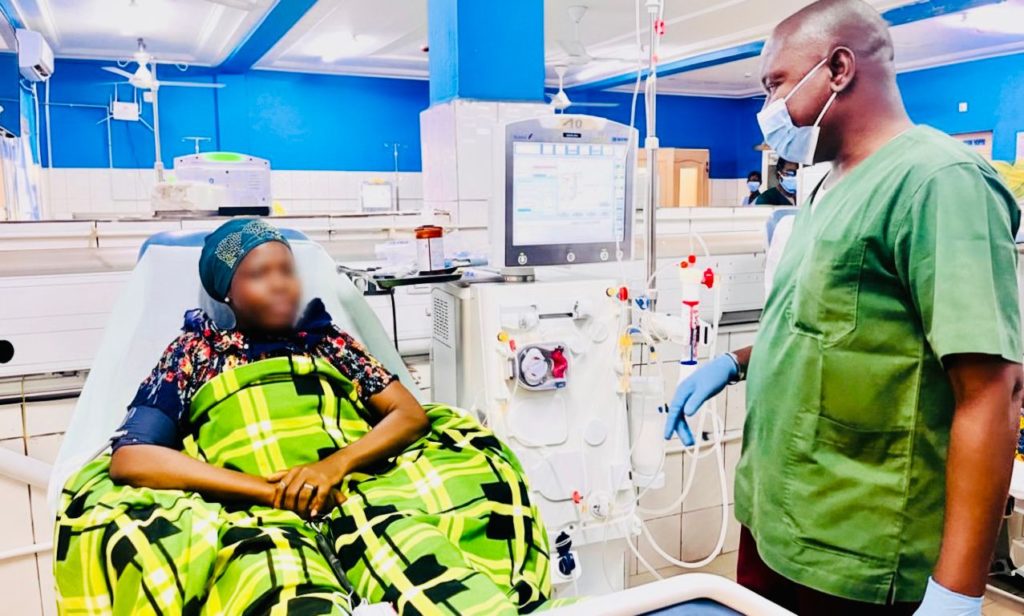
At the Centre Hospitalier Universitaire Yalgado Ouédraogo in Ouagadougou, the dialysis unit operates around the clock to serve nearly 100 patients daily using 34 machines. Since the reform, the elimination of the 500,000 FCFA deposit has allowed 16 new patients to begin treatment without financial barriers—though long waitlists persist due to limited capacity.
Tuina Nsoma Hélène, head of the dialysis unit, highlights both progress and unmet needs: “Each month-end, patients face difficult decisions about what care they can afford. While the deposit removal is a major step forward, additional exam costs still weigh heavily on those with chronic conditions. We urge the government to address these ancillary expenses as well.”
The unit operates in three daily shifts (6 AM–12 PM, 12 PM–6 PM, and 6 PM–10 PM), with emergency cases handled outside these hours. “A death frees up a spot for someone waiting,” Hélène explains with a mix of realism and regret.
At the Centre Hospitalier Universitaire Sourou Sanou in Bobo-Dioulasso, the largest healthcare facility in western Burkina Faso, the reform’s effects are equally apparent. Elie Ouattara, purchasing medical supplies, smiles broadly: “Prices are truly affordable. This is a huge relief for us.” The reform has reduced not only costly exams but also everyday medical expenses, improving the hospital experience for patients and their caregivers.
In the dialysis ward, patients endure long, silent hours connected to machines, seeking distraction through headphones, televisions, or smartphones. Dr. Hamidou Sawadogo, a nephrologist at the CHU Sourou Sanou, confirms the reform is being applied but notes structural limitations: “Most patients were already receiving treatment before the reform. Since the changes took effect, only 17 new hemodialysis patients have been integrated.” He stresses that acute cases requiring urgent dialysis still cannot be accommodated due to lack of capacity.
Dame Sanou Traoré Salimata, a dialysis patient since 2018 who only began treatment in 2020 due to financial constraints, reflects on the significance of the reforms: “Seeing the financial barrier lifted is a recognition of the dignity of patients living with chronic illness.”
Youl Sié, a patient with kidney failure since 2021, echoes the call for decentralization: “We need more dialysis centers closer to communities. If every patient could receive treatment locally, it would ease the burden on families and improve social cohesion.” He highlights the ripple effects of forced travel: “When we are ill, we must travel far from home, disrupting our roles as family pillars and complicating education for our children.”
a step forward, but challenges remain
While the reforms represent a major advancement, critical challenges persist. Machine shortages, long waitlists, and geographic disparities in access continue to limit the system’s capacity. However, for those who now enter public hospitals without fear of crippling bills, the relief is palpable.
In Burkina Faso, a nation built on integrity, healthcare is no longer a privilege reserved for the few—it is becoming a right for all. Though the journey is far from complete, the first steps have been taken toward a future where no one is denied treatment because of cost. The nation moves forward, one patient at a time.