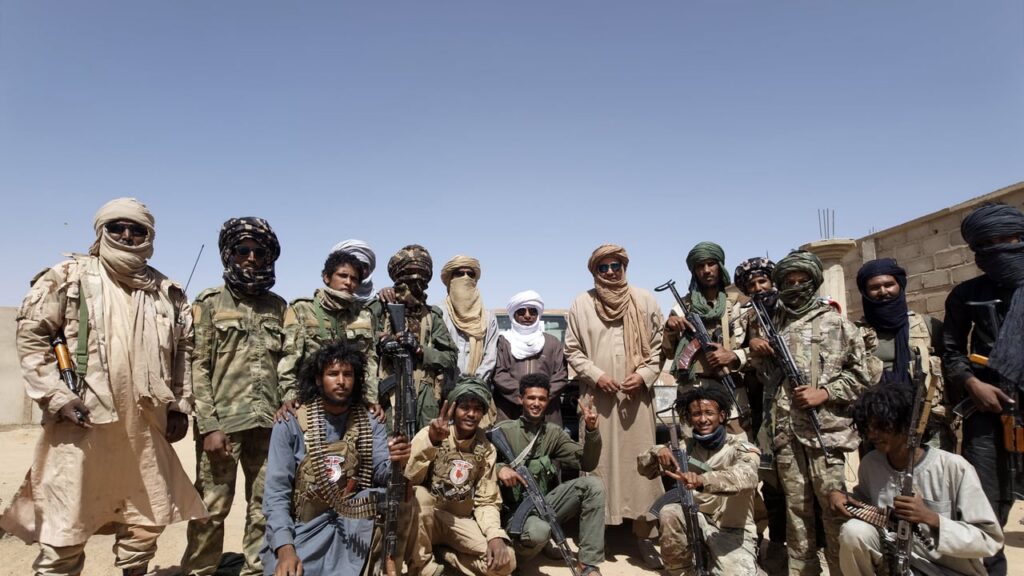

The northern city of Kidal remains a battleground as rebel factions continue to assert control despite military pressure from Bamako. On-the-ground observations reveal a tense atmosphere where armed groups navigate a complex web of alliances and rivalries. The situation reflects the deep-rooted instability that has plagued the region for years, with no clear resolution in sight.
Life under rebel rule: daily realities in Kidal
Residents of Kidal endure a precarious existence under the watchful eye of armed factions. Markets operate under tight restrictions, while civilian movement is heavily monitored. The presence of armed groups like the Group for the Support of Islam and Muslims (JNIM) has reshaped local governance, replacing state institutions with their own systems of control. Schools have either closed or operate sporadically, and healthcare services remain severely limited.
Interviews with locals paint a picture of survival under duress. Families speak of disrupted livelihoods, with farmers unable to tend their fields and traders facing extortion demands. The psychological toll on the population is evident, as fear becomes a constant companion. Despite these challenges, communities show resilience, clinging to hope for a return to normalcy.
Key figures shaping the conflict
The leadership of Iyad Ag Ghaly, a prominent figure in the insurgency, continues to play a pivotal role in the ongoing turmoil. His influence extends beyond Kidal, impacting wider dynamics across northern Mali. Meanwhile, the transitional government in Bamako, led by Assimi Goïta, faces mounting pressure to reclaim control over the region. The government’s military campaigns have yet to yield significant breakthroughs, leaving Kidal in a state of limbo.
International implications of the crisis
The conflict in Kidal is not isolated; it carries regional and international repercussions. Neighboring countries watch with concern as the instability threatens cross-border security. Regional organizations and global powers are increasingly involved, though their strategies vary widely. Some advocate for dialogue and reconciliation, while others prioritize military intervention as the primary solution.
The humanitarian crisis unfolding in Kidal demands urgent attention. Thousands have been displaced, and international aid organizations struggle to deliver essential supplies. The United Nations and other bodies have repeatedly called for increased support to address the dire needs of the population. Yet, access remains a major obstacle, compounded by ongoing hostilities.
As the stalemate persists, Kidal stands as a symbol of the broader challenges facing Mali. The path to peace remains fraught with obstacles, requiring coordinated efforts from all stakeholders. Until a lasting solution is found, the people of Kidal will continue to navigate a landscape defined by conflict and uncertainty.