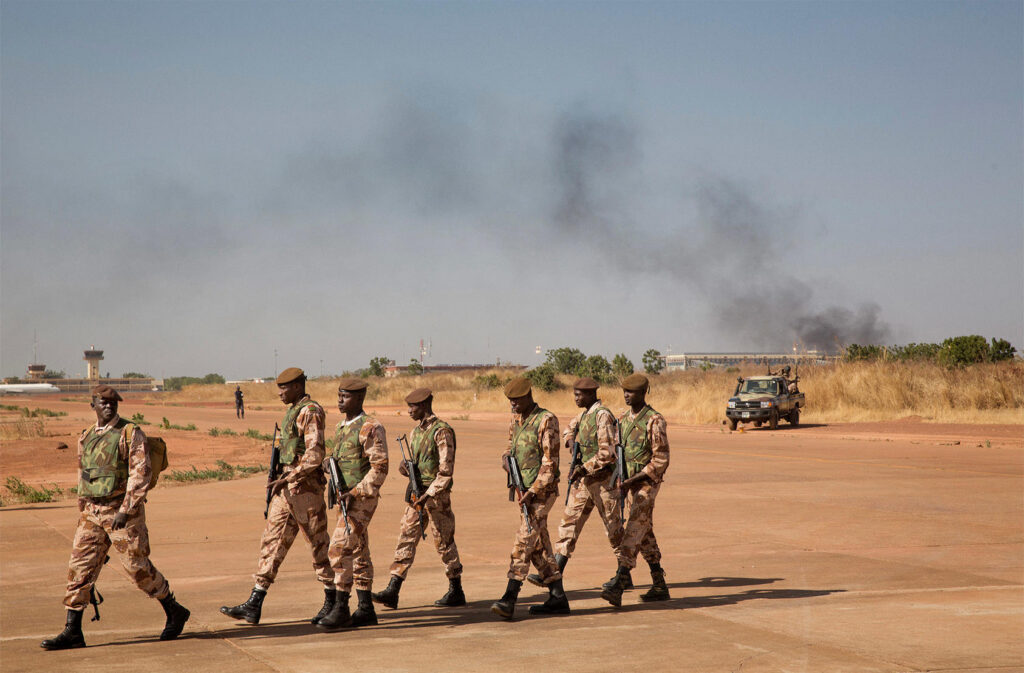
The West African nation of Mali has plunged deeper into crisis following a sweeping offensive launched by Tuareg rebels and jihadist factions, dealing a significant blow to the military junta and its Russian-backed allies. This coordinated assault, which spanned multiple strategic locations, marks a dramatic escalation in the country’s prolonged conflict.
escalation in Mali’s ongoing security crisis
A multi-pronged attack on April 25 struck at the heart of Mali‘s stability, targeting key installations in Bamako and its outskirts, including Kati, as well as central cities like Konna and Mopti, and northern strongholds such as Gao and Kidal. The assault, which began before dawn, involved coordinated strikes using vehicle-borne explosives, improvised explosive devices, and kamikaze drones. Rebel groups claimed responsibility for targeting the presidential residence, the Ministry of Defense, and Bamako’s international airport, alongside military positions in Kati, Gao, Kidal, and Sévaré.
The government of transition, caught off guard, initially reported the situation as “totally under control,” but later imposed a 72-hour curfew in Bamako and closed the international airport. Army Chief of Staff Oumar Diarra alleged these attacks were part of a “coordinated destabilization plan orchestrated by both internal and external actors” to create permanent insecurity. He claimed Malian forces have neutralized over 200 combatants and conducted sweep operations, though the situation remains fluid.
alliances and shifting dynamics in Mali’s conflict
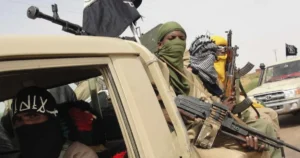
This offensive has revealed a tactical alliance between the Tuareg Front de Libération de l’Azawad (FLA) and the Group for Support of Islam and Muslims (JNIM), an Al-Qaeda affiliate. The FLA, formed in late 2024 through the merger of several rebel factions, recently abandoned the 2015 Algiers Accords, signaling a renewed push for Azawad’s autonomy or independence. Though their ultimate goals differ—Tuaregs seek autonomy while jihadists aim for an Islamic state—their tactical cooperation against a common enemy has intensified in recent months.
This alliance was notably tested in July 2024 at Tinzaouaten, where a coalition of Tuareg and jihadist forces inflicted heavy casualties on Russian mercenaries operating under the Africa Corps banner, marking one of the deadliest defeats for Moscow-aligned forces in Africa. Analysts suspect Ukrainian military intelligence provided tactical support during this battle, a claim echoed in subsequent attacks. Mali has since severed diplomatic ties with Ukraine, accusing Kiev of providing strategic assistance to militant groups.
russian mercenary withdrawal and leadership casualties
The Africa Corps, which replaced the Wagner Group in supporting Malian forces, announced a strategic withdrawal from Kidal following a joint decision with Bamako authorities. The force claimed to have secured key strategic positions and neutralized over 1,000 jihadists, though reports indicate losses among its ranks. The offensive also resulted in high-profile casualties, including the death of Defense Minister Sadio Camara, a pivotal figure in Mali‘s transition government and architect of its strategic alignment with Moscow. Camara was killed in a suicide bombing attack on his residence in Kati, along with his wife, two children, and several civilians. Additionally, the head of the National Agency for State Security, Modibo Koné, was wounded, while junta leader Assimi Goïta was evacuated to safety.
international implications and regional instability
The attack’s scale and coordination suggest significant external involvement, with Ukraine’s military intelligence suspected of providing tactical guidance. Mali‘s rupture with Ukraine highlights growing tensions between Moscow and Western powers in the Sahel. The offensive has also exposed vulnerabilities in the junta’s security apparatus, prompting questions about its ability to maintain control amidst shifting alliances and regional power struggles.
The situation remains highly volatile, with ongoing operations in Kidal and other hotspots. As the junta grapples with internal fractures and external pressures, Mali‘s future hangs in the balance, with the specter of prolonged instability looming large.