
On April 25, 2026, Bamako witnessed a series of violent attacks that sent shockwaves through Mali. These events not only tested the resilience of the nation but also became a turning point for transitional leader Assimi Goïta. Within weeks, he reshaped the political landscape, consolidating his authority in ways observers had not anticipated.
From crisis to consolidation: Goïta’s strategic moves
The transitional period in Mali has been marked by uncertainty, but the April attacks accelerated a series of decisive actions by Goïta. Within days, he announced sweeping reforms aimed at stabilizing the country. His approach combined swift military responses with calculated political maneuvers, sending a clear message to both domestic and international stakeholders.
Key among his strategies was the reorganization of key security institutions. By replacing top military commanders and increasing oversight of defense operations, Goïta positioned himself as the central figure in Mali’s fight against insurgency. These changes were not merely administrative; they reflected a broader agenda to centralize power under his leadership.
The role of external actors in Mali’s evolving power dynamic
While Goïta’s moves were primarily domestic, the influence of external forces cannot be ignored. The presence of international security groups, alongside shifting alliances with regional and global powers, created a complex backdrop for his consolidation efforts. Reports from diplomatic circles in Bamako suggest that these dynamics played a subtle but significant role in shaping the transitional leader’s decisions.
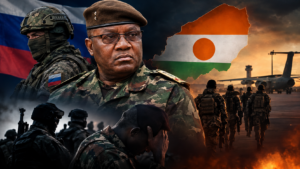
The Africa Corps and other foreign entities operating in the region found themselves navigating a landscape where Mali’s internal politics were becoming increasingly intertwined with broader geopolitical interests. This environment provided Goïta with opportunities to renegotiate terms of engagement, further strengthening his position.
The funeral that became a political statement
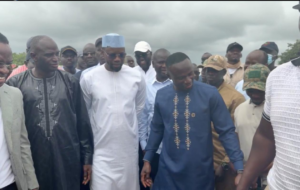
On April 30, 2026, the funeral of Sadio Camara, a prominent military figure killed in the April 25 attacks, became a pivotal moment for Goïta. The ceremony in Bamako was not just a tribute but a carefully orchestrated display of unity and resolve. Surrounded by top military officials, Goïta used the event to reinforce his narrative of strength and determination.
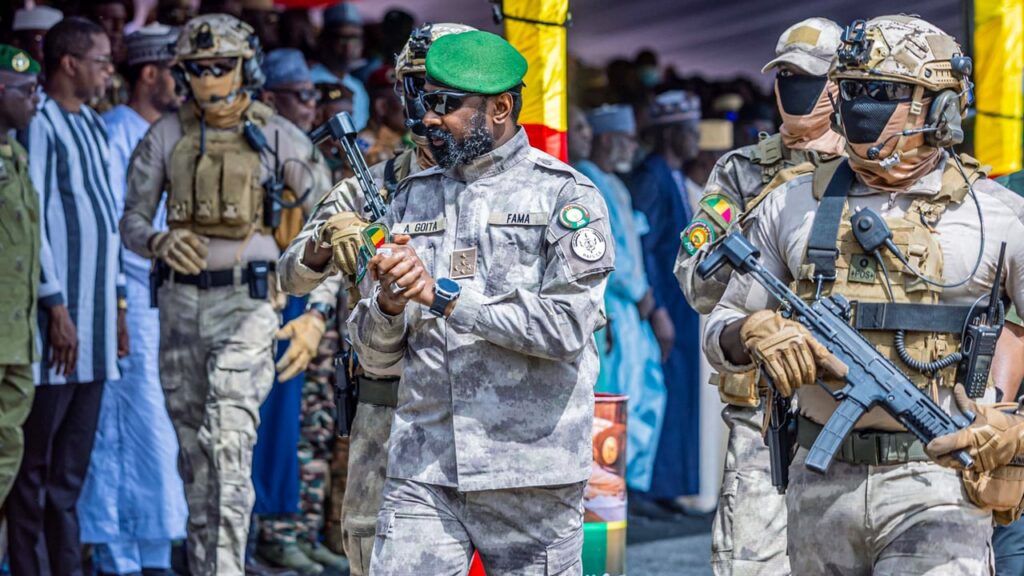
Images from the funeral, widely circulated in national media, showed Goïta standing resolute amid a sea of uniformed personnel. This visual messaging was intentional, designed to project authority and foster a sense of stability among Mali’s populace and international partners alike.
Public reaction and the path forward
The Malian public’s response to Goïta’s actions has been mixed. While some citizens and political factions have rallied behind his leadership, citing a need for strong, decisive governance, others remain skeptical. Critics argue that his consolidation efforts risk undermining Mali’s fragile democratic institutions, particularly as the country prepares for a planned transition back to civilian rule.
Despite these concerns, there is little doubt that Goïta has succeeded in redefining the power structure in Bamako. His ability to capitalize on the crisis has not only strengthened his grip on power but also set the stage for a new phase in Mali’s political journey. Whether this will lead to long-term stability or further instability remains a question of intense debate among analysts and citizens.
What’s next for Mali?
As Mali moves forward, the trajectory of its political and security landscape will depend largely on Goïta’s next moves. His current strategies suggest a preference for centralized control, but the effectiveness of this approach in addressing the root causes of insurgency and political fragmentation remains uncertain.
The international community, too, will be watching closely. Mali’s evolving alliances and internal power struggles have implications for regional security and global geopolitics. For now, Assimi Goïta stands at the helm, navigating a delicate balance between consolidation and contention.