Senegal’s student leaders: bridging academia and activism for national change
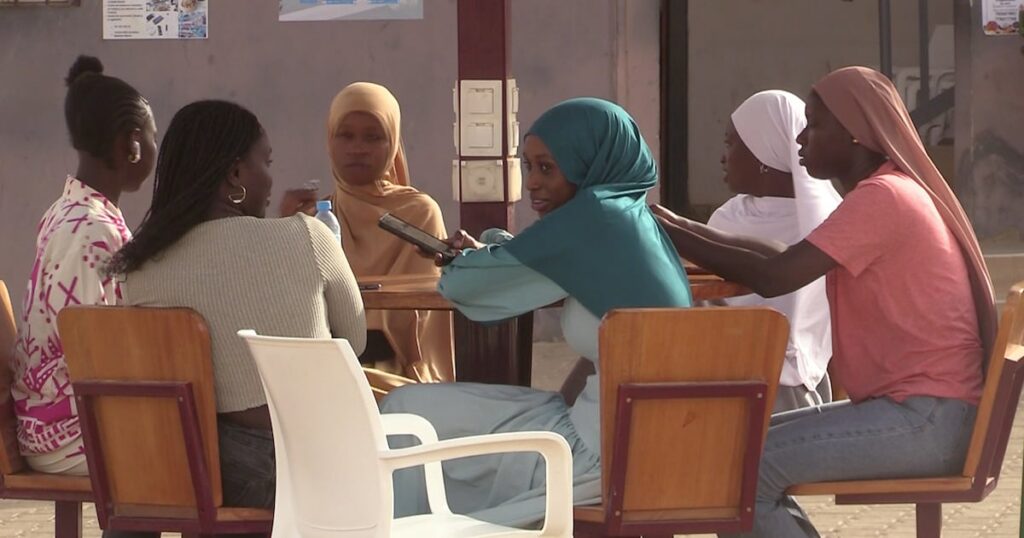
In Senegal, a growing movement of university students is redefining the boundaries between academic pursuits and civic responsibility. These young minds are proving that intellectual curiosity and political engagement are not mutually exclusive, but rather complementary forces shaping the nation’s trajectory.
From lecture halls to political platforms: the new wave of student activists
For many students in Dakar and beyond, joining a political movement is no longer a distant aspiration but a strategic step toward personal and collective growth. The university campus is no longer just a place of study—it has become a dynamic space where ideas are tested, alliances are formed, and future leaders are forged.
Adama Lam, a law student at Université Cheikh Anta Diop, embodies this mindset. With a clear vision of how knowledge translates into real-world impact, he sees political engagement as an extension of his academic journey. “Engaging in politics while studying isn’t about choosing one path over another; it’s about enriching both,” he explains. “The university equips us with the tools to analyze policies, while political participation sharpens our understanding of their practical implications.”
Balancing ambition and service: the dual role of student leaders
Not everyone views politics as a distraction from academic or professional goals. For students like Amadou Saliou Diallo, political involvement is a form of civic duty that coexists with other aspirations. “Politics isn’t a profession—it’s a commitment to one’s country,” he asserts. “One can excel in finance or law while actively contributing to public discourse. The key is to find harmony between personal ambitions and societal impact.”
This perspective challenges the notion that political engagement demands the abandonment of other career paths. Instead, it frames activism as a layered experience where skills acquired in diverse fields—whether economics, engineering, or the arts—can be channeled into meaningful public service.
The classroom of tomorrow: where students prepare to lead
Beyond personal development, some students see their dual role as a way to gain early exposure to governance and policy-making. Ousmane Seck, a political science major, highlights the dual benefits of this approach: “Academic training gives us theoretical knowledge, but political engagement immerses us in the realities of policy implementation. Programs like Jub, Jubal, Jubanti aren’t just concepts in textbooks—they become tangible frameworks we can critique, adapt, and one day lead.”
For Seck and his peers, the university is more than a stepping stone to a degree—it’s a proving ground for future leaders. Their engagement reflects a broader shift in how youth perceive their role in shaping Senegal’s future, where active citizenship is not deferred until after graduation but cultivated from the earliest stages of academic life.
A new era of leadership in the making
The debate continues: Should universities remain sanctuaries of pure scholarship, or should they also nurture the next generation of political thinkers and doers? For these students, the answer is unequivocal. They are not waiting for permission to engage—they are already laying the groundwork for a future where competence, vision, and civic duty go hand in hand. As Senegal navigates its socio-political challenges, this emerging cohort of student activists may well hold the keys to the nation’s next chapter.