The military juntas in Burkina Faso, Mali, and Niger are facing deepening crises of legitimacy as they resort to widespread repression, arbitrary detentions, and restrictions on freedoms. This crackdown has left human rights defenders and journalists in a precarious position, struggling to operate under mounting pressure.
why repression fails to hide systemic failures
Alioune Tine, President of Afrikajom Center, highlights the growing difficulties faced by these regimes. ‘’The reality today is that Captain Ibrahim Traoré’s regime in Burkina Faso, and its counterparts in Mali and Niger, are trapped in a severe impasse,’’ he explains. ‘’When these leaders seized power, they justified their actions by citing worsening security conditions. Yet, security has deteriorated even further under their rule—sometimes more critically than before.’’
Tine also points to the broken promises of a swift return to civilian rule. ‘’Initially, Ibrahim Traoré claimed the ECOWAS timeline for elections was too long and vowed to hold elections quickly. But those promises remain unfulfilled. Instead, his government has intensified repression, particularly targeting communities like the Fulani people. The human rights situation is alarming, with reports of massacres and systematic abuses.’’
escalating violence and internal turmoil
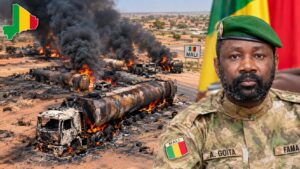
Recent attacks, such as the deadly assault on Mansila on June 11, which reportedly killed over a hundred people, have further strained the morale of security forces. Reports indicate that access to the area is nearly impossible without military convoys, and communication with local actors remains severed. This isolation has fueled speculation about internal dissent within the armed forces.
The situation took a dramatic turn on June 12 when a shell struck the courtyard of the national broadcaster RTB in Ouagadougou, injuring several people. Rumors of mutiny and coup attempts have since spread, though Ibrahim Traoré dismissed these claims as baseless. In a televised address, he accused ‘enemy media’ of spreading fake news and insisted that no mutiny or coup was underway. ‘’If the position is vacant, they can come and take it,’’ he declared. ‘’These people have been paid to lie.’’
human rights organizations demand accountability
Human rights groups, including Amnesty International and the Senegalese Coalition of Human Rights Defenders, are planning peaceful protests against the suppression of press freedom and freedom of expression. They are also calling for the immediate release of detained activists, such as lawyer Guy Hervé Ham, who has been held since January 24.
The crisis in Burkina Faso reflects a broader pattern across the region. While the juntas initially positioned themselves as saviors, they have failed to deliver on their promises. In Mali, despite some progress in controlling northern territories, the socio-economic situation continues to deteriorate. ‘’There is a failure in governance,’’ Tine observes. ‘’These regimes lack legitimacy and are unable to address the suffering of their people. In Mali, even opposition figures in exile have formed a parallel government, underscoring the deep crisis of authority.’’
regional divisions and geopolitical shifts
Tine also criticizes the growing influence of external powers, particularly Russia, which these regimes have aligned with in exchange for support. ‘’The ECOWAS bloc is now divided between pro-Western and pro-Russian factions, undermining regional cooperation,’’ he warns. ‘’This division benefits no one and distracts from the urgent needs of African youth.’’
He further expresses concern over the persistence of the CFA franc and the role of foreign military bases. ‘’While the departure of French troops was a step forward, the lack of viable alternatives has left a void that threatens stability,’’ he notes.
As repression intensifies, the juntas’ strategies appear increasingly desperate. For many observers, the situation signals a dangerous descent into authoritarianism, with little hope for a swift resolution.