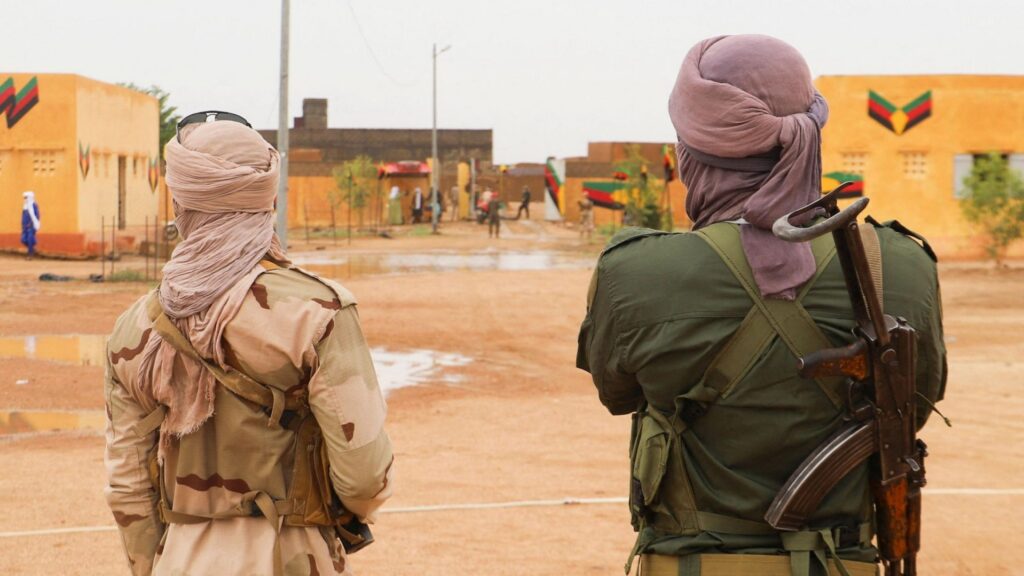
The recent surge in militant activity by the Jamaat Nusrat al-Islam wal Muslimin (JNIM)—affiliated with the Front de Libération du Azawad (FLA)—has thrust the Mali crisis back into the spotlight, exposing the hidden role of Algeria in the country’s escalating instability.
Algeria’s ambiguous neutrality in the Sahel
Despite its long-standing claim to neutrality, Algeria stands accused of fueling tensions across the Sahel, particularly in Mali. Diplomatic observers note that Algiers maintains a carefully calibrated influence over Mali’s political and security dynamics, often acting as a shadow player rather than a disinterested mediator.
Analysts argue that Algeria’s strategy hinges on sustaining a “controlled instability” in Mali, preventing the emergence of a unified or hostile government that could challenge its regional dominance. This approach has been particularly evident in the Mali crisis, where Algiers has been accused of supporting certain factions while publicly advocating for peace.
Morocco’s counter-strategy in the Malian conflict
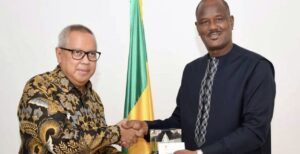
Morocco, a key rival of Algeria in the region, has responded by deepening its engagement in Mali, offering military cooperation, humanitarian aid, and economic partnerships. The Moroccan government has positioned itself as a stabilizing force, countering Algiers’ influence and positioning itself as a credible alternative in the eyes of regional leaders.
Rabat’s proactive stance includes training Malian security forces, facilitating dialogue between conflicting factions, and expanding trade ties with Bamako. This move is seen as part of a broader strategy to counter Algeria’s perceived hegemony in West Africa.
Geopolitical stakes rise as tensions spread
The intensifying rivalry between Morocco and Algeria is no longer confined to their own borders—it has spilled into Mali, a nation still grappling with political fragmentation and militant violence. The JNIM-FLA offensive has only amplified the stakes, with both countries leveraging the crisis to advance their strategic interests.
For Algeria, maintaining influence in Mali is critical to securing its southern border and preserving its role as a regional security broker. Meanwhile, Morocco sees an opportunity to expand its diplomatic footprint and challenge Algerian dominance in the Sahel.
What’s next for Mali?
The future of Mali now hangs in the balance, caught between the competing ambitions of Algeria and Morocco. With militant groups exploiting the power vacuum, the risk of further destabilization looms large. Whether Bamako can navigate this geopolitical storm remains an open question.
The outcome will not only shape Mali’s trajectory but could also redefine the balance of power in the Sahel for years to come.