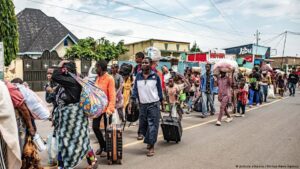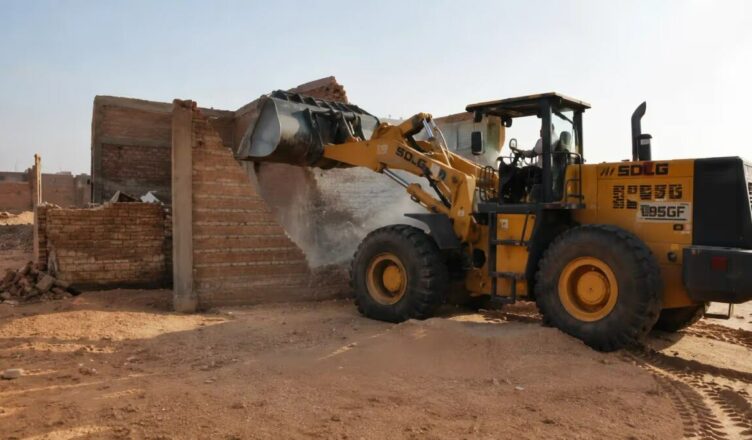
The bustling neighborhood of Kobontafa, just minutes from Niamey’s international airport, is a scene of frantic activity as residents rush to dismantle their own homes. Roofs, doors, and windows are being stripped away in a desperate scramble ahead of imminent demolitions ordered by authorities to clear what they call an illegal occupation of the airport’s perimeter.
The crackdown follows a January 29 attack on the Diori Hamani International Airport and a nearby drone base, which left the nation’s security apparatus exposed. Investigations revealed that attackers had exploited unregulated settlements on the airport’s outskirts to infiltrate the area, prompting immediate action to eliminate this perceived vulnerability.
Official figures indicate nearly 26,000 residents across four unauthorized districts are impacted by the operation. These informal settlements, built without permits, sprawl across critical sections of the airport’s buffer zone and have long been flagged by officials as a glaring security risk.
Niger has been battling a surge in jihadist violence for years, with armed factions linked to both Al-Qaeda and the Islamic State operating across vast stretches of the country, even encroaching upon the capital’s outskirts. The January assault, claimed by the Islamic State in the Sahel (ISS), was repelled by Nigerien forces with support from foreign partners. Official tallies report twenty militants killed and four soldiers wounded, alongside damage to targeted infrastructure.
Shortly after the attack, General Abdourahamane Tiani, head of the National Council for the Safeguard of the Homeland, acknowledged a critical breakdown in security protocols that allowed the assault to unfold. He emphasized that the attackers’ primary objective was to cripple the nation’s aerial defense capabilities.
Colonel Amadou Abdramane, Minister of Transport and Civil Aviation, confirmed that demolitions would focus on the airport’s eastern sector—a zone irregularly occupied and identified as the entry point used by attackers during the raid.
General Mohamed Toumba, Interior Minister, warned that unchecked occupation of these areas could invite further infiltration attempts. He also cautioned that failing to address security gaps might jeopardize the airport’s international compliance status, potentially triggering downgrades from global aviation bodies.
Authorities have pledged compensation for displaced families, contingent on registration in an ongoing census. Meanwhile, security measures around the airport are being fortified, with perimeter fencing extended and over 350 surveillance cameras deployed both inside and outside the facility.
Nationwide, public awareness campaigns are urging citizens to report suspicious activities or individuals via dedicated emergency hotlines, reinforcing the government’s push for a collective defense against growing extremist threats.