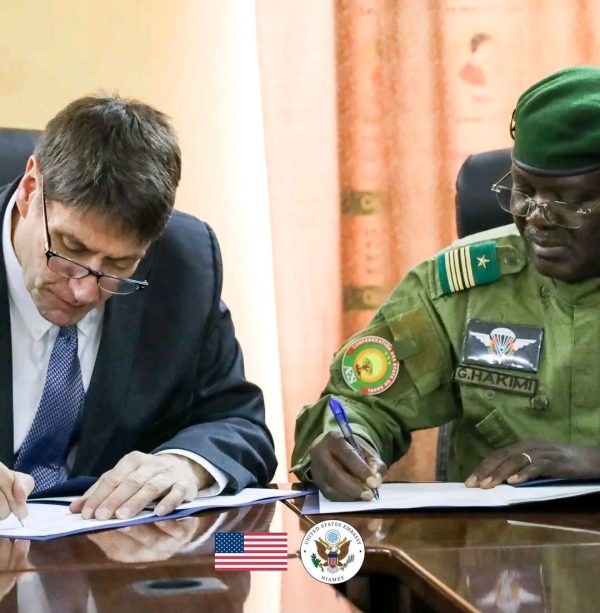
When the government of Niger and the United States inked a health cooperation protocol in Niamey on February 26, 2026, the financial scale of the agreement—178 million USD (approximately 99.6 billion XOF)—immediately commanded attention. Yet beneath the impressive figures lies a complex web of questions about public health priorities, national budget commitments, and the long-term implications of foreign partnerships.
At the heart of this bilateral health initiative is a clear mandate: combat malaria, strengthen infectious disease surveillance, prevent polio outbreaks, and improve maternal and child health outcomes. These goals align with the United States’ America First global health strategy under former President Donald Trump. But while the objectives are widely supported, the means by which they will be achieved—and the concessions involved—are sparking intense debate across Niger’s political and civil society spheres.
financing health in times of fiscal pressure
The U.S. contribution under the agreement is set at 107 million USD over five years, with Niger committing to an additional 71 million USD in domestic health spending. This dual commitment represents a significant fiscal shift for a country facing persistent economic strain and escalating security threats that already divert critical public resources.
Can Niamey sustain this increased investment without compromising other vital sectors? Which budget lines will need to be reallocated or reduced to meet this pledge? These are urgent questions, especially as the government navigates inflation, debt servicing, and the cost of ongoing counterterrorism operations in the Sahel.
is this a health partnership or a data exchange gateway?
While framed as a technical health support program, the agreement includes a controversial data-sharing clause. Niger has been included in a U.S.-led initiative for cross-border health data exchange, reportedly on a paid basis. This development has raised serious concerns about data sovereignty and the protection of sensitive health information belonging to Nigerien citizens.
In an era where health data is increasingly seen as a strategic asset, such exchanges could expose Niger to geopolitical risks and long-term surveillance dependencies. How will patient confidentiality be preserved? What legal safeguards are in place to prevent misuse or unauthorized access to personal medical records? These issues remain largely unaddressed in official communications.
lessons from the african continent: caution ahead
Africa has seen similar initiatives stumble before. In Zimbabwe, a proposed health data-sharing deal was rejected outright. Kenya’s courts recently suspended a comparable program, citing constitutional violations. Zambia also walked away from a billion-dollar offer, citing clauses that threatened national security and data sovereignty.
These precedents raise a critical question: Did Niger secure stronger legal protections in its agreement? Or did it prioritize immediate health gains over long-term data governance concerns? The answer could define how future health partnerships in West Africa are negotiated—and how much sovereignty African nations are willing to trade for external support.
beyond data: investing in resilient health systems
Yet focusing solely on data risks overlooking the agreement’s potential to transform Niger’s health landscape. The country faces deep-rooted challenges: endemic malaria, epidemic vulnerabilities, crumbling rural infrastructure, and persistently high maternal mortality rates. If funds are deployed efficiently, the impact could be transformative—modernizing surveillance systems, scaling up vaccination campaigns, and revitalizing community health centers.
Still, history cautions against over-optimism. External funding, no matter how generous, rarely drives lasting change without robust internal reforms. Will this investment catalyze systemic improvements, or will it simply patch holes in an already strained system? The outcome hinges on Niger’s ability to integrate foreign support with national health priorities and governance reforms.
balancing sovereignty and survival
Ultimately, the Niamey agreement reflects a timeless dilemma for African nations: how to attract essential foreign investment while safeguarding national autonomy. In a shifting geopolitical landscape—where traditional allies are recalibrating their strategies and new partners are emerging—the Nigerien government appears to have chosen a pragmatic path forward.
Will this decision strengthen the country’s health system and save lives? Or will it open a Pandora’s box of data governance issues and digital dependencies? As the 178 million USD headline fades into budget ledgers, one question lingers: Can a partnership built on health truly be measured in dollars alone?