Niger’s military leadership has recently implemented a controversial restructuring of its counterterrorism operations, splitting the existing Garkoi command into two new tactical headquarters. This move aims to establish Operation Akarasse along the Algerian border and Operation Klafoki along the Chad frontier. While officials cite “efficiency” and “coordination” as key objectives, the decision has sparked intense debate among governance and security analysts across the Sahel region.
Financial waste or strategic necessity?
The creation of these parallel military structures has raised serious questions about fiscal responsibility and ethical governance. Each new headquarters requires a full command hierarchy, including high-ranking officers, detachment leaders, and support staff, all of which demand substantial funding for salaries, logistics, and infrastructure. Critics argue this restructuring is less about military effectiveness and more about appeasing elite factions within the armed forces by granting lucrative promotions and financial privileges.
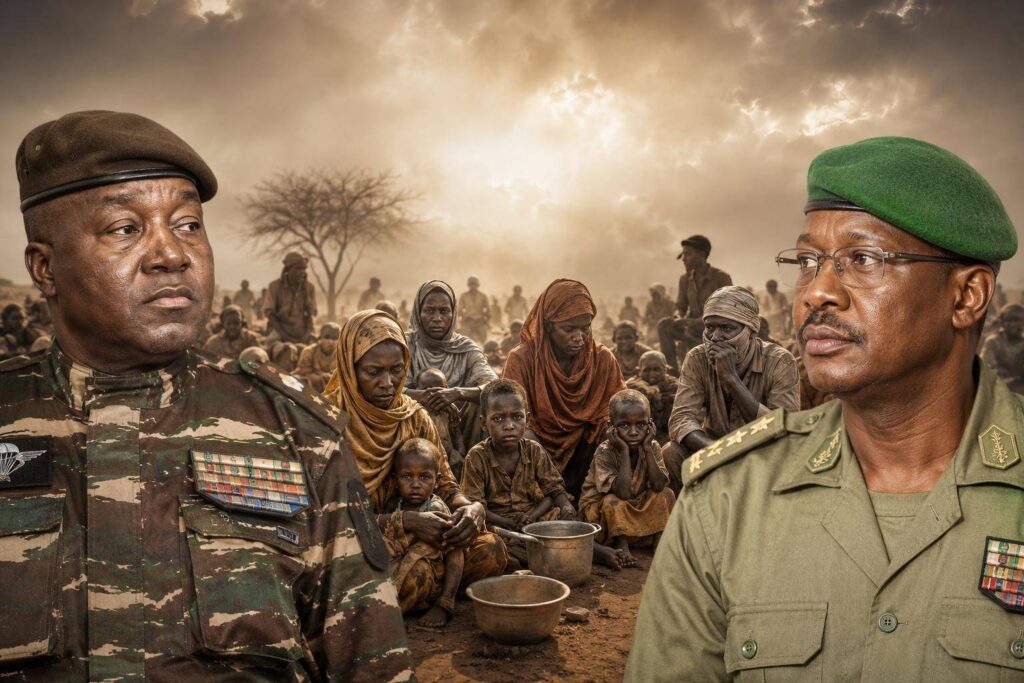
This decision comes at a time when Niger faces unprecedented social and economic challenges. While the government allocates resources to establish and maintain these new military hubs in strategic locations like Bilma and Arlit, essential public services continue to crumble. The education sector, for instance, remains paralyzed as thousands of contractual teachers go unpaid for months, pushing countless families into extreme poverty. The stark contrast between military expenditures and the neglect of critical public services has fueled widespread outrage, with many condemning the move as a blatant misuse of public funds.
A sign of military strain and territorial vulnerability
Beyond the financial concerns, the decision to split the command structure reveals a deeper crisis: Niger’s armed forces appear increasingly overwhelmed by the relentless pressure of armed terrorist groups. If the situation were under control, the existing command structure would have been sufficient to uphold security. Instead, the creation of two highly specialized and simultaneous operations—Akarasse and Klafoki—highlights the military’s struggle to manage the escalating threat across its borders.
The fragmentation of the command suggests that terrorist organizations, including affiliates of Al-Qaïda, the Islamic State, and Boko Haram, have intensified their activities to a point where centralized control is no longer viable. This development underscores the growing insecurity gripping Niger’s northern and eastern frontiers, where armed groups exploit weak governance and porous borders to launch deadly attacks. The military’s desperate need to deploy additional resources to these remote regions signals a troubling escalation in the conflict, one that risks further destabilizing the nation.
Urgent reactions or systemic failure?
The establishment of Operation Akarasse and Operation Klafoki appears less like a calculated strategic maneuver and more like a frantic attempt to contain rapidly deteriorating security conditions. For ordinary citizens, the cost of this restructuring—borne by taxpayers—is compounded by the neglect of fundamental needs such as education, healthcare, and food security. The move has exposed a stark paradox: while the military expands its footprint to combat terrorism, the very foundation of the state—its people—suffers from neglect and deprivation.
The unfolding situation raises urgent questions about the government’s priorities and the long-term sustainability of its security policies. As the crisis deepens, Niger’s ability to balance military expenditures with social welfare will determine not only its stability but also the trust of its citizens in their leaders.