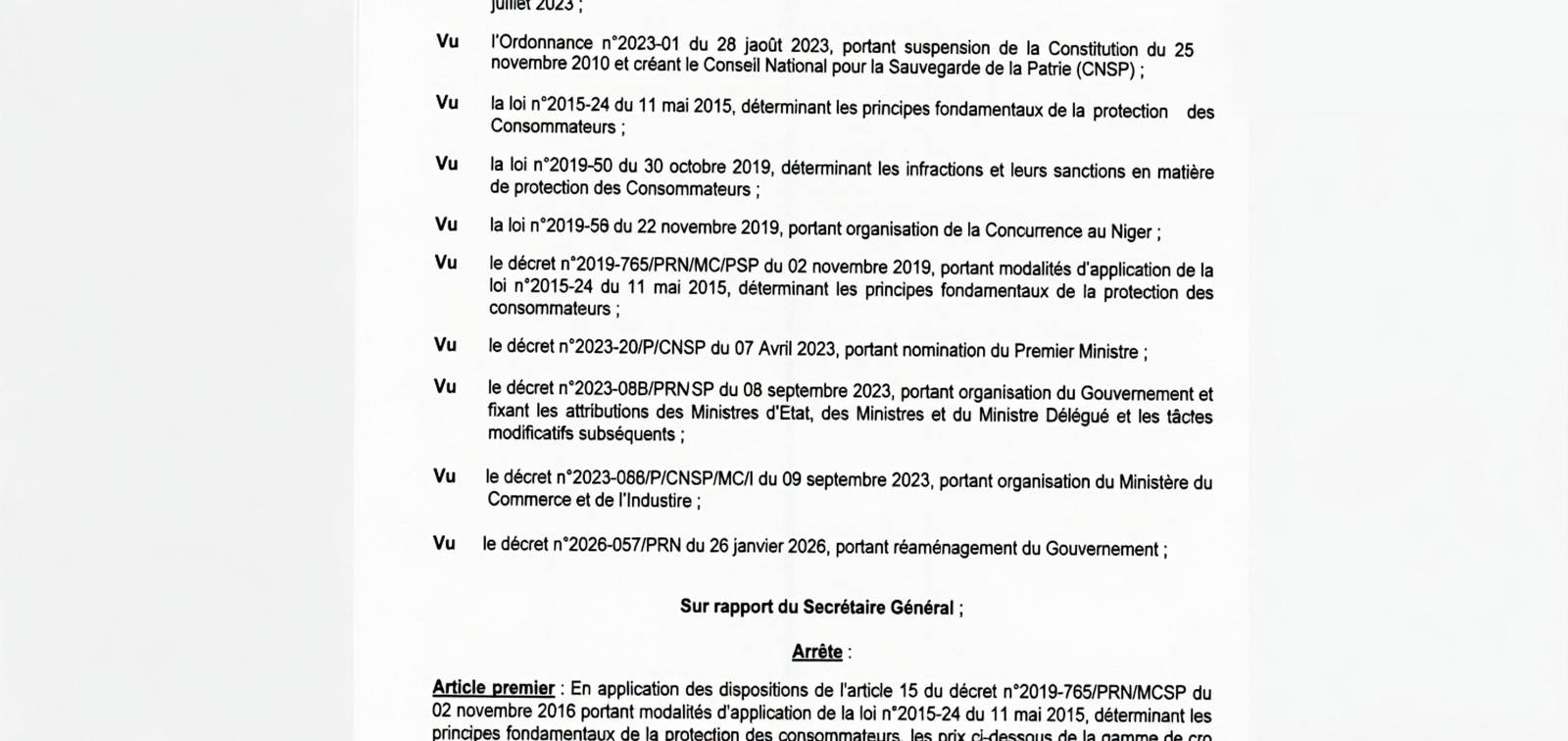
The Nigerien authorities have taken decisive action to address the escalating cement prices and widespread shortages affecting multiple regions. In a move aimed at curbing speculation and protecting consumer purchasing power, the Ministry of Trade and Industry issued two official decrees on July 13, 2026, imposing a price ceiling on cement grade 42.5 N. The measures also include stringent penalties for non-compliant operators, including the confiscation of illegally hoarded stocks.
Addressing Immediate Concerns Amidst Structural Challenges
The government’s intervention seeks to curb profiteering by traders who allegedly exploit high demand to inflate prices or artificially restrict supply. While the objective of safeguarding household budgets is commendable, the efficacy of administrative price controls remains questionable. Historical precedents in other markets suggest that such measures, when implemented without addressing underlying supply chain inefficiencies, often yield unintended consequences.
Potential Unintended Consequences of Price Controls
By capping prices without simultaneously enhancing production capacity or streamlining distribution networks, the authorities risk exacerbating market distortions. When production, transportation, or import costs exceed the regulated margins, distributors may respond by reducing sales volumes, curtailing orders, or diverting supplies to unregulated markets where prices are not subject to government oversight.
The enforcement of stock confiscations, while intended to deter fraudulent practices, introduces further complexities. Without transparent oversight mechanisms and robust legal safeguards, such measures could lead to arbitrary enforcement, operational disruptions, and escalating tensions between regulatory bodies and the private sector.
Identifying Root Causes Beyond Speculative Practices
The current crisis underscores deeper vulnerabilities within Niger’s cement sector. Structural issues such as logistical inefficiencies, high importation costs, limited local production capabilities, and bottlenecks in the supply chain cannot be resolved through administrative decrees alone. Industry stakeholders emphasize that sustainable price stability hinges on a well-supplied market, supported by enhanced production capacity, streamlined import processes, and improved distribution logistics.
While the government’s swift response reflects an acknowledgment of public frustration, it falls short of addressing the root causes of the crisis. Administrative controls, though effective in the short term, are not a substitute for comprehensive structural reforms that ensure long-term market stability and resilience.
Building Sustainable Solutions for Market Stability
The path forward requires a collaborative approach that fosters trust among authorities, producers, distributors, and consumers. A holistic strategy must prioritize investments in local production, simplification of import procedures, and modernization of distribution networks. Without such measures, the risk of recurring shortages and speculative practices persists, ultimately undermining the welfare of Nigerien households.
In the absence of these foundational reforms, the price cap may provide only temporary relief while inadvertently creating new market distortions. The true test for the government lies in balancing immediate interventions with long-term structural adjustments to secure a stable and equitable cement market for all stakeholders.