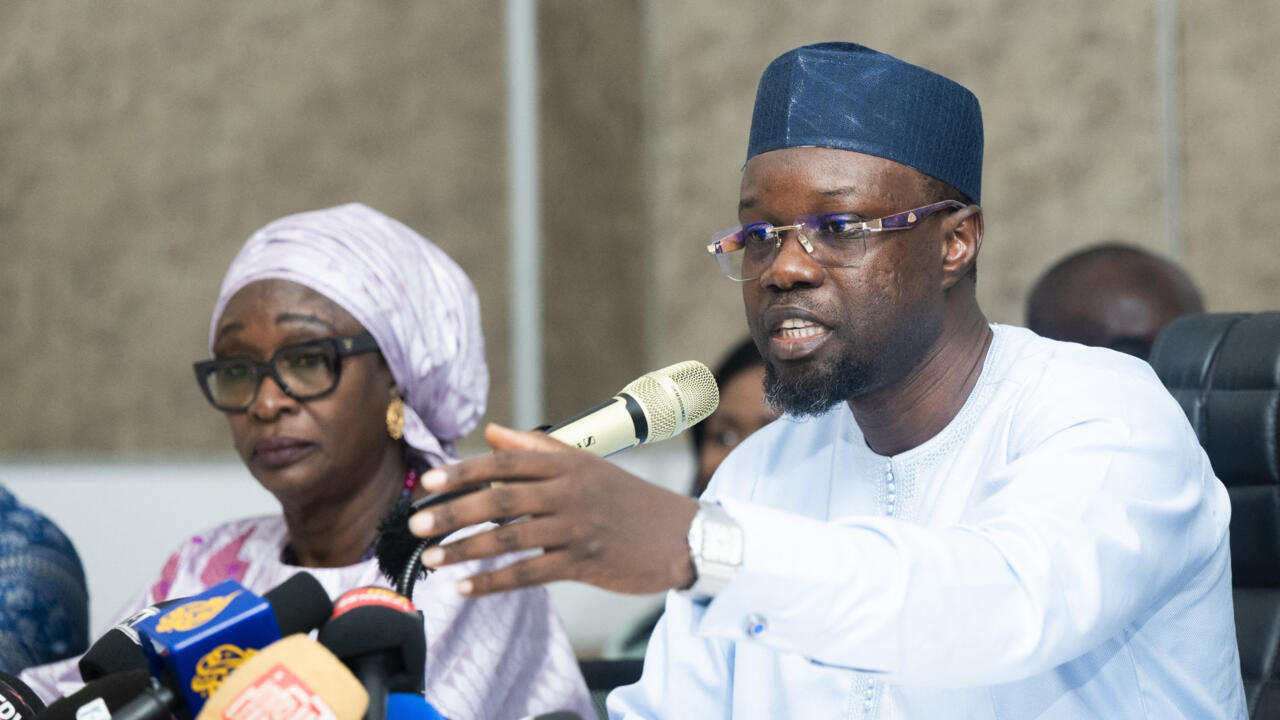
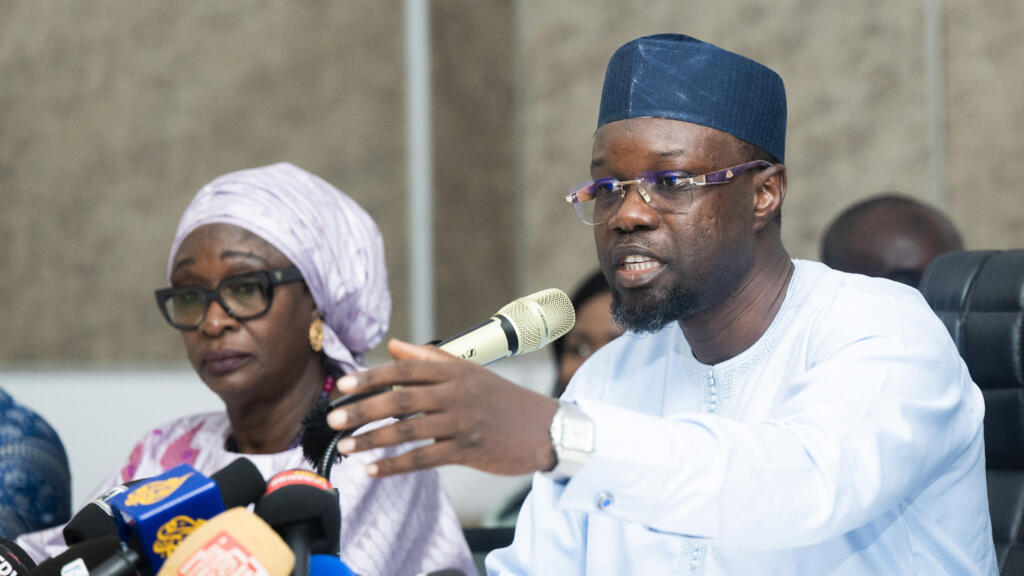
Just one week after his dismissal by President Bassirou Diomaye Faye, Ousmane Sonko has launched a political offensive. The former Prime Minister and leader of Pastef delivered a sharp critique of the head of state during a recent appearance. While maintaining that he has no intention of undermining the country’s institutions, he was quick to point out that Pastef‘s overwhelming parliamentary majority grants it the power to collapse the current government through a motion of censure. Sonko described the present political landscape as a de facto cohabitation, noting that he had warned the President about this outcome months ago.
The Pastef leader did not hold back regarding the new cabinet formed by Prime Minister Al Amine Lô. He argued that the current executive branch lacks fundamental political legitimacy. “We are looking at a government with no political base,” he declared, dismissing the presidency’s coalition as insignificant. For Sonko, labeling the team as a “government of technocrats” is merely a way to mask their political isolation. He insists that Pastef remains the primary political power in Sénégal, and that attempting to rule without them is a move against the will of the voters.
A test for the presidency
The exclusion of Pastef from the government creates a significant hurdle for the Diomaye Faye administration. The party continues to be the dominant force in the country, holding a comfortable majority in the National Assembly. This dynamic has created an unusual form of cohabitation within the presidential majority itself. While Bassirou Diomaye Faye retains his constitutional powers, the success of his legislative agenda will now depend heavily on maintaining a working relationship with Pastef deputies.
Beyond the simple makeup of the cabinet, the broader issue of political stability is now at the forefront. Observers are questioning how the executive branch will successfully pass laws or implement major reforms without the direct participation of the majority party in government management.
President Bassirou Diomaye Faye appears to have distanced himself from the very movement that brought him to power. He is currently navigating a strange political space—one that is constitutionally legitimate but narratively disconnected from the history that gave it meaning. Meanwhile, at the National Assembly, Ousmane Sonko remains poised with 130 deputies and a massive popular mandate, acting as a guardian of the movement’s original vision.
A unique political rupture
The evolving situation in Sénégal is unprecedented. This is not a standard cohabitation between a president and an opposing party, but a far more complex internal rupture. It features a head of state facing a party that controls 130 of the 165 parliamentary seats and refuses to be part of the government.
The central question remains: how can a technocratic government without its own parliamentary foundation function alongside a Pastef majority led by Sonko? This tension is expected to play out in the coming months, both within the halls of the presidential palace and through national mobilizations of the party’s massive activist base.