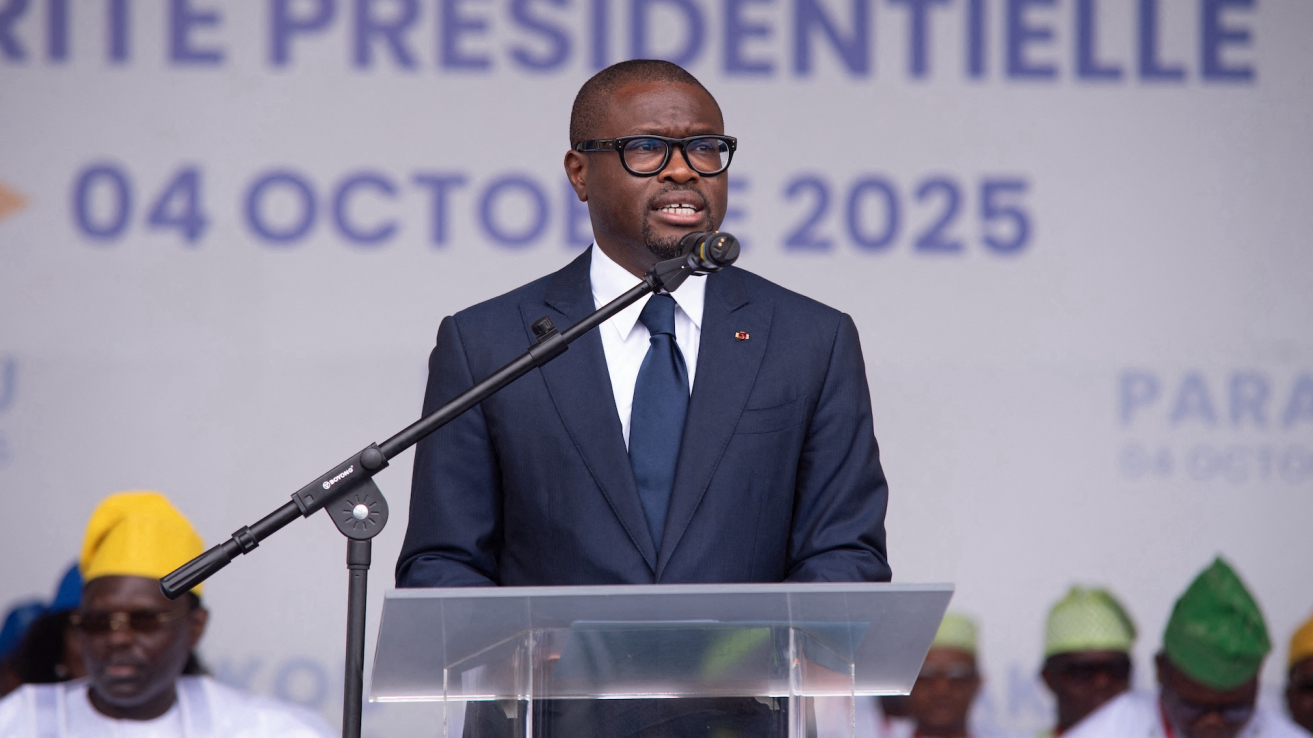
Romuald Wadagni steps into Benin’s presidency with bold expectations
Romuald Wadagni secured a decisive victory in Benin’s presidential election on April 12, winning 94.27% of the vote against his sole opponent, Paul Hounkpè, who conceded defeat and urged national unity and respect for democratic values. The Constitutional Court later confirmed a turnout rate of 63.57%, a significant increase from the 50.17% recorded in the 2021 election.
a landmark democratic transition
This election marks the fifth peaceful democratic transition in Benin since the historic 1990 National Conference. In a region where presidential term extensions frequently spark instability, outgoing President Patrice Talon’s adherence to the two-term constitutional limit has bolstered the country’s institutional stability. The vote proceeded without major disruption, though isolated incidents—including allegations of ballot stuffing—were reported in a few areas. While investigations are underway to determine accountability, the electoral commission, constitutional court, and international observation missions concluded that these irregularities did not compromise the election’s integrity. The court invalidated 34,596 votes nationwide due to procedural violations.
Paul Hounkpè, representing the minor opposition party Forces Cauris pour un Bénin émergent, posed no real challenge to Wadagni. The party’s performance in the January 2026 legislative and local elections—4.78% and 6.65% respectively—as well as its 11.37% share in the 2021 presidential race, reflected its limited influence.
economic architect faces poverty challenge
With a decade of service as Finance Minister under President Talon, Wadagni is credited as a key architect of Benin’s strong economic performance. Under his stewardship, annual GDP growth surged from 1.8% in 2015 to approximately 8% by 2025. Despite this progress, 40.1% of Beninese citizens still live below the poverty line, underscoring the urgent need to translate economic growth into inclusive development.
Wadagni has prioritized inclusive growth in his 2026–2033 agenda, focusing on three pillars: universal social well-being, a diversified and competitive economy, and national cohesion through enhanced security. Yet, achieving these goals will require more than policy vision—it demands structural reforms and equitable resource distribution.
political pluralism and regional stability at the forefront
The new administration must navigate a complex political landscape shaped by sweeping constitutional and institutional reforms since 2016. These changes, particularly the 15% sponsorship requirement for presidential candidates—introduced after the March 2024 electoral code revision—have significantly restricted political participation. As a result, major opposition parties, including Les Démocrates, were barred from contesting the 2026 election.
The opposition remains weakened, further strained by internal divisions following former President Boni Yayi’s March 2026 departure from Les Démocrates. Without reforms to the sponsorship rules, opposition parties could remain sidelined until at least the 2040 election.
The 2025 Constitution introduced a “pacte de responsabilité républicaine”, a framework for collaboration between the government and opposition parties via the Senate. While intended to foster dialogue, this mechanism risks becoming a tool to marginalize dissent if not implemented transparently. Wadagni’s government must also strengthen institutionalized citizen participation and public accountability dialogues to rebuild trust and national cohesion.
security and regional cooperation: critical priorities
The December 7 coup attempt highlighted Benin’s vulnerability to political instability. Wadagni’s presidency coincides with persistent security threats in the north and strained relations with neighboring Burkina Faso and Niger. While ties with Nigeria have improved following its support during the coup attempt, restoring regional cooperation is essential to counter shared terrorist threats.
During his campaign, Wadagni emphasized diplomacy, framing his election as an opportunity to revitalize regional partnerships. However, meaningful progress will depend on political will from Niamey and Ouagadougou. Without collaboration, transborder zones and the W-Arly-Pendjari complex will continue to serve as havens for militant groups, jeopardizing stability across the three nations.
the road ahead: balancing reform and dialogue
Wadagni’s success hinges on his ability to reconcile economic ambition with social equity, uphold pluralism, and stabilize Benin’s regional role. The newly established Senate—granted significant legislative oversight in November 2025—could either strengthen governance or create friction, especially if Talon is appointed to lead it, potentially leading to a dual-executive structure.
To ensure long-term stability, the government must engage in inclusive national dialogue to address contested reforms, refine policies, and build broad-based consensus. Meanwhile, the opposition must regroup and redefine its strategy to reclaim its role as a credible counterbalance in Benin’s democracy.
The coming years will test whether Benin can sustain its democratic gains while confronting economic inequality and security challenges—all under Wadagni’s leadership.