Senegal loses Africa Cup of Nations title: why did CAF strip the Lions of Teranga?
The Confederation of African Football (CAF) overturned Senegal’s victory in the 2025 Africa Cup of Nations final, awarding the title to Morocco instead. This unprecedented decision raises critical questions about competition integrity and the legal avenues still open to Senegal through its appeal to the Court of Arbitration for Sport (CAS).
By Habib Badjinri Touré, Lecturer at Université Grenoble-Alpes and Criss-Dess Dongar, PhD in Law from Université Jean-Moulin Lyon 3
CAF strips Senegal of its 2025 Africa Cup of Nations title: what happened in the final?
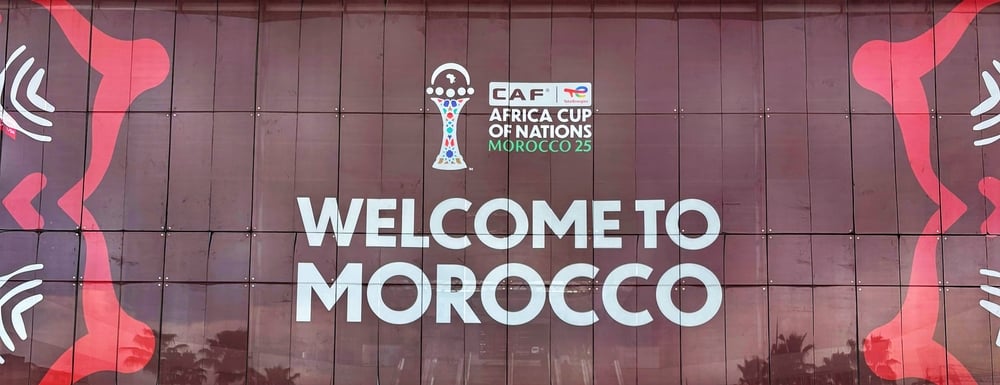
The 2025 Africa Cup of Nations final saw Senegal defeat Morocco in a dramatic encounter that concluded with the Lions of Teranga lifting the trophy. Yet the match was overshadowed by controversy surrounding refereeing decisions and allegations of favoritism toward the host nation. These accusations prompted the CAF to issue statements reaffirming its commitment to fairness, transparency, and strict adherence to competition regulations.
The final match itself became a flashpoint. In the 92nd minute, a goal by Senegal was disallowed for an alleged infringement. Minutes later, a penalty was awarded to Morocco in the 98th minute following a challenge in the box. Protesting the decision, the Senegalese team and coaching staff abandoned the field, retreating to the locker rooms for nearly fifteen minutes. Although Morocco failed to convert the penalty, Senegal scored during extra time and eventually claimed victory.
However, the protest strategy adopted by Senegal contravened the CAF Competition Regulations. According to Articles 82 and 84, “if any team refuses to play or leaves the field before the match has ended without the referee’s permission, it shall be declared the loser by default and lose the match 3–0.” Relying on this provision, the Royal Moroccan Football Federation filed a complaint with the CAF Disciplinary Board, which initially dismissed the claim. Morocco then appealed to the CAF Appeals Board, which ruled on March 17, 2026—two months after the final—that Senegal had violated Article 82. The Appeals Board concluded that Senegal’s actions constituted a forfeit, and the result was officially recorded as a 3–0 victory for Morocco.
In response, Senegal initiated legal proceedings by filing an appeal with the Court of Arbitration for Sport (CAS) on March 25, 2026, seeking to overturn the decision.
How will the Court of Arbitration for Sport rule on Senegal’s appeal?
Senegal’s appeal falls under the governance framework of the CAF Statutes and the Code of Sports Arbitration. Pursuant to Article 48.2 of the CAF Statutes, the CAS is required to apply CAF and FIFA rules in priority, with Swiss law as a subsidiary source. This principle was confirmed in a prior case involving the South African Football Association (CAS 2020/A/6907), where the panel applied the relevant competition regulations to assess the validity of a team’s withdrawal.
In this instance, the CAS has emphasized its readiness to handle the dispute, asserting in a statement that it is “fully equipped to resolve such disputes with the support of specialized and independent arbitrators.” The tribunal will need to determine whether the CAF Appeals Board’s decision aligns with the letter and spirit of Articles 82 and 84. It may also consider FIFA’s Disciplinary Code (Articles 9 & 16) and the Laws of the Game (Law 5), which address the finality of referee decisions and the consequences of team behavior on match continuity, among other potential legal angles.
What outcomes can we expect from Senegal’s appeal?
Under Article 48.7 of the CAF Statutes, “an appeal to the CAS has no suspensive effect; contested decisions remain enforceable until the CAS renders its final award.” This means that even as Senegal pursues legal recourse, the 3–0 forfeit ruling stands unless overturned.
Procedurally, the appeal is still in its early stages. Senegal has requested an extension to file its brief, arguing that it has not yet received the CAF’s full written decision. This preliminary phase will determine whether the appeal is admissible.
Substantively, Senegal’s legal strategy appears to hinge on two key arguments. First, it may challenge the interpretation of “refusal to play” or “leaving the field” under Articles 82 and 84, arguing that a temporary protest does not equate to forfeiture. Second, it could invoke FIFA principles to assert that match management falls under the referee’s authority, and that the CAF Appeals Board overstepped by retroactively reclassifying the incident as a forfeit, thereby undermining the immediacy of game regulation and legal certainty in the competition.
Ultimately, while Senegal’s appeal centers on the interpretation of CAF regulations and the interplay with FIFA norms, the outcome remains uncertain. The CAS has the discretion to either annul the CAF decision—as it did in CAS 2019/A/6483—or uphold it, as in CAS 2020/A/6907. A definitive ruling is expected in the coming weeks.