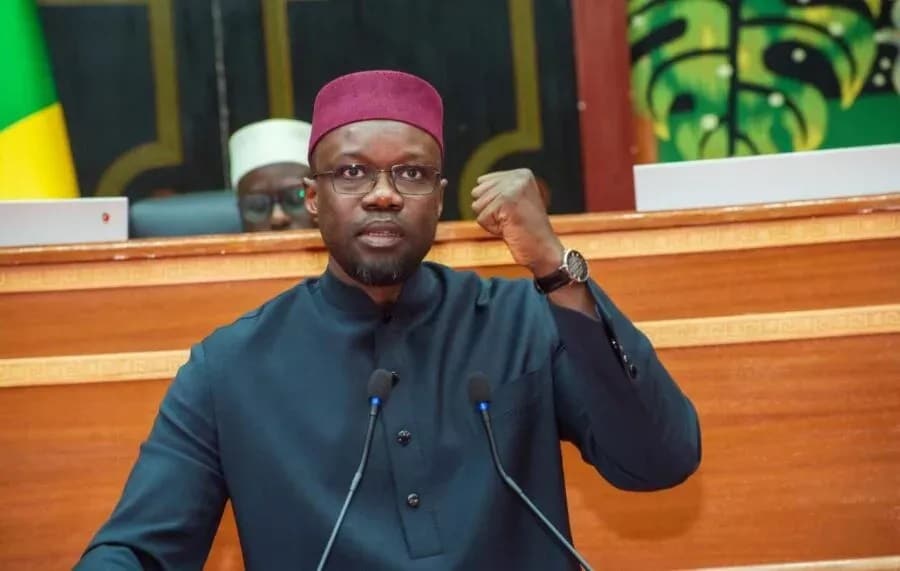
On the eve of the highly anticipated 2026 World Cup encounter between France and Senegal, Ousmane Sonko, the President of the Senegalese National Assembly, offered a multifaceted perspective, blending both sporting analysis and profound political insights into the upcoming clash.
During a recent interview, President Sonko openly expressed his unwavering support for the Lions of Teranga, while simultaneously underscoring the deep symbolic resonance of the match. “I believe Senegal will emerge victorious. That is certainly my hope, shared by all Senegalese citizens. Nevertheless, it is, in essence, just a football game,” he remarked.
Beyond the immediate athletic stakes, Ousmane Sonko highlighted that this fixture vividly illustrates the intricate connections binding Africa and Europe, particularly evident in the diverse composition of the French national team.
“Irrespective of which team prevails, it will be Africa that has triumphed over Africa. Merely observing the makeup of the French national squad compels us to grasp where the genuine necessities truly lie,” he asserted, offering a thought-provoking stance on global dynamics and African politics.
The President of the National Assembly also issued a compelling call to action, urging Africans across the continent to fully recognize their immense potential and inherent strengths.
He contended that Africa possesses abundant natural resources, a substantial and vibrant human capital, and a predominantly youthful population. These factors, he emphasized, are crucial for Africa to claim a more significant and influential position within the global framework, shaping the African economy today.
“If we truly comprehend our intrinsic worth and confidently embrace it, we will then understand that the scale of our needs is not necessarily located where conventional wisdom often places it,” he argued.
For Ousmane Sonko, this profound reflection also extends to ongoing discussions surrounding immigration and the imperative to re-evaluate the relationships between African nations and Western countries. He advocates for a reimagining of these ties, grounded in the contemporary demographic, economic, and human realities of the continent, a vital subject for pan-African news and West Africa news.