Senegal’s 2029 election: President Faye’s electoral reform boosts Sonko’s bid
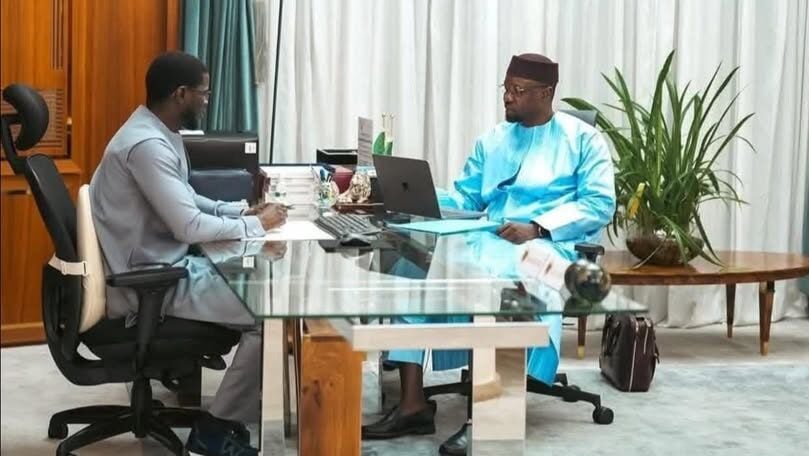
President Bassirou Diomaye Faye of Senegal has signed into law a controversial electoral reform bill, sending shockwaves through the ruling Pastef party and significantly improving the prospects for Prime Minister Ousmane Sonko in the 2029 presidential race. The decision, confirmed by an official presidential decree issued Saturday, has set the stage for a dramatic political showdown.
The new legislation, which modifies key provisions of the electoral code, has sparked intense debate across the political spectrum. While some analysts view it as a neutral technical adjustment, others see it as a calculated move to reshape the electoral landscape in favor of the Prime Minister. The reform comes at a particularly sensitive moment for the Pastef party, where internal tensions have been simmering for months.
Under the revised law, the period of civic ineligibility following a criminal conviction has been capped at five years after sentence completion. This change carries significant implications for Ousmane Sonko, whose 2023 conviction for defamation against a former minister under Macky Sall’s administration had previously barred him from running in the 2024 presidential election. The Supreme Court’s confirmation of that conviction in January 2024, just weeks before the vote, left Sonko’s political future hanging in the balance—until his appointment as Prime Minister in July 2025.
Political fault lines emerge in the ruling party
The electoral reform’s passage has exposed deep divisions within the Pastef party between President Faye and Prime Minister Sonko. The initial adoption of the bill by the National Assembly on April 28 was followed by a rare presidential request for reconsideration, with Faye citing ‘technical errors’ in the draft legislation. The move was met with sharp criticism from party officials, some of whom accused the president of deliberately delaying the process to serve his own ambitions.
After a second reading and approval by lawmakers on May 9, the bill cleared its final legislative hurdle, culminating in its official promulgation. The revised provisions now include a non-retroactive clause that could potentially clear Sonko’s path to eligibility, though the implementation timeline remains under scrutiny. The Prime Minister, who had previously been blocked from running due to the loss of his civil rights, has since been elected as a deputy in the November 2024 legislative elections—though he ultimately declined the parliamentary seat to remain in his government role.
Uncertainty looms over Sonko’s 2029 ambitions
While the electoral reform has breathed new life into Ousmane Sonko’s presidential aspirations, questions persist about its long-term impact. The debate over the law’s retroactive application has intensified, with legal experts divided over whether it can effectively erase the consequences of Sonko’s past conviction. His continued presence at the helm of government, coupled with his growing popularity among the electorate, has only fueled speculation about a potential 2029 showdown.
The political landscape in Senegal remains fluid, with the Pastef party at a crossroads. As the 2029 election approaches, all eyes are on President Faye and Prime Minister Sonko—two key figures whose relationship will shape the country’s democratic future.