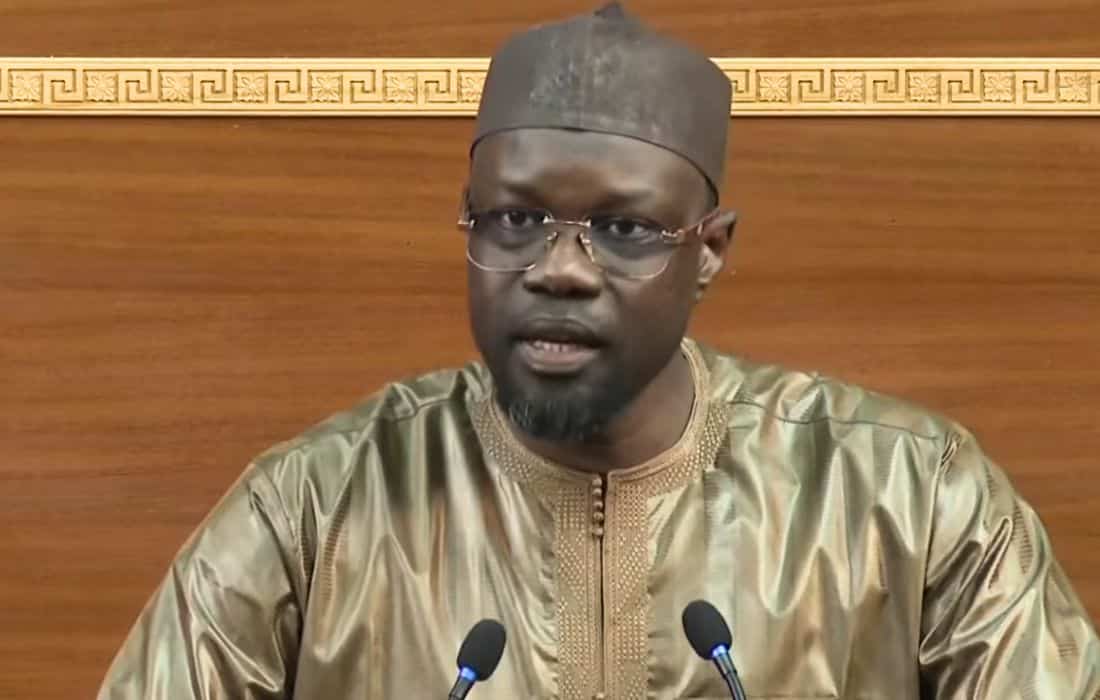
The Prime Minister of Senegal, Ousmane Sonko, recently delivered a pointed address to the National Assembly, condemning what he termed the “dictate” of Western powers, even going so far as to describe it as a “tyranny” allegedly seeking to “impose homosexuality” on the rest of the world. His remarks come at a pivotal moment when Senegal is tightening its legal stance on same-sex relationships, deepening the divide between national sovereignty and human rights.
This rhetoric reflects an increasingly common narrative in Senegalese politics—one that frames LGBT rights as a foreign imposition rather than an intrinsic aspect of human dignity. The government’s hardening position aligns with a broader trend of resisting external pressures, particularly when they challenge deeply rooted social norms.
Since early 2026, Senegal has intensified its legal crackdown on same-sex relationships, with penalties now ranging from five to ten years in prison. This legislative shift has unfolded against a backdrop of heightened social stigma and reported arrests, as documented by human rights organizations. The move has sparked heated public debates, particularly on social media, where sentiments like “We will not let others dictate our laws” and “This is about our values” dominate discussions.
Human rights or a clash of cultures?
The debate over LGBT rights in Senegal often veers into broader questions of national identity and cultural sovereignty. Critics argue that the push for LGBT rights is an attempt to undermine Senegalese traditions, while supporters contend that the issue transcends borders and touches on fundamental human freedoms. This tension has led to a polarizing discourse, where the lived realities of LGBT individuals are frequently overshadowed by political posturing.
A legal framework under scrutiny
Senegal’s penal code criminalizes same-sex relationships, and the 2026 amendments have further stiffened penalties. Beyond the courtroom, the consequences are stark: social ostracization, arbitrary arrests, and violence against LGBT individuals remain persistent threats. Human rights advocates emphasize that the debate cannot be confined to legal technicalities—it must address the real-world impact on people’s lives.
Why does the world take notice?
International concern over LGBT rights in Senegal stems from a core principle: human rights are universal. When individuals face persecution or violence based on their sexual orientation, it is not merely a domestic issue—it is a matter of global human dignity. Ignoring such violations would imply that human rights protections end at national borders, despite their intended universality.
Rights as commitments, not impositions
Contrary to claims that human rights are an external imposition, they are rooted in commitments voluntarily undertaken by states, including Senegal. The country’s 2001 Constitution explicitly incorporates the Universal Declaration of Human Rights, affirming its dedication to non-discrimination and equality. In this context, advocating for LGBT rights is not about forcing a foreign model—it is about upholding existing legal and moral obligations.
LGBT realities in Senegalese society
A common misconception is that LGBT identities are foreign to African societies. This could not be further from the truth. LGBT individuals exist across all communities in Senegal, contributing to society in diverse ways. Historical and anthropological evidence also reveals long-standing expressions of gender and sexual diversity, such as the goor-jigeen, which challenge the notion of LGBT identities as a recent or imported phenomenon.
A debate shaped by power and prejudice
The discourse on LGBT rights in Senegal is intertwined with broader tensions: colonial legacies, political maneuvering, and deep-seated social biases. While some frame the issue as a cultural defense against foreign interference, others see it as a tool to justify discrimination. Terms like “threat” or “plague” in public discourse further dehumanize LGBT individuals, reducing complex lives to simplistic, fear-driven narratives.
Championing dignity without domination
Human rights organizations emphasize that their mission is not to impose alien values but to protect individuals from harm. The principle is clear: no one should face punishment or violence because of who they are. In Senegal, as elsewhere, this means standing against laws and attitudes that perpetuate injustice under the guise of tradition or sovereignty.
Beyond borders: a global fight for rights
Senegal is not alone in grappling with these issues. Similar struggles unfold worldwide, from Russia to China, where LGBT individuals face systemic discrimination. Human rights defenders act where they can, guided by local realities and urgent needs. Their efforts are not about ranking suffering but responding to crises as they arise, guided by the unifying principle of human dignity.
Taking action: standing with the vulnerable
To turn awareness into impact, grassroots initiatives have emerged to support LGBT individuals in Senegal. These campaigns provide legal aid, emergency relief, and solidarity to those affected by criminalization. Supporting such efforts translates concern into tangible change, offering hope to those navigating a system that too often denies their humanity.