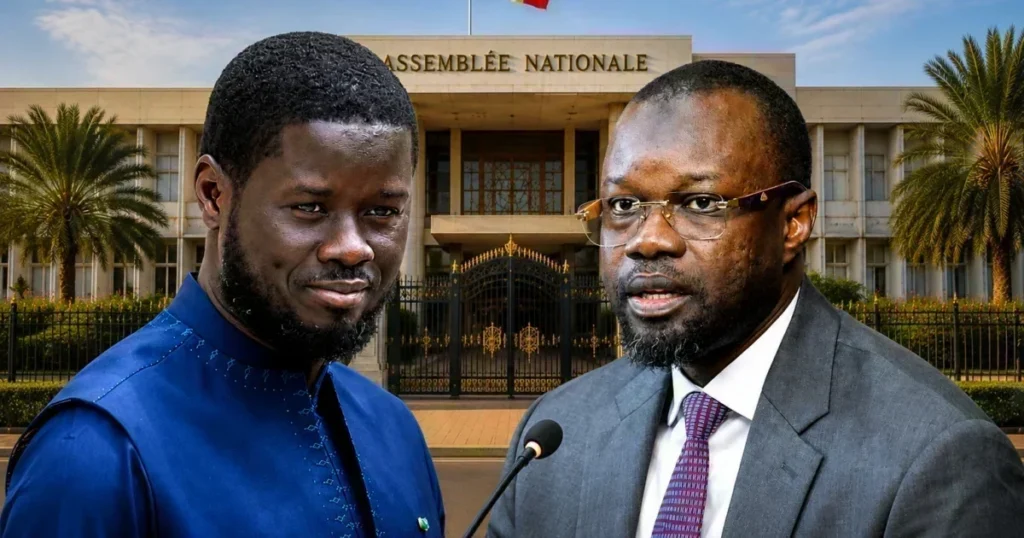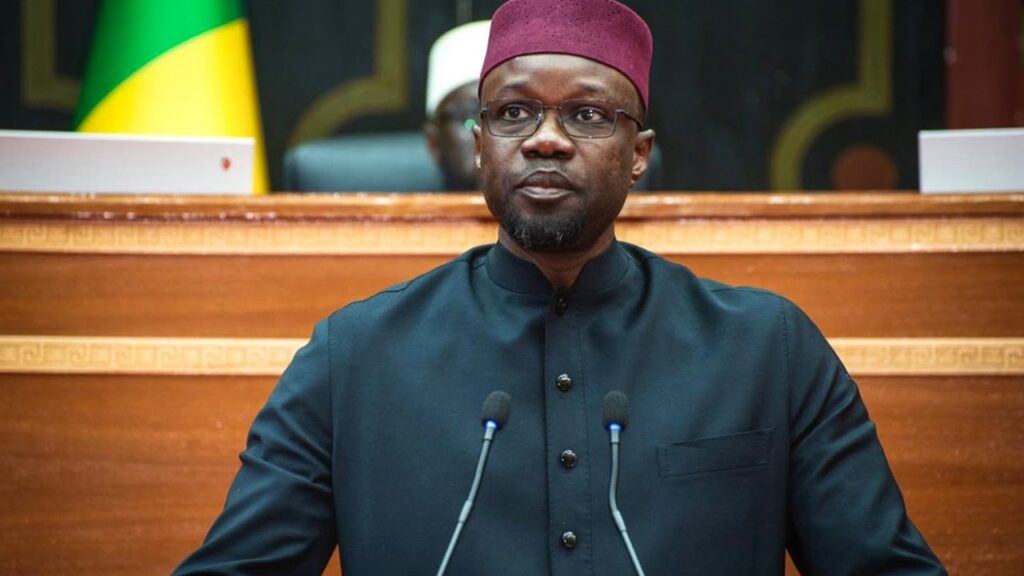
An insightful analysis has shed light on the growing divide between President Bassirou Diomaye Faye and Prime Minister Ousmane Sonko. This perceived personal conflict, according to observers, represents a crucial litmus test for Senegal’s democratic transition and its future as a stable nation in West Africa.
An ancient African proverb states that when two elephants clash, it is the grass that suffers. Few nations today embody this wisdom as distinctly as Senegal. Just two years ago, the country stood as a shining example of democratic renewal across West Africa, inspiring pan-African news. The election of Bassirou Diomaye Faye, largely facilitated by the political endorsement of Ousmane Sonko and the Pastef movement, had generated widespread optimism far beyond Senegal’s borders.
The path to this historic victory was unique. Barred from contesting the 2024 presidential election due to legal issues, Sonko made an extraordinary choice. Instead of delaying the democratic process or engaging in protracted political confrontation, he channeled his entire political capital behind Bassirou Diomaye Faye. This transformed a relatively unknown candidacy into a landmark triumph, an act of personal sacrifice that garnered immense voter support for the joint ticket.
Divergence over public debt management
The current rift between the two leaders doesn’t stem from deep ideological differences but rather from contrasting approaches to managing an unexpectedly complex budgetary situation. The discovery of public debt levels significantly higher than previously disclosed created a critical challenge. Sonko advocates for a philosophy of economic sovereignty, publicly opposing any debt restructuring. In contrast, President Faye seeks to reassure financial markets and development partners while carefully avoiding the economic and political risks associated with formal debt restructuring. Notably, the Minister of Economy and Finance recently confirmed that the government is not considering this option.
These differing views, while distinct, should not be overstated as entirely opposing economic doctrines. Instead, they highlight the inherent tension between the transformative ambitions that galvanized the electorate and the pragmatic constraints of governing. However, political analysts observe that calculations regarding the country’s longer-term political trajectory are now influencing how these disagreements are perceived, risking the marginalization of the core reform agenda itself.
The paradox of institutional reforms and the challenge of trust
The most striking irony, according to commentators, is that the very movement that ascended to power promising to bolster democratic institutions now finds itself tested by the institutional questions it pledged to resolve. Recent proposals for constitutional revision, intended to rebalance power between the executive and parliament, have themselves become a subject of national debate. Supporters link these proposals to Pastef’s historical program and the National Assizes, while detractors question the timing and methodology of their implementation.
This situation underscores a lasting democratic lesson: constitutional reform is judged not merely by the quality of its legal text but equally by the political trust surrounding its execution. Democracy, it is emphasized, relies as much on the constitutional conduct of its leaders as on its legal framework.
Ultimately, for the average Senegalese citizen, the real stakes transcend who prevails in this power dynamic. Their concerns revolve around job creation for a burgeoning youth population, controlling the cost of living, and improving schools and hospitals. Every day spent navigating political tensions is, in essence, a day not fully dedicated to implementing the transformative agenda that inspired so many Senegalese to vote for change. Despite these challenges, it is reassuring to note that, unlike other political crises in the region often marked by coups or insurrections, Senegal’s democratic institutions remain resilient. The judiciary continues its functions, the Parliament remains active, and political disagreements are, for now, strictly contained within constitutional processes, showcasing the strength of African politics and West Africa news.