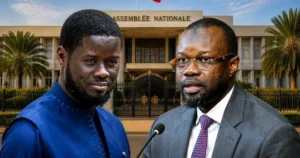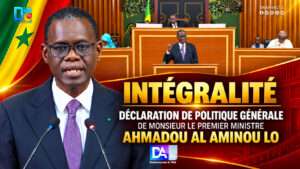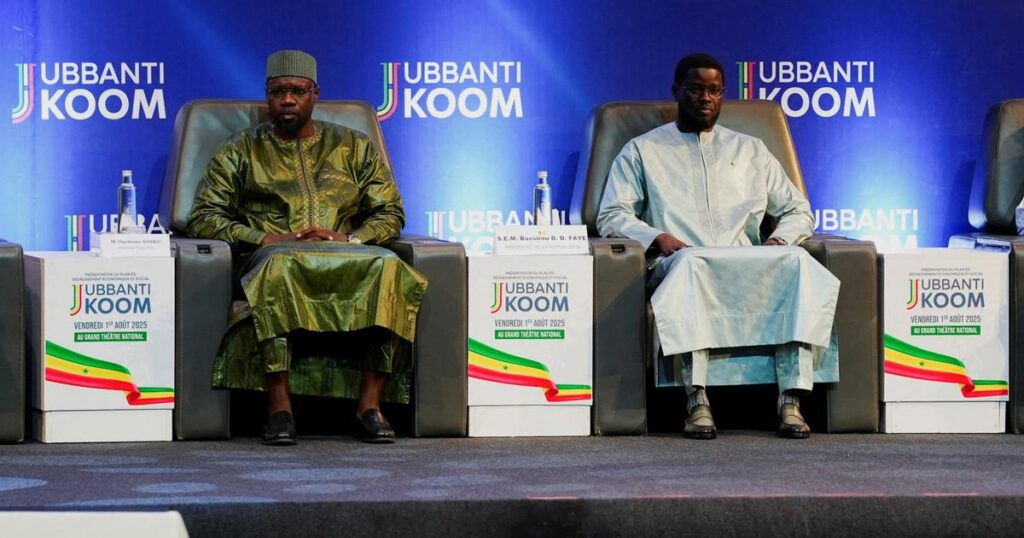
A swift political shift has unfolded in Sénégal with President Bassirou Diomaye Faye’s recent dismissal of Prime Minister Ousmane Sonko. This move, announced [Friday, May 22], marks a significant escalation in the already mounting political tensions and increasingly public disagreements between the two leading figures of the executive branch in the nation of Teranga.
In a related development, Malick Ndiaye, the President of the National Assembly, declared his resignation from the parliamentary leadership, though he intends to retain his seat. This orchestrated scenario appears designed to pave the way for the former Prime Minister, Ousmane Sonko, who has sought to reclaim his mandate as a deputy within the National Assembly.
a clear division emerges
The Parliament is scheduled to convene in an extraordinary session on May 26 to elect its new president. All indications suggest that, barring an unforeseen upheaval, Ousmane Sonko, the former mayor of Ziguinchor, who was removed from the Prime Minister’s office under well-known circumstances, is poised to assume the leadership of the National Assembly. This strategic position would allow him to continue his direct confrontation with President Bassirou Diomaye Faye.
The pressing question now is the extent of this rivalry between the two erstwhile political allies. This query gains further weight considering that, beyond the former National Assembly President’s resignation—which appears to be an act of loyalty toward Sonko—Ousmane Sonko is expected to secure the speakership with relative ease, should he desire it. The National Assembly is overwhelmingly dominated by Pastef (Patriotes africains du Sénégal pour le travail, l’éthique et la fraternité), the ruling party, of which Sonko remains the principal figure. Pastef commands no less than 130 of the 165 seats in Parliament.
This highlights the critical importance of the upcoming session, which provides a pathway for the former Prime Minister to remain deeply embedded in the political landscape and at the highest levels of state decision-making by becoming the head of Parliament. This highly strategic post comes at a time when a definitive split appears to have occurred between Sonko, a native of Thiès, and President Bassirou Diomaye Faye, who is determined to assert his own authority and step out from the influential shadow of his former mentor.
sonko’s potential to obstruct
In this clash of ambitions between former comrades who have ascended to the pinnacle of state power, Sénégal faces the genuine risk of an institutional crisis. This is particularly true if, as the situation seems to indicate, Ousmane Sonko is elected President of the National Assembly following the May 26 session. Such an outcome would establish him as the second most powerful figure in the state and the constitutional successor to the President.
From this vantage point, Sonko could at any moment utilize his control over the legislative branch to impede government actions. Predicting the ultimate trajectory of this rivalry between the two leaders of the ruling party is challenging. Indeed, if not carefully managed, this internal conflict risks negatively impacting the party’s cohesion. With these two prominent figures in open dispute, one might wonder if Pastef is prematurely undermining its own strength.
It is evident that since their rise to power, Ousmane Sonko has harbored a clear ambition to occupy the presidential office, having propelled Bassirou Diomaye Faye into the role under circumstances that are widely known [Sonko was deemed ineligible in May 2023 following an appeal, preventing his candidacy in the 2024 presidential election].
All signs suggest that by now entering into open conflict with the Head of State, Sonko does not merely intend to remain in the background. He likely believes he possesses sufficient leverage to continue pursuing his presidential aspirations, overcoming the judicial obstacle he faced in 2024.
a delicate balance of power
This ambition is further bolstered by the new Electoral Code, which passed smoothly on May 12. [This revision aimed to clarify cases of ineligibility and prevent the political disqualification of candidates. However, some opposition figures viewed it as a means to clear the path for both Ousmane Sonko and Bassirou Diomaye Faye to run.]
While Sonko, a fierce opponent of former President Macky Sall, undoubtedly commands significant popularity within the party he founded, his eligibility for the next presidential election [slated for March 2029] will likely remain uncertain until the Constitutional Council issues a definitive ruling on the matter.
Should this rivalry between the two powerful figures at the top of the state intensify, it could devolve into a precarious standoff, portending an unstable future for Sénégal. This is especially true for Pastef, which could potentially be outmaneuvered by a third contender in upcoming elections, or face a protest vote from the Senegalese electorate, known for its decisive political expressions.
Meanwhile, many hope that reason will prevail in the nation’s best interest, ensuring that Sénégal does not become held hostage by the rivalries of two political leaders who promised a transformative approach to governance, a key aspect of contemporary African politics and West Africa news.