Why Senegal’s three-day strike has rattled the nation
The 72-hour nationwide strike in Senegal entered its second day amid escalating tensions between workers’ unions and the government. With key sectors at a standstill, the mobilization has crystallized long-standing frustrations over unmet promises, delayed payments, and deteriorating working conditions. As the government scrambles to balance public pressure with legal strictures, analysts warn the standoff could redefine labor relations in the country ahead of critical events on the horizon.
What the unions are demanding — and why it matters
The strike spearheaded by the G7 coalition of seven major teachers’ unions stems from a broken agreement signed with the government last April. Core demands include unpaid allowances, administrative backlogs, and unresolved training commitments under the Universal Diploma Training initiative. Contract teachers, whose salaries have been irregularly delayed, face escalating precarity as classrooms remain understaffed and students miss precious learning time.
The G7 has framed the strike not as a protest but as a last-resort measure to secure the 2026–2027 academic year, which was postponed to October following severe flooding. Behind the immediate grievances lies a broader critique of public sector governance: slow-moving bureaucracy, opaque financial procedures, and a perceived erosion of trust between state institutions and citizens.
The Front syndical pour la défense des travailleurs (FSDT), representing multiple labor sectors, amplifies the pressure. Their demands extend beyond education to include workplace safety standards, job protection, and equitable employment practices. The breadth of the mobilization raises the specter of prolonged disruption in healthcare, transport, and public administration — sectors already strained by economic uncertainty.
Government’s balancing act: dialogue vs. enforcement
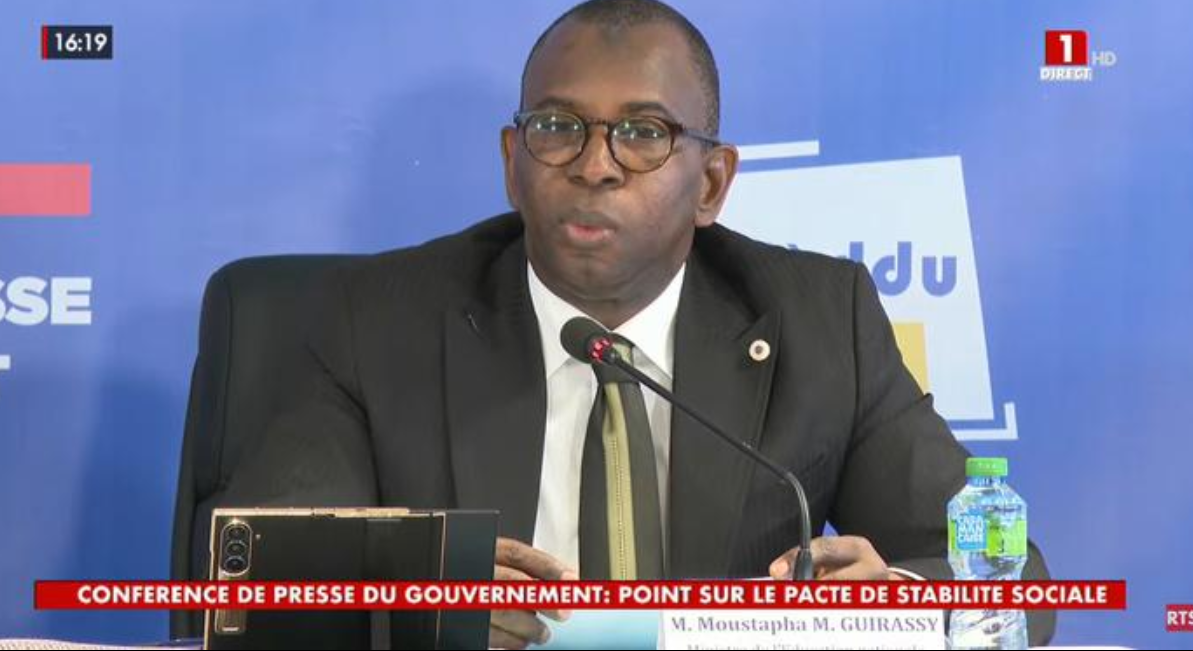
In public statements, the administration has positioned itself as a proponent of social dialogue. During a tripartite meeting convened on October 15, Prime Minister Ahmadou Al Aminou Lo urged unions to observe a three-month moratorium on strikes to facilitate negotiations. Yet this conciliatory rhetoric is undercut by legal warnings. The Ministry of Public Service and Labor has declared that a single strike notice filed with one ministry does not legally cover a general strike across public, parapublic, and private sectors. Violations, the ministry cautioned, could result in wage deductions and disciplinary action for participating workers.
On the eve of the strike, authorities also pledged to protect freedom of movement and the right of non-striking employees to access workplaces. The dual posture — appealing for calm while reinforcing legal boundaries — reflects a tightrope walk: maintaining state authority without provoking outright confrontation. But for unions, appeals to patience ring hollow when prior agreements remain paper promises.
Political fault lines complicate social tensions
The strike erupts against a backdrop of deepening political schisms. Public disagreement over the 2027 budget draft and institutional rivalries within the executive and legislature have eroded confidence in coordinated policymaking. While unions insist their demands are grounded in labor rights, the timing amplifies political consequences. Each delayed payment or stalled negotiation becomes ammunition in broader debates about governance legitimacy and institutional responsiveness.
Adding pressure is Senegal’s hosting of the Youth Olympic Games, set to begin in early 2027. Authorities are keen to project stability and operational efficiency, yet the strike threatens to tarnish the country’s international image and disrupt key infrastructure preparations. Meanwhile, union leaders insist their grievances — rooted in systemic neglect — cannot be sidelined for the sake of an event.
Striking a deal — or facing fallout
The next 72 hours will determine whether Senegal can avert a prolonged labor crisis. A resumption of talks with a clear implementation timeline could de-escalate tensions, but without tangible concessions, defiance among workers may harden. For students, families, small businesses, and civil servants, the stakes are immediate: lost wages, suspended services, and mounting uncertainty.
For the government, this moment is less about quelling dissent than restoring credibility. Can public institutions honor their commitments? Can they build trust through action, not just rhetoric? With the Youth Olympic Games looming, the answer will shape not only labor relations but Senegal’s global standing in the years ahead. The strike is not just a protest — it is a test of whether dialogue can survive when promises decay and patience wears thin.