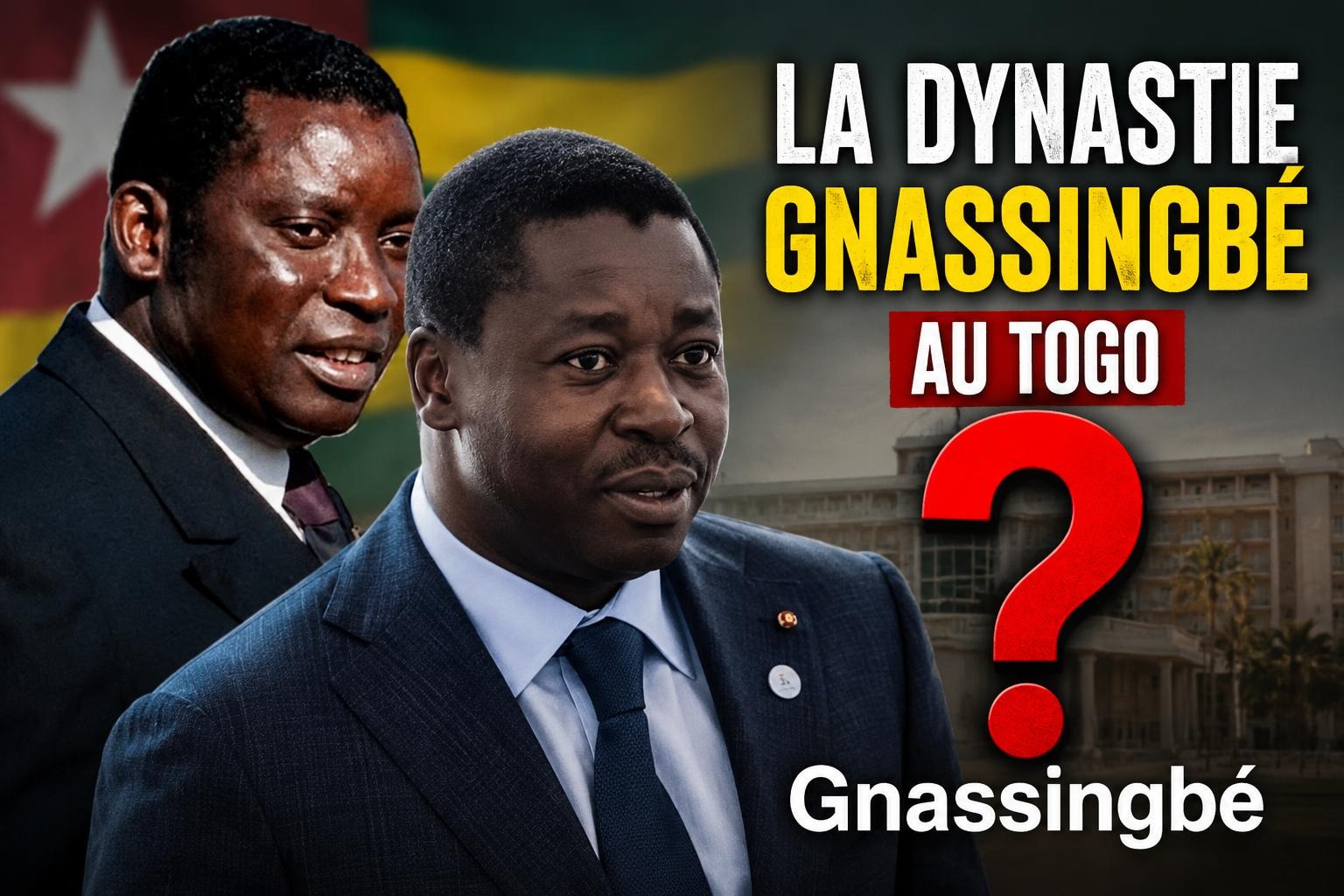
The Republic of Togo stands out in Africa for a singular and troubling distinction: it has been governed by the same political family for half a century. Following his father Gnassingbé Eyadéma’s 38-year reign, Faure Gnassingbé now approaches his third decade as head of state. By systematically sealing off state institutions and securing unwavering allegiance within the military, the current president appears to have set a course nearly identical to that of his predecessor. Evidence strongly suggests that Faure Gnassingbé has opted for a lifetime presidency, positioning himself to remain in power until his death, mirroring the path of his late father.
An inherited fortress: power as family legacy
To grasp why peaceful political turnover has become unthinkable in Togo, one must examine the regime’s foundational nature. This is not merely a political party in control; it is a tightly knit clan centered around the Gnassingbé dynasty and its inner circle. Since 1967, power has been treated by this group as an inherited possession, a private asset to be safeguarded at all costs.
For Faure Gnassingbé, stepping down would pose an existential threat—not only to his family but to every associate who has benefited from decades of patronage. Relinquishing the presidency would open the door to demands for accountability over financial mismanagement, entrenched corruption, and, above all, the bloodshed that has stained the regime’s legacy—most notably the hundreds killed during the violent transition of 2005. For the clan, retaining power is no longer a political strategy; it is a matter of survival, both physically and in the courts. This is the trap that binds the president to his seat until his final days.
The constitutional coffin: how new laws buried democracy
The recent and abrupt shift to a parliamentary system has effectively extinguished any remaining hope for democratic change. By assuming the title of Prime Minister, Faure Gnassingbé has freed himself from the constraints of presidential term limits and direct popular elections.
This sweeping constitutional overhaul functions as an irreversible turning point:
- No more direct vote: Citizens no longer elect their highest leader, eliminating the possibility of a punitive electoral outcome.
- Unlimited mandate through proxy: As long as his ruling party, UNIR, wins elections orchestrated by the state, the presidency will continue indefinitely.
This legal engineering reveals a deliberate strategy: Faure Gnassingbé has refined the model used by his father, who in 2002 amended the Constitution to guarantee his own rule until 2005. Where Eyadéma relied on brute force to bypass constitutional norms, his son has weaponized the law itself to legitimize perpetual control.
The Togolese military: the regime’s unbreakable shield
The final lock on this dynastic fate is found within the Togolese Armed Forces (FAT). Established by Gnassingbé Eyadéma with a strong regional and clan-based foundation, the FAT remain the regime’s backbone. Senior officers share deep economic and security interests with the ruling family.
“In Togo, the army does not defend the nation’s institutions; it defends a dynasty against the very people it is supposed to serve.”
For the generals, Faure Gnassingbé’s departure would mean the loss of their privileges and the destabilization of their network of influence. The president is, in effect, a hostage to this system. He understands that his personal security—and that of his entourage—depends entirely on maintaining control. The army would tolerate no successor outside the established order or the ruling family. This inescapable alliance has sealed his fate to the presidential palace in Lomé.
A gilded cage with no exit
Faure Gnassingbé has become the prisoner of a system he cannot escape. Trapped by a clan that refuses to relinquish its privileges, shielded by a military that fears change, and shielded by laws he drafted himself, he has condemned himself to a life sentence in power.
History in Togo is repeating itself. Like Eyadéma before him, Faure Gnassingbé will likely rule until nature takes its course. But in denying the nation a peaceful path forward, he risks leaving behind a ticking bomb—one where the dynasty’s collapse could plunge the country into turmoil.