As part of a massive $33 billion global humanitarian appeal for 2026, the United Nations and its partner organizations are requesting $5.1 billion. This funding is essential to provide life-saving assistance to 24 million of the most vulnerable individuals across West and Central Africa.
Projections for 2026 indicate that over 42 million people will require urgent aid to ensure their survival and safety. The countries most affected include Burkina Faso, Cameroun, Mali, Niger, Nigéria, the République centrafricaine, the République démocratique du Congo, and Tchad.
Charles Bernimolin, the regional head of OCHA, warned that a lack of immediate funding will result in increased hunger, further displacement, and heightened protection risks for families throughout the region.
The United Nations Office for the Coordination of Humanitarian Affairs (OCHA) reports that the region is gripped by an intensifying crisis. Ongoing violence, deep-seated conflicts, and environmental shocks are forcing families to flee their homes, destroying their ability to meet basic needs.
Growing insecurity in the Sahel and Lake Chad basin
Instability in the central Sahel—specifically in Burkina Faso, Mali, and Niger—is now spreading toward neighboring nations like Bénin, Côte d’Ivoire, Ghana, Togo, and Mauritanie. Meanwhile, the crisis in the Lake Chad basin and the war in Soudan continue to drive massive population movements.
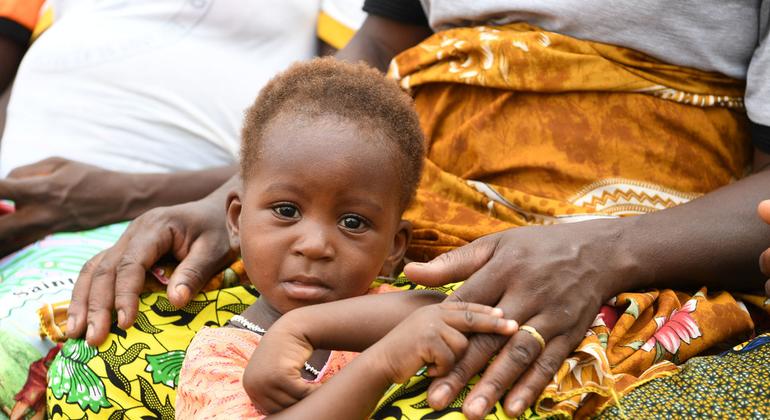
Currently, the region hosts 12.7 million internally displaced persons and 3.7 million refugees and asylum seekers. Women and children make up the majority of this population. Many have been displaced multiple times and face extreme dangers, including gender-based violence and exploitation.
Climate change is further aggravating these vulnerabilities. In 2025, torrential rains and flooding impacted over 2 million people in 12 different countries. These disasters ruined crops, destroyed homes, and blocked access to healthcare and education. The République démocratique du Congo was hit particularly hard, with more than 830,000 people affected by these environmental shocks.
The catastrophic results of funding shortages
Despite donor contributions in 2025, humanitarian efforts faced a massive financial gap. Of the $7.8 billion needed, only $1.8 billion was received—a mere 24% of the required total.
This lack of resources forced aid agencies to scale back their operations and make painful decisions about which communities and regions to prioritize. The consequences have been dire:
- In the République centrafricaine, cash assistance programs were slashed by 75%.
- In the République démocratique du Congo, where conflict has triggered new waves of displacement, 85% of those needing emergency shelter received no help at all.
Humanitarian partners remain committed to addressing the most critical needs in West and Central Africa. By the end of 2025, aid workers expect to have reached 19 million people with some form of support. However, agencies emphasize that millions more remain unassisted simply because the necessary funds are not available.