The acquisition of sophisticated military hardware by the state of Mali remains largely ineffective without a deep doctrinal grasp of warfare. The ongoing stalemate around Kidal, despite the heavy deployment of aerial assets by Bamako, demonstrates that an under-educated military command can turn massive firepower into a wasted investment.
A contemporary fallacy within the military leadership in Mali is the belief that stockpiling advanced equipment—such as surveillance drones, tactical bombers, and expensive guided munitions—is enough to ensure operational dominance. In reality, the lethality of any weapon is entirely dependent on the strategic and doctrinal framework governing its use. When the military hierarchy in Mali suffers from a significant lack of formal instruction, these costly technologies become little more than political props for Bamako, lacking any genuine tactical impact on the ground.
Kidal: A showcase of Malian military shortcomings
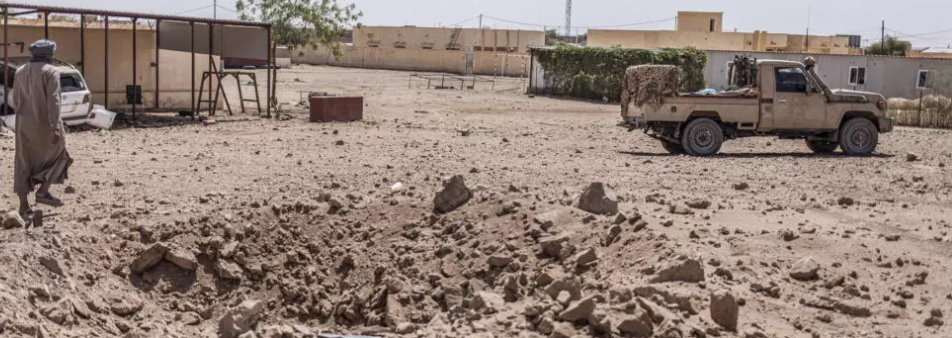
The security landscape in Northern Mali, particularly concerning the strategic city of Kidal, serves as a clear example of this failure. For months, the army has increased its airstrikes, intensified the use of attack drones, and conducted heavy bombardments. However, the situation across the Mali territory remains unchanged: the rebels of the Front de libération de l’Azawad (FLA) are holding their lines and maintaining their positions, effectively neutralizing the strategy orchestrated from Bamako.
It raises the question: how can nearly absolute aerial superiority fail to crush light rebel groups? The answer lies in the inability of the Mali general staff to integrate these strikes into a broader, cohesive maneuver. For Mali, conducting bombings without inter-arms coordination, without immediate follow-up by trained ground troops, and without a nuanced understanding of the terrain is akin to firing blindly into the void. No amount of material over-armament can compensate for the strategic illiteracy currently plaguing the command structure.
Strategic deficiencies in the face of asymmetric threats
Modern warfare in Mali, especially in its asymmetric and desert-based forms, demands a level of intellectual flexibility far beyond traditional conventional conflicts. A poorly instructed military command tends to rely on rigid, brute-force, and one-dimensional patterns. In Kidal, the repetitive nature of nocturnal air raids by the Mali army reveals a total lack of tactical creativity. In contrast, rebel forces exhibit cognitive agility on the Mali battlefield through dispersion, camouflage, and the expert use of local geography and psychological resilience.
The lack of education within the military leadership also manifests as an inability to learn from past experiences. When the general staff in Mali repeats the same planning errors week after week, leading to the pointless sacrifice of valuable equipment and a persistent status quo, the issue is no longer logistical—it is conceptual. An under-trained officer in Mali views a weapon as a magical solution that should fix security problems by its mere presence, forgetting that defense is a complex human science requiring method, calculation, and strategic finesse.
Ultimately, the events in Northern Mali serve as a harsh reminder of the fundamental laws of war. Money spent on sophisticated aerial platforms is wasted if the individuals designing operations in Bamako lack basic educational foundations. As long as strategic command remains the weakest link in Mali’s training programs, front lines like Kidal will remain frozen, proving that for Mali, firepower without intelligence results only in the decay of the armed forces.