Cotonou and Lomé are intensifying their political cooperation to counter the persistent instability of foreign energy providers. To safeguard the expansion of their industrial corridors, the two neighboring states have resolved to combine their resources and capital to establish genuine electrical sovereignty.
On April 23, a fire at the Akosombo substation in Ghana suddenly stripped the regional network of 1,000 megawatts, leading to an immediate halt of exports to Togo and Bénin. This latest disruption serves as a stark reminder of a difficult reality: during a crisis, nations prioritize their own domestic consumption over regional commitments.
Earlier in 2024, malfunctions in the West African Gas Pipeline had already forced Togo to mobilize 31 billion FCFA in emergency funds to compensate for the lack of Nigerian gas. This shared fragility underscores the structural shortcomings of the Communauté Électrique du Bénin (CEB). Established in 1968, the organization has remained a mere transporter of electricity, lacking any independent production capacity.
Industrial growth through the Adjarala dam
The urgency has shifted from a technical concern to a high-level political priority. the definitive response lies in the Adjarala dam project on the Mono River. With an estimated cost of 266 billion FCFA and a projected capacity of 147 megawatts, this infrastructure ensures a stable electricity supply for thirty years. Additionally, it will provide irrigation for 14,700 hectares of farmland in Togo. Such an investment is vital to sustain the industrial momentum in both countries. The Glo-Djigbé economic zone in Bénin, which has attracted over $1 billion for local cotton and cashew processing, and the Adétikopé platform in Togo can no longer depend on the energy policies of their neighbors. A unified energy market will allow both nations to present a stronger front to international investors.
Tapping into local savings as international lenders withdraw
As global financial institutions move away from funding fossil fuel projects, Cotonou and Lomé are rethinking their financing strategies. They intend to mobilize long-term local savings by engaging their National Social Security Funds (CNSS) and insurance firms. These institutions hold substantial reserves that are currently tied up in short-term public securities. Experts suggest that issuing joint energy bonds, backed by the guarantees of both states, would transform these social savings into a powerful tool for regional infrastructure development.
A historic political alignment
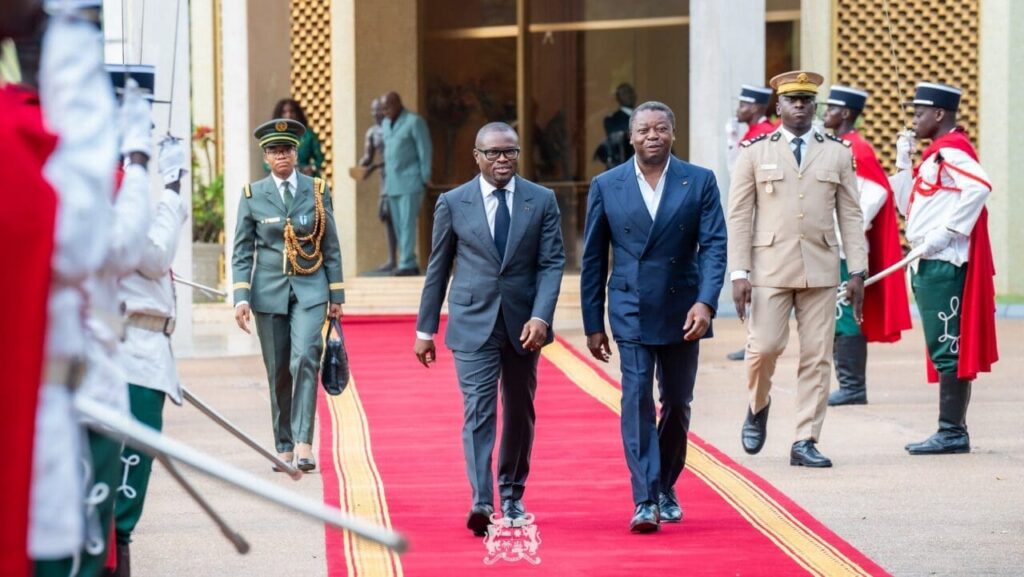
The official visit of Romuald Wadagni to Lomé on June 3, 2026, represents a significant milestone in this partnership. A joint communiqué has laid the groundwork for deep economic complementarities and interconnected infrastructure. The goals of the two administrations are now closely aligned: Bénin intends to add 100 megawatts to its grid every two years, while Togo is striving for universal electricity access by 2030. This current political harmony offers a rare opportunity to finally secure collective energy autonomy.