Bénin’s Senate convenes for first session thursday

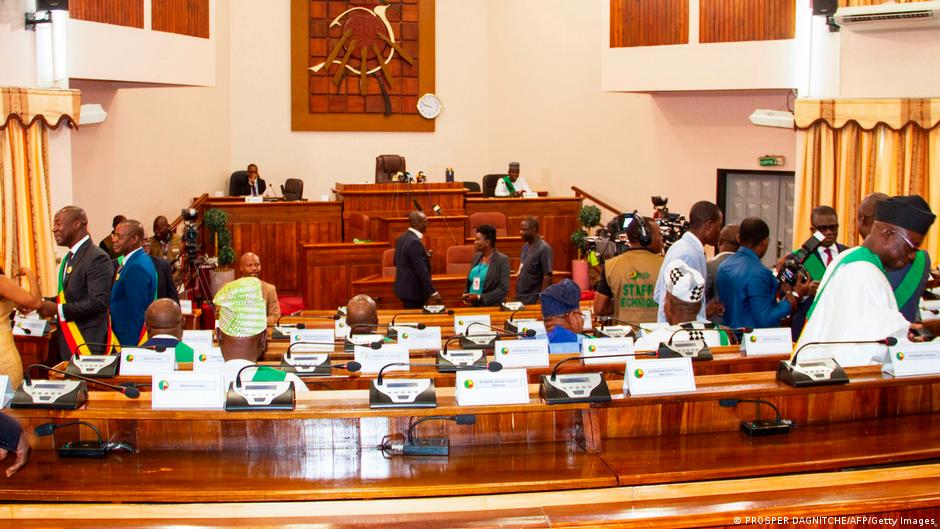
Twenty-five senators, including former presidents, officially inaugurated the Senate on Thursday in Porto-Novo, Benin’s constitutional capital. This second legislative chamber will serve as a consultative body aimed at reinforcing social cohesion and political stability.
Established through the November 2025 constitutional reform, the Senate will temporarily operate from the National Assembly building until its permanent facilities are completed. Prior to its formal launch, the senators convened behind closed doors in Cotonou under the leadership of Robert Dossou, former president of the Constitutional Court, to organize their legislative agenda.
The Senate’s primary mission is to act as a stabilizing force in Benin’s political landscape. Comprising both ex-officio members and appointed figures, it brings together seasoned leaders whose collective experience is expected to guide the nation through potential crises.
Building a chamber of wisdom
Governance expert Joël Atayi-Guèdègbé emphasized the high expectations placed on the Senate: “Frankly, we anticipate remarkable wisdom from this upper chamber. With such a distinguished assembly, the margin for error is nonexistent. Its role must transcend past political divisions and serve as a true council of elders.”
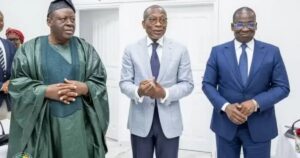
The Senate includes former presidents Patrice Talon, Boni Yayi, and Nicéphore Soglo—leaders who have not always agreed on policy approaches. Observers view this diversity as an asset, positioning the Senate as a neutral arbiter capable of diffusing tensions.
Political analyst Eugène Allossoukpo noted: “We see the Senate as a pathway to peace, especially considering our nation’s history of political strife. This new institution will foster a more regulated and calm political ecosystem while still allowing dissenting voices to be heard.”
Financial implications and public scrutiny
The Senate’s establishment has sparked debate over its economic impact. The government has allocated 100 million CFA francs solely for the inauguration ceremony. Critics question whether the benefits will justify the costs.
Atayi-Guèdègbé commented: “While the Senate is a smaller body, it will still incur additional expenses. Ideally, the four scheduled annual sessions will suffice, avoiding excessive extraordinary meetings. Despite the high compensation for these high-ranking officials, we trust they will exercise fiscal responsibility. Democracy, unfortunately, comes with a price.”
Now, all eyes turn to the Senate presidency. Will former president Patrice Talon assume the role? The 25 inaugural senators face a critical test: demonstrating that this democratic investment will enhance national stability.