The diplomatic rupture between Burkina Faso and France is already yielding tangible repercussions, not merely at the interstate level but most notably in the daily lives of many Burkinabè citizens.
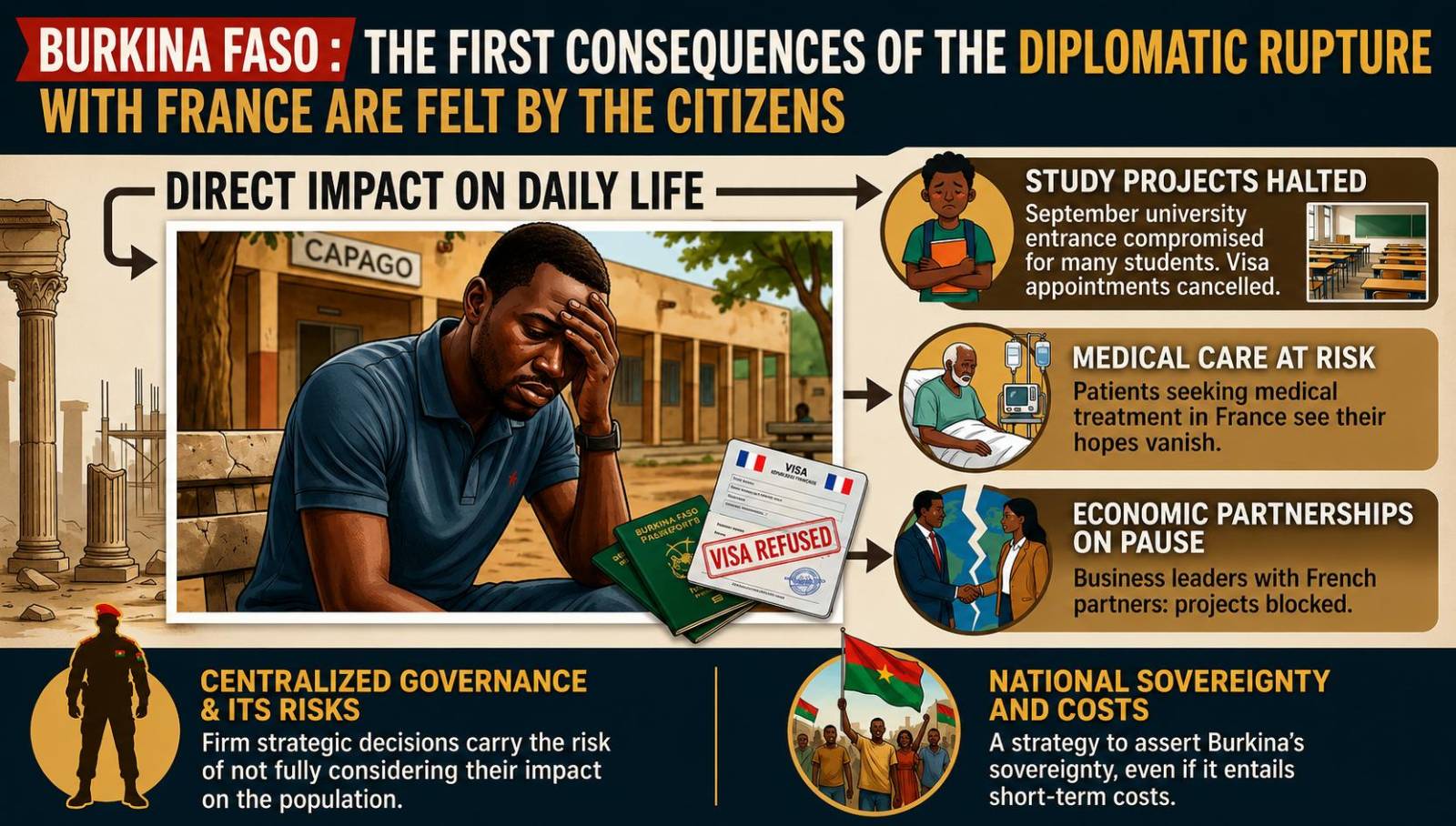
In recent days, nearly 200 visa applicants whose files were under review have been summoned to CAPAGO offices to retrieve their passports along with a visa refusal notification. This development has caught many off guard, as they continued to hope for a positive outcome.
Among those affected are patients requiring medical treatment in France, business leaders involved in economic partnerships, students preparing for the September academic term, and other travellers whose plans are now disrupted. Simultaneously, appointments for submitting student visa applications have also been cancelled, leaving numerous families in a state of uncertainty.
Beyond the diplomatic crisis, this situation underscores a stark reality: decisions made at the highest levels of state can have immediate consequences for the population. Citizens who have no direct role in diplomatic choices find themselves confronting the fallout of such policies.
For some observers, this episode illustrates a governance style that is highly centralised around Captain Ibrahim Traoré. Critics argue that he makes strategic decisions with considerable resolve, possibly without fully gauging their impact on a segment of the populace. They contend that this manner of running state affairs sometimes gives the impression that the country is administered as a personal domain, where political priorities overshadow the everyday hardships faced by citizens.
Conversely, his supporters maintain that these choices are part of a strategy to assert Burkina Faso’s sovereignty, even if it entails short-term costs.
Regardless of the political interpretations of this diplomatic break, one fact remains: hundreds of Burkinabè now see their academic, medical, business, or travel plans abruptly halted. Behind diplomatic decisions lie lives, families, and aspirations whose future is now uncertain.