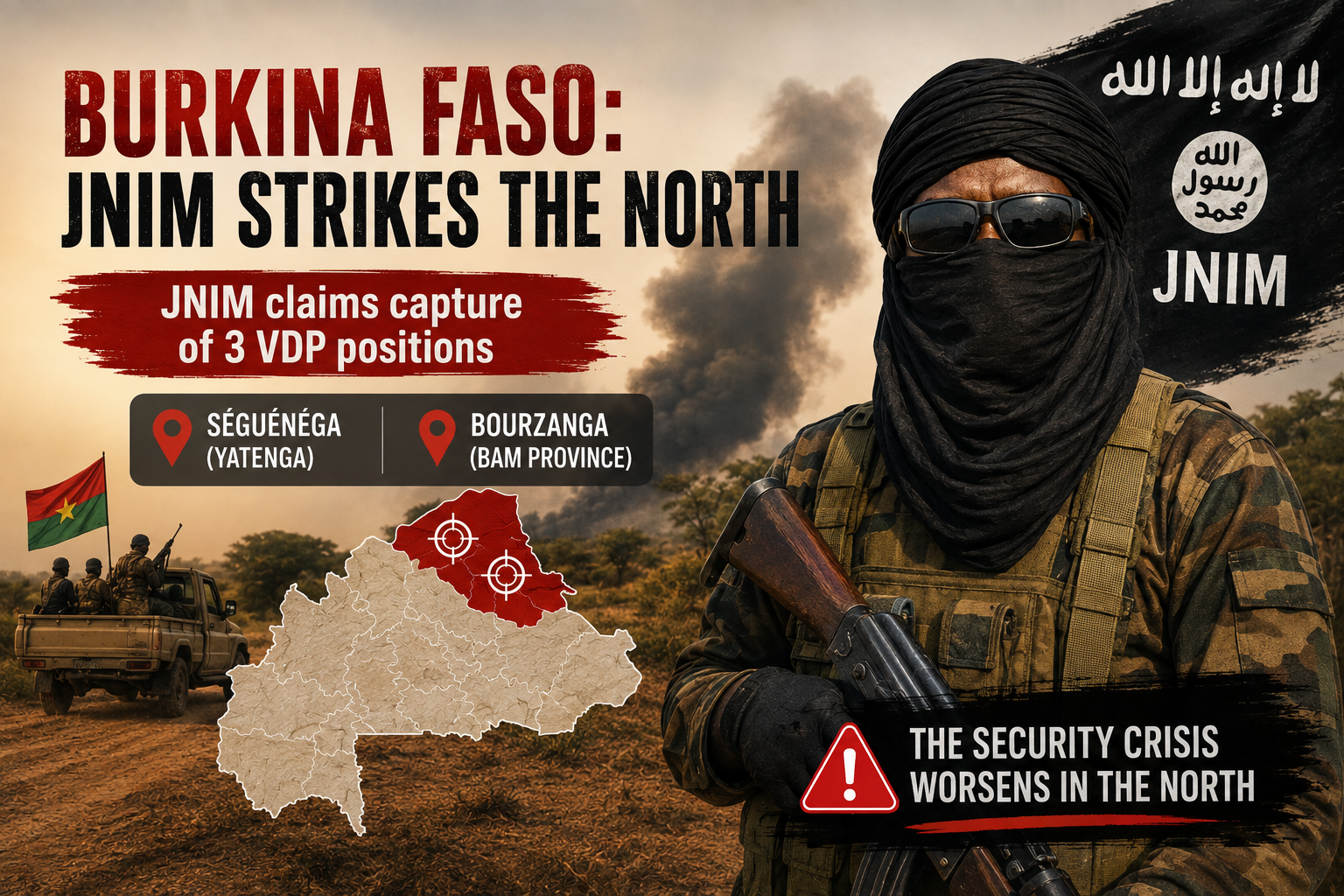
The escalating security threats gripping Burkina Faso have intensified scrutiny over the government’s communication methods. On August 19, the designated terrorist entity, JNIM, asserted responsibility for capturing three strategically vital positions previously held by the Volontaires pour la défense de la patrie (VDP) in the northern sector. These coordinated strikes targeted Séguénéga, located in Yatenga, and Bourzanga, in Bam, further expanding the operational reach of armed factions in the region.
This most recent attack underscores persistent concerns regarding the government’s ability to maintain control over recovered zones. The surge in violence, relentless coercion against civilian populations, and persistent vulnerabilities in critical areas highlight that military counteroffensives alone are inadequate. Comprehensive measures including sustained state engagement, enhanced intelligence infrastructure, reliable logistical frameworks, and decisive civilian protection are indispensable to reversing this downward trajectory.
The crisis is compounded by the VDP’s pivotal yet exposed role within Burkina Faso’s security architecture. Frequently deployed at the forefront, these forces confront adversaries noted for their tactical agility and destructive capacity. Each territorial loss for the VDP not only signifies a military setback but also risks eroding community confidence, exacerbating displacement, and impeding humanitarian interventions.
Analyzing leadership amid adversity
Against this backdrop, Captain Ibrahim Traoré’s leadership style has come under increasing scrutiny. Rather than addressing systemic vulnerabilities or proposing coherent solutions, the transitional authority has resorted to inconsistent public declarations. Characterized by rhetorical ambiguity and populist undertones, these communications appear more as diversionary tactics than as elements of a structured response. Such an approach risks deepening public frustration amid the unrelenting erosion of daily security.
In times of crisis, rhetoric cannot substitute for demonstrated progress. Although appeals to national sovereignty, resilience, or shifting alliances may resonate with select audiences, they fail to safeguard communities, secure critical transit corridors, or shield military and auxiliary installations. For Burkinabè citizens, tangible improvements not political narratives constitute the true benchmark of success.
Security outcomes versus official narratives
The crux of the matter transcends governmental discourse: it centers on the lived experiences of Burkinabè populations. When settlements remain vulnerable, residents are displaced, or defensive installations fall despite allocated resources, the issue extends beyond communication it reflects the effectiveness of the broader security framework and the state’s capacity to honor its obligations.
Adding to the complexity is the narrowing space for independent inquiry. Once a bastion of vibrant journalism, Burkina Faso’s media landscape now faces severe constraints. Journalists and dissenting voices attempting to report realities are systematically suppressed through detention, forced relocation to indoctrination sites, or conscription under nationalistic pretexts. The penalization of those seeking to expose truth only exacerbates the disconnect between official accounts and ground-level realities.
In wartime conditions, objective journalism is indispensable for evaluating progress, identifying weaknesses, and highlighting civilian hardships. Suppression does not eliminate problems; it fosters a dangerous disconnect between perception and reality. The authorities may project an image of crisis control, yet such illusions cannot obscure the persistent toll of attacks, displacement, and loss of life.
Transparency as a strategic imperative
The contradiction is glaring: as security demands greater clarity, accountability, and open dialogue, freedom of expression continues to contract. A robust strategy necessitates acknowledgment of setbacks, analysis of root causes, and rapid corrective action. While suppressing dissent may yield short-term political dividends, it ultimately deprives leadership of critical insights essential for strategy refinement.
By restricting access to unbiased information, the government perpetuates a dangerous detachment from reality one that does little to address the entrenched security crisis. Counterterrorism demands resolute action and collective determination, but it also requires honesty, responsibility, and the courage to confront hard truths.
Ultimately, the true measure of success lies not in speeches or slogans, but in the tangible safety of the population. As long as armed groups retain the initiative expanding influence, perpetrating attacks, and maintaining pressure on civilian areas the authorities remain accountable for the real-world consequences of their policies. Communication may shape narratives, but it cannot, in isolation, defeat terrorism.