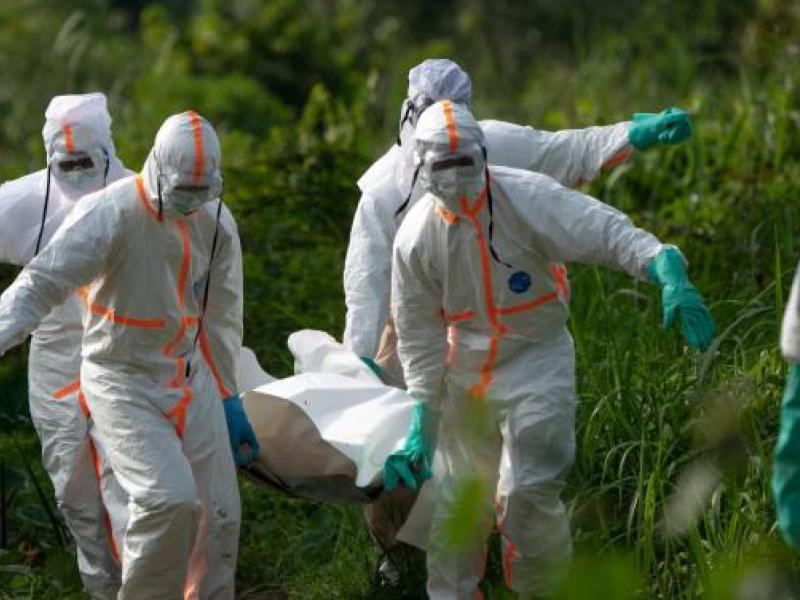
Ebola outbreak in DR Congo escalates with alarming speed
- Health
The World Health Organization’s Director-General, Dr. Tedros Adhanom Ghebreyesus, has issued a stark warning about the unprecedented spread of Ebola in the Democratic Republic of Congo (DRC), two months after the outbreak was declared. The situation has deteriorated so rapidly that this epidemic now ranks as the third-largest Ebola outbreak ever recorded globally.
Speaking from Geneva, Dr. Tedros revealed that the outbreak has already claimed 796 lives out of 2,073 confirmed cases. Notably, 80% of new infections are occurring outside known contact tracing lists, indicating undetected transmission chains. The situation is particularly dire in Ituri Province, where community transmission persists despite containment efforts.
Critical challenges hampering response
The WHO Director-General highlighted several alarming developments:
- Security threats: A treatment center in Bunia, Ituri’s capital, was violently attacked, severely disrupting response operations.
- Logistical constraints: Only one laboratory was initially available; now expanded to 16, but still insufficient for the scale of the outbreak.
- Community resistance: Approximately two-thirds of deaths occur in communities that avoid healthcare facilities entirely.
- Resource limitations: Despite progress, treatment capacity (800+ beds) and contact tracing (80% coverage) remain inadequate.
Scientific breakthroughs amidst crisis
Amidst the devastation, encouraging medical advancements offer hope:
- Two experimental treatments (monoclonal antibody MBP134 and antiviral remdesivir) are being tested in clinical trials.
- Oxford University has initiated the first safety trial of the ChAdOx1 vaccine.
- DRC’s biomedical research institute launched a post-exposure prophylaxis trial using obeldesivir.
- Despite no approved vaccines or treatments, 377 patients have recovered through early diagnosis and supportive care.
Regional implications and urgent calls for action
While neighboring Uganda nears the end of its Ebola outbreak (with its last patient discharged today), the DRC’s crisis continues to escalate. Dr. Tedros emphasized the urgent need for:
- Enhanced surveillance in Ituri Province to identify hidden transmission chains
- Safe and dignified burial practices to prevent community spread
- Improved clinical management protocols
- Political intervention to facilitate access to conflict-affected areas
The outbreak, caused by the rare Bundibugyo strain, was declared a Public Health Emergency of International Concern (PHEIC) on May 17. The WHO warns that the actual scale of the epidemic may be underestimated due to population mobility, fragile health systems, and ongoing conflicts in affected regions.
DRC authorities, while acknowledging the challenges, point to the country’s extensive experience in managing previous Ebola outbreaks (16 successfully contained since 1976) and ongoing collaboration with international partners. However, the current trajectory demands immediate, coordinated action to prevent this crisis from becoming one of the deadliest in history.
Related posts

Benin’s AIIB funding pipeline sparks debate on future economic impact
Benin’s AIIB funding pipeline sparks debate on future economic impact The announcement of a $730 million...
Cameroon’s anglophone regions under lockdown: a decade of unrest and the fallout on october 1st
Cameroon’s anglophone regions under lockdown: a decade of unrest and the fallout on october 1st The...
Benin’s €500 million bond: what the landmark deal means for the region’s future
Cotonou — The fallout from Benin’s latest foray into international capital markets is still being digested,...