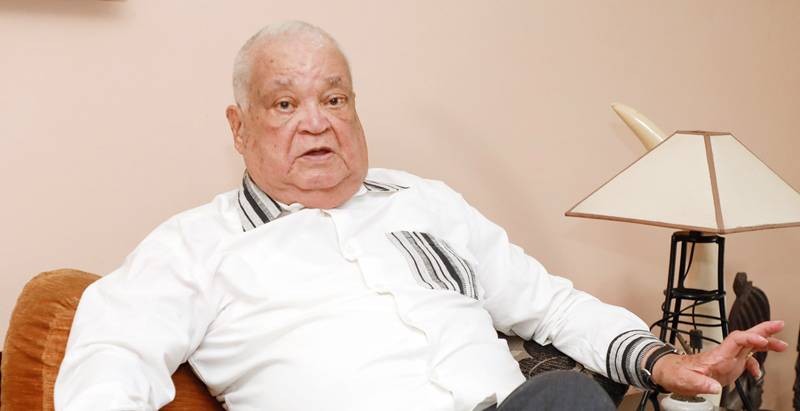
As Côte d’Ivoire’s first Minister of Communication (1989–1993) and former Director-General of Fraternité Matin, Auguste Miremont has witnessed decades of the country’s political life from a front-row seat. Now 85, this seasoned statesman and media figure shares his insights following the publication of a new book chronicling his journey.
a book born of duty, not ego
Miremont initially resisted the idea of writing his memoirs. The author, Michel Koffi, spent months convincing him that this was not an act of self-aggrandizement, but a transmission of experience meant to guide future generations. The book’s title, « Auguste Miremont, d’Houphouët à Ouattara, en toute liberté… », reflects its purpose: an unfiltered account of a life dedicated to public service.
« Everyone kept telling me that after witnessing so many pivotal moments in our nation’s history, I had a duty to leave a record, » Miremont explains. From his village to the corridors of power, the call to document his journey resonated deeply. Even local authorities encouraged him to share his recollections during a recent official ceremony.
trust and collaboration paved the way
The thirty hours of conversations between Miremont and Koffi stretched over eighteen months, but the former minister insists the process was anything but tedious. « It was pleasant, almost therapeutic, » he recalls with a chuckle. « Michel would come back with transcriptions, and as a journalist at heart, I couldn’t resist refining the wording. Eventually, he stopped showing me drafts entirely, or we’d never have finished! »
ivory coast’s political odyssey: from stability to turbulence
Miremont reflects on the modern political trajectory of Côte d’Ivoire, from the era of President Félix Houphouët-Boigny to the present leadership of Alassane Ouattara. « The path has never been smooth, » he notes. While Houphouët-Boigny’s tenure brought remarkable stability, it was not without crises—mutinies, social unrest, and economic challenges tested the nation. Yet, his political acumen allowed him to navigate these storms with finesse: listening, delaying decisive action, and acting at the right moment.
« After him, the transition to Presidents Bédié and Ouattara introduced far greater complexity, » Miremont says. « The succession process, though legally clear, sparked tensions that plunged the country into instability. The 1999 coup against President Bédié was a particularly painful turning point. As the leader of a dominant parliamentary group, I watched helplessly as the nation unraveled. »
the collapse of a model
For Miremont, the darkest chapter came during the post-coup violence and the subsequent crises under Presidents Guéï and Gbagbo. « It was heartbreaking to witness the erosion of Côte d’Ivoire’s image—a country once respected as a beacon of stability and solidarity in West Africa, » he reflects. « We welcomed those fleeing conflicts elsewhere; suddenly, we became a cautionary tale in international media. For someone who helped build this nation, that pain is indescribable. »
Houphouët-Boigny’s leadership, Miremont emphasizes, was the glue that held the country together. « His political magic lay in his ability to balance strength with magnanimity. He inspired loyalty, but never hesitation in correcting course when necessary. »
ouattara’s leadership: lessons from houphouët-boigny
When asked which leader best embodied Houphouët-Boigny’s philosophy, Miremont points to Alassane Ouattara. « He has absorbed the most from Houphouët: patience, attentiveness, and the ability to act decisively. The only difference I see is that as President, he’s become more lenient with his team than he was as Prime Minister. »
Miremont recalls Ouattara’s uncompromising standards as Prime Minister: « One misstep, and you were out by morning. He tolerated no deviation from the plan. That firmness was essential to the economic recovery. Today, he balances that rigor with a more measured approach—perhaps a reflection of experience and maturity. »
loyalty and admiration for a steadfast leader
Miremont’s relationship with Ouattara has always been defined by trust and loyalty. « I admire his tenacity, » he says. « He’s faced challenges that would break lesser men, yet he’s remained unyielding in his mission to rebuild Côte d’Ivoire. » He also highlights Ouattara’s hallmark courtesy: « His team would call back within the hour if he missed a call, ensuring no one felt overlooked. That’s the mark of true leadership. »
Even as Ouattara nears the end of his political career, Miremont sees no signs of retreat. « He’s just beginning a new term. Let’s give him the time to complete his work. His vision—a united, prosperous, and dignified Côte d’Ivoire—is evident in every road, hospital, and university built across the country. »
progress and pitfalls: a balanced perspective
While Miremont acknowledges the economic strides under Ouattara’s leadership—such as mastering international financial norms and launching social programs like the « Ecole de la deuxième chance »—he doesn’t shy away from criticism. « Yes, the economy has improved, but life remains expensive for ordinary Ivorians. Poverty hasn’t vanished. »
Yet, he commends the government’s efforts to address these disparities. « Programs like the social safety nets and vocational training initiatives are making a difference. In my own community, 25 apprenticeships have been funded for young people. That’s leadership with heart. »