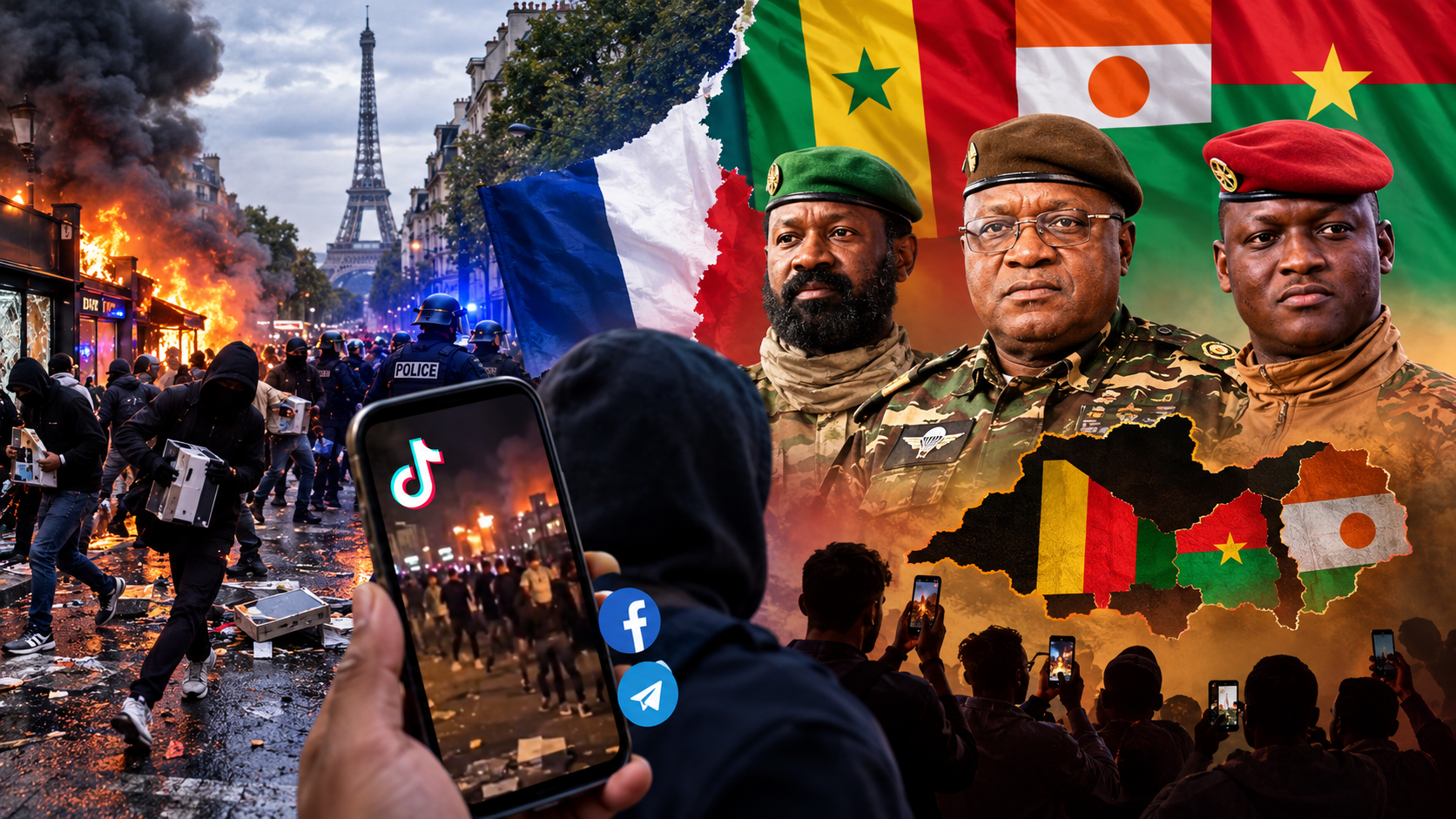
The recent unrest in French cities has not only ignited domestic reactions but also intensified political discourse across the Sahel region, particularly in Mali, Burkina Faso, and Niger. Where diplomatic ties with Paris have deteriorated under military leadership, social media platforms such as TikTok, Facebook, and Telegram have become arenas for recalibrating narratives with footage of looting, vandalism, and clashes now weaponized against France.
From urban chaos to geopolitical ammunition
Proponents of the Alliance of Sahel States (AES) have seized on these images to challenge France’s legitimacy on global stages, framing domestic turbulence as evidence of systemic decay. The argument hinges on a pointed question: if French institutions struggle to maintain order at home, how can they credibly advocate for democracy and rule of law abroad? By juxtaposing Paris’s own challenges with the governance records of Sahelian juntas, propagandists aim to erode France’s moral authority and reframe its historical influence as a source of national grievance.
Beyond the headlines: accountability in the crosshairs
Yet the story extends beyond ideological posturing. Investigators are meticulously piecing together evidence to determine whether foreign nationals including individuals from AES member states played direct roles in criminal acts. Preliminary findings suggest that some suspects may have violated residency regulations, raising dual concerns: legal accountability under French law and potential administrative consequences for overstaying visas or entering without authorization.
Crucially, France’s judicial system operates on a principle of individual responsibility. No statute whether domestic or European permits collective punishment based on nationality. If guilt is established, suspects face prosecution regardless of their country of origin. This principle remains non-negotiable, even as political narratives attempt to conflate isolated incidents with broader national crises.
Misinformation and the weaponization of viral content
Social media amplifies the noise, but discerning fact from fabrication demands scrutiny. Seemingly damning videos may be taken out of context old footage mislabeled as current, isolated crimes magnified into nationwide failures. While coordinated disinformation campaigns often thrive in polarized digital ecosystems, their reach should not obscure the task at hand: verifying each claim and prosecuting only those with verifiable involvement in wrongdoing.
Distinguishing between organic public outrage and orchestrated propaganda is essential. The former reflects genuine citizen frustration; the latter seeks to instrumentalize that sentiment for geopolitical ends. Without rigorous fact-checking, the line between genuine debate and manufactured division blurs dangerously.
The dangerous slip from justice to collective blame
There is a moral and legal imperative to avoid conflating individual actions with national identity. The overwhelming majority of Malians, Burkinabè, and Nigeriens residing in France live peacefully and contribute constructively to society. Their lives and livelihoods must not be collateral damage in a war of narratives. When suspicion arises, it must be grounded in evidence, not assumption.
Similarly, political leaders and media voices on both sides must resist the temptation to cherry-pick imagery that serves a predetermined storyline. Selective outrage condemning Sahelian governments for human rights concerns while ignoring criminal acts by their citizens abroad undermines the very credibility they seek to assert. Justice cannot be applied through a prism of convenience.
France’s institutions remain the final arbiters
Amid the clamor of competing claims, one truth endures: France’s judicial apparatus is independent, transparent, and bound by the rule of law. As investigations progress, the nation will judge the merits of each case on its own facts not on viral clips or propaganda talking points. The outcomes of these legal proceedings will speak louder than any tweet or algorithmically amplified message.
The Sahel’s military regimes may frame the riots as proof of Western decline, but the French Republic’s response will be measured in courtrooms, not comment threads. Justice, not retaliation, must define the path forward.
By Ousmane Tandja — Journalist