North Korea’s political landscape is shrouded in mystery once again as unverified reports claim Supreme Leader Kim Jong-un has fallen into a coma following a severe cerebral hemorrhage. The alleged medical emergency has sparked a global debate, with questions mounting over the future of the regime and the reliability of the claims circulating online.
From social media whispers to international headlines
The latest health crisis surrounding Kim Jong-un stems from a wave of speculation that emerged on digital platforms. Reports, initially shared by an anonymous dissident based in the United States, suggested the North Korean leader suffered a debilitating stroke before being rushed to Peking Union Medical College in Beijing for emergency treatment. However, no official confirmation has been issued by Pyongyang or Chinese authorities, leaving the situation in a state of limbo.
Eyewitness accounts, allegedly from insiders close to the regime, described a rapid deterioration in Kim’s condition, with some claiming he was unresponsive and placed on life support. Yet, without verifiable evidence, these assertions remain in the realm of rumor, exacerbated by the regime’s long-standing tradition of secrecy around its leadership’s affairs.
The speed at which these unverified claims spread underscores a troubling pattern: when it comes to Kim Jong-un, misinformation can take on a life of its own, amplified by the global media’s appetite for news on one of the world’s most reclusive leaders.
Pyongyang’s calculated silence fuels more questions
In North Korea, transparency is a luxury the regime cannot afford—and neither can the outside world. The absence of any official statement regarding Kim’s health has only deepened the uncertainty, fueling a cycle of speculation that has persisted for years. Every time the leader vanishes from public view, analysts and diplomats scramble to fill the void with theories, often based on little more than fragmented intelligence or geopolitical hunches.
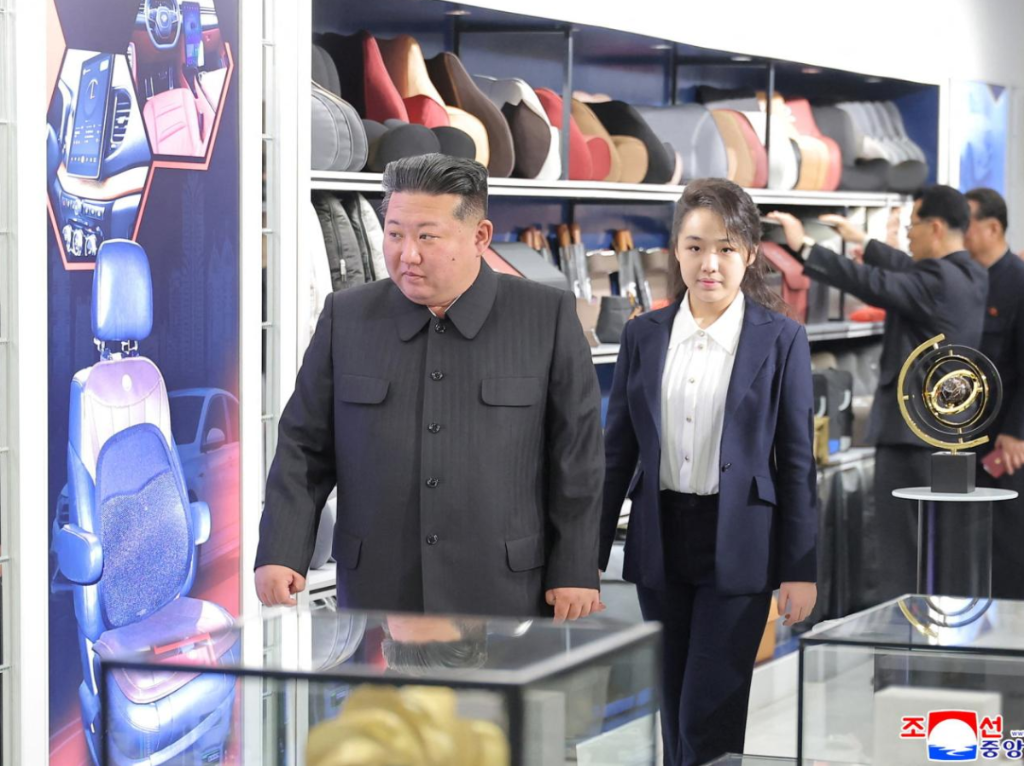
Yet this opacity is not without purpose. By controlling the narrative, Pyongyang maintains an iron grip on power, ensuring that even minor deviations from routine—such as a delayed public appearance—can escalate into full-blown crises. The latest controversy is no exception: despite claims of a medical evacuation to China, state media provided a counter-narrative just days later, releasing photographs allegedly showing Kim attending an event in Pyongyang, accompanied by his daughter, Ju-ae.
While these images offer a glimpse into his recent activities, they do little to dispel doubts. The provenance of the photos, their exact timing, and Kim’s visible condition remain subjects of intense scrutiny. For now, the only certainty is that the regime’s tight-lipped approach continues to sow confusion, both domestically and abroad.
The weight of history and the shadow of succession
The current health scare is not the first to raise eyebrows about Kim Jong-un’s longevity as leader. Since assuming power in 2011, his physical appearance, weight fluctuations, and lifestyle have been dissected by international observers and intelligence agencies alike. South Korea’s intelligence community has previously flagged concerns over his cardiovascular health, though no direct link to the latest rumors has been established.
Adding to the intrigue is North Korea’s hereditary leadership model, which has already seen two transitions in the Kim dynasty. The sudden death of Kim Jong-il in 2011 left a power vacuum that was swiftly filled by his son, but another abrupt leadership change could trigger chaos in a system built on absolute loyalty and secrecy. Speculation about a potential successor has intensified, with Kim Yo-jong, his influential sister, often mentioned as a leading contender. Meanwhile, his daughter’s growing presence at official events has ignited fresh debates about a possible dynastic handover.
What happens next? The stakes for North Korea and the world
Should the rumors of Kim Jong-un’s incapacitation prove true, the implications would be seismic. North Korea’s nuclear arsenal, already a flashpoint for global tensions, could become a bargaining chip—or a source of instability—if power struggles erupt within the regime. Neighboring powers, including China, South Korea, Japan, and the United States, are watching closely, their strategic calculations hinging on the regime’s next moves.
A leadership transition in Pyongyang would not only reshape the country’s internal dynamics but also test the resilience of the six-party talks and broader non-proliferation efforts. The uncertainty surrounding Kim’s health has already prompted diplomats to revisit contingency plans, though any overt actions remain constrained by the lack of concrete information.
For now, the international community remains in a holding pattern, awaiting credible updates from North Korea or its allies. Until then, the narrative is driven by secondhand accounts, digital chatter, and the perennial question: is this another false alarm, or are we witnessing the beginning of a new chapter in one of the world’s most unpredictable regimes?
Key takeaways to watch
- Unverified claims: Reports of Kim Jong-un’s coma and transfer to China lack official confirmation, highlighting the challenges of verifying information about North Korea.
- Regime control: Pyongyang’s tight control over state media means any health crisis could be met with delayed or misleading updates to maintain stability.
- Succession speculation: With no clear successor named, Kim Yo-jong and Ju-ae are emerging as potential leaders, raising questions about the future of the Kim dynasty.
- Global implications: A change in leadership in Pyongyang would send shockwaves through East Asia, particularly regarding nuclear disarmament and regional security.