Senegal’s debt strategy under scrutiny: insights into the alternatives pursued
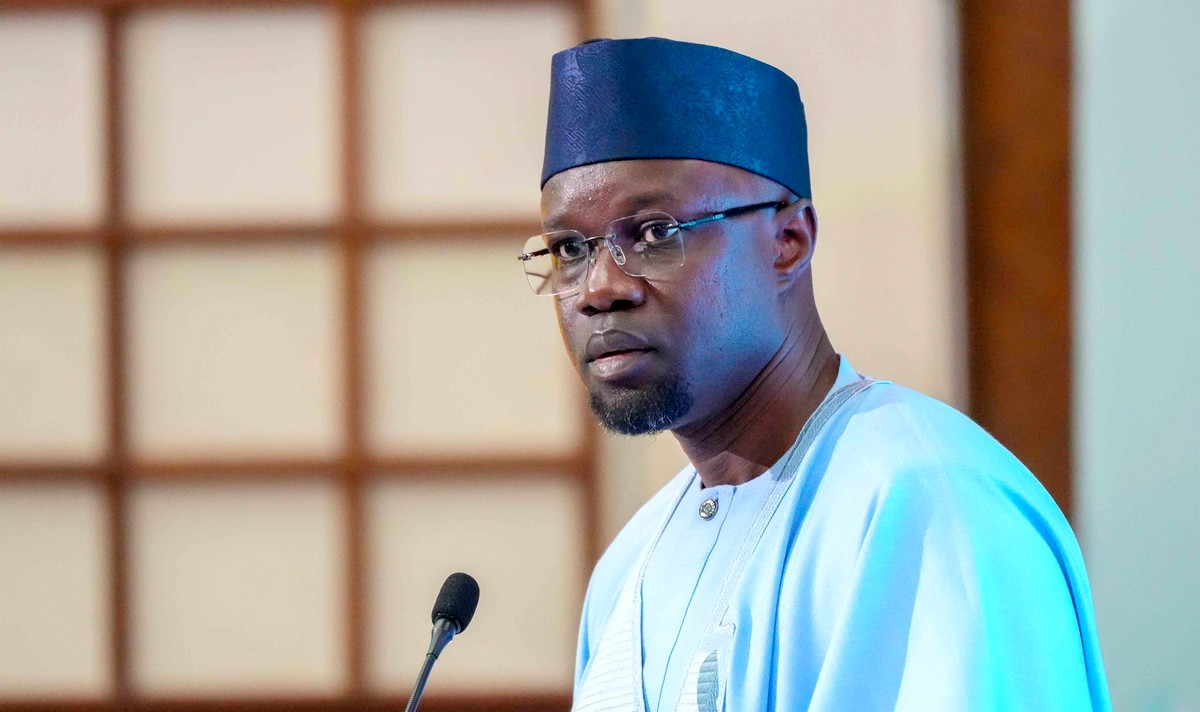
In a rare public address, former Senegalese Prime Minister Ousmane Sonko recently dismantled persistent claims that his administration had mishandled the country’s public debt during his tenure. Speaking to the press on 19 October 2026, Sonko clarified his government’s firm stance: no debt restructuring was ever considered, nor was it pursued behind closed doors. His defense revealed a deliberate policy choice to prioritize alternative funding streams over traditional restructuring measures, a decision he now positions as a strategic pivot in Senegal’s fiscal governance.
No restructuring consensus existed, Sonko asserts
Sonko’s remarks came in response to mounting criticism over perceived inaction in addressing public debt pressures. He emphasized that his economic team—including former Finance Minister Abdourahmane Sarr and current Finance Minister Cheikh Diba—had never entertained the idea of restructuring. “There was no backing for such a move, not once,” he stated, underscoring the unanimity among key financial leaders.
The former prime minister further claimed that President Bassirou Diomaye Faye was ultimately convinced of this position after multiple high-level discussions. “After two or three strategic meetings,” Sonko recounted, “the President aligned with the position we advocated.” According to Sonko, this consensus remained the official state stance until his departure from office.
Mobilizing resources without restructuring: The 1.8–2 trillion CFA franc plan
Critics had questioned why Sonko’s administration did not pursue debt restructuring as a means to ease fiscal pressure. In rebuttal, Sonko highlighted a concerted effort to secure alternative financing, anchored in the Economic and Social Recovery Plan. He cited internal meeting minutes as evidence of active deliberations focused on resource mobilization, not debt renegotiation.
Under this strategy, Sonko’s government aimed to establish a guarantee fund capable of raising between 1.8 and 2 trillion CFA francs. The objective was clear: secure financial resources without compromising the nation’s debt profile through restructuring. Key partners identified included the African Development Bank (AfDB), the West African Development Bank (BOAD), the Islamic Development Bank (IsDB), and JPMorgan. The fund was envisioned as a buffer against immediate liquidity challenges, blending grants, low-interest loans, and co-financing mechanisms.
UAE deal: A two-billion-dollar lifeline?
Among the most contentious claims was Sonko’s assertion that Senegal had negotiated a $2 billion financing package with the United Arab Emirates. He described this as a product of two official visits to Abu Dhabi, where discussions culminated in an agreement designed to support both fiscal stability and local investment.
According to Sonko, the deal included a first tranche of $1 billion, disbursed in February 2026. Of this amount, $900 million was earmarked for sovereign liquidity operations, while $100 million was designated for a business center project in Dakar’s former Mermoz military base—reportedly reclaimed from French military presence. Sonko cited correspondence with UAE officials and the Finance Ministry as supporting documentation.
While the financial flows await independent verification, this agreement symbolized Sonko’s broader argument: that Senegal could secure critical financing outside the constraints of global debt restructuring frameworks.
Avoiding G20 common framework: A strategic rejection
Sonko did not mince words when refuting the necessity of the G20 Common Framework for debt treatment. He framed Senegal’s avoidance of this pathway as a refusal to serve as a “Guinea pig” for untested global debt mechanisms.
“Our priority was to find solutions rooted in dignity and financial sovereignty,” he said. He also invoked remarks attributed to the International Monetary Fund (IMF) Managing Director, suggesting that Senegal possessed sufficient financial resilience to recover with targeted support—without resorting to restructuring.
Sonko’s interpretation positioned the country’s debt challenges not as a solvency crisis, but as a liquidity and financing gap, one that alternative funding could bridge.
The questions that remain
Despite Sonko’s detailed defense, gaps persist in the public record. Questions linger over the formalization of the promised funds, the actual disbursement of the UAE monies, and the long-term viability of the proposed guarantee fund. Were engagements legally binding? Were the terms of the UAE deal publicly disclosed? Most critically, would these alternative mechanisms have sufficed to stabilize Senegal’s public finances over the long term?
For now, Sonko’s narrative offers a window into the behind-the-scenes calculations that shaped Senegal’s debt strategy. It frames a vision of economic resilience built on diversification—one that challenges conventional narratives and invites broader scrutiny of what might have been.