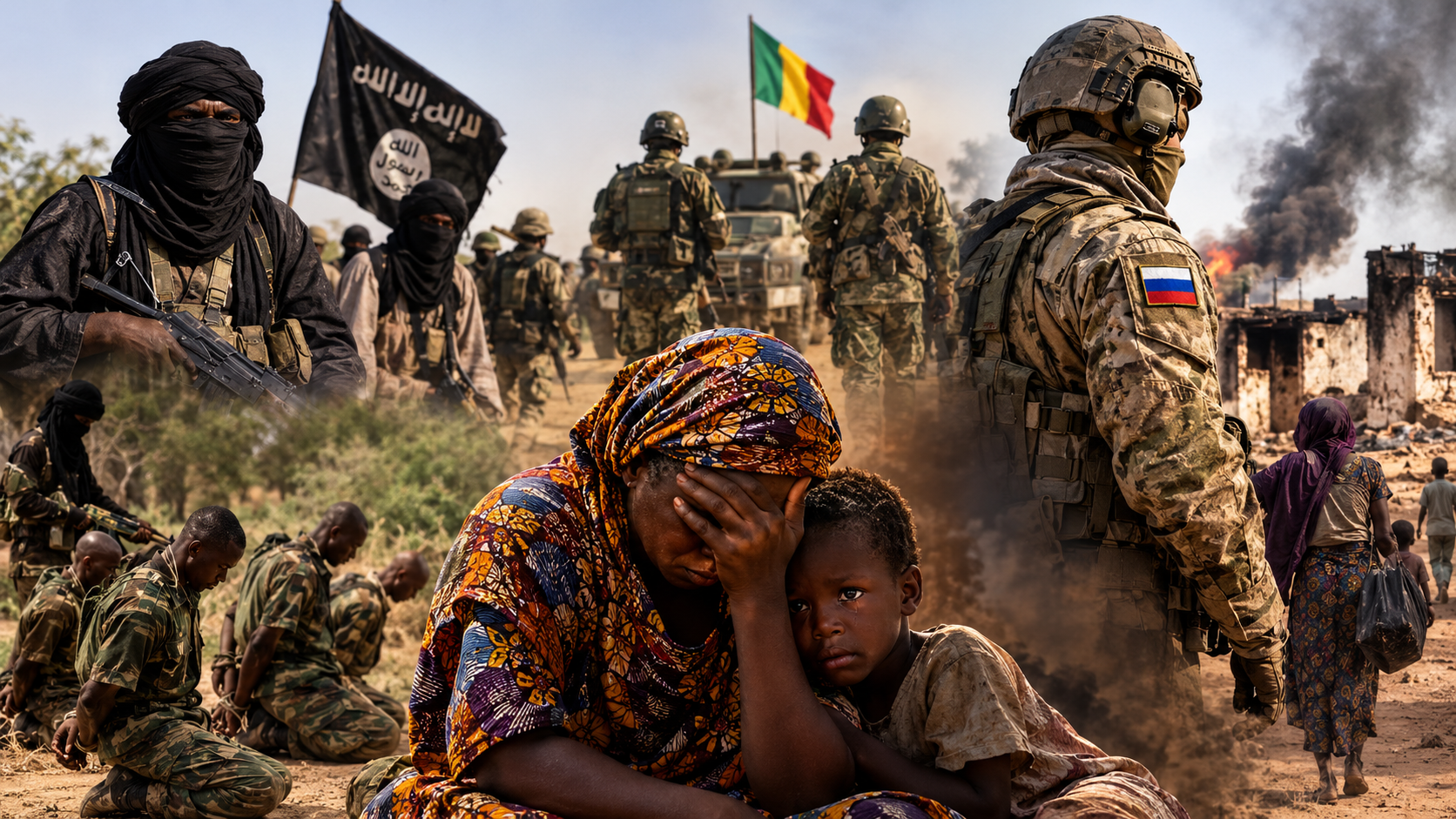
The recent surge in violence in Mali has exposed a troubling paradox: while soldiers fall victim to the brutal tactics of the Group for the Support of Islam and Muslims (JNIM), civilians are increasingly caught in the crossfire of military operations backed by foreign forces. This escalation of hostilities has intensified public scrutiny over the conduct of Mali’s military and its international partners, raising urgent questions about accountability and the protection of vulnerable communities.
Military under siege: soldiers targeted while civilians bear the brunt
The conflict in Mali has taken a devastating turn, with Mali’s armed forces facing relentless attacks from JNIM. The group’s recent executions of soldiers highlight the growing threats military personnel face on the front lines. Yet, despite these challenges, credible reports indicate that innocent civilians are also paying the price this time, at the hands of government forces operating alongside foreign units.
The irony is stark: those who are meant to safeguard Mali’s population are now being accused of perpetrating violence against them. In a region already plagued by instability, the collateral damage from joint military operations has pushed communities to the breaking point. The human cost of this crisis cannot be ignored, as families flee their homes and livelihoods are destroyed.
Foreign partnerships under scrutiny: accountability in question
The involvement of Africa Corps a foreign military contingent has become a focal point of debate. Since Mali’s military leadership forged closer ties with international partners, joint operations have raised concerns about compliance with humanitarian law. When civilians are caught in the crossfire or become unintended victims of military actions, the question of accountability looms large.
International collaborations are essential in combating terrorism, but they must not serve as a shield for unchecked conduct. The use of foreign personnel in Mali’s security operations demands rigorous oversight, especially when human rights violations are alleged. Without transparency, the legitimacy of these missions risks eroding further.
Where security strategies fall short: protecting the vulnerable
A nation’s security strategy cannot be judged solely by its battlefield successes or territorial gains. The true measure of its effectiveness lies in the safety and dignity of its people. Yet in Mali, civilians are trapped between the brutality of armed groups and the unintended consequences of military campaigns often with no clear path to justice or redress.
The mixed messaging from authorities is concerning. While officials condemn attacks on soldiers, there is often silence or deflection when it comes to civilian casualties. Such inconsistencies fuel skepticism about the government’s commitment to protecting all citizens, regardless of their background or circumstances.
What’s next for Mali’s security landscape?
The path forward demands more than military prowess; it requires a commitment to accountability and the rule of law. Investigations into alleged abuses must be thorough and impartial, ensuring that neither soldiers nor civilians are subjected to impunity. The international community, too, must play a constructive role by insisting on ethical conduct in all security operations.
Mali’s leaders face a critical choice: will they prioritize territorial control at the expense of human rights, or will they adopt a strategy that balances security with justice? Communities desperate for peace deserve better than a cycle of violence where no one is held to account.
By Ousmane Tandja — Journalist