The Togolese government’s push for political dialogue has hit a major roadblock after four opposition groups withdrew, intensifying public debate over the country’s future. The refusal, framed around a broad coalition called the Manifeste Génération Togo, underscores deep divisions over a 2024 constitutional reform and a landmark ruling by the ECOWAS Court of Justice.
Opposition unites in rejection of government-led talks
On October 15, 2026, four major opposition coalitions jointly announced their refusal to participate in the government’s initiative, describing it as a “sham dialogue.” The groups—Dynamique Monseigneur Kpodzro (DMK), Dynamique pour la majorité du peuple (DMP), Lumière pour le Développement dans la Paix (LDP), and Touche Pas À Ma Constitution—issued a statement from Lomé, rejecting the Permanent Consultation Framework (CPC) as an inadequate platform for addressing Togo’s democratic and institutional challenges.
The coalitions argue that the CPC is merely a tool for maintaining the status quo rather than facilitating meaningful change. Instead, they are demanding a political transition followed by inclusive national talks aimed at rebuilding the republic’s institutions. They have called on civil society and other political actors to reject what they see as a flawed process that sidesteps their core demands.
The 2024 constitutional reform fuels tensions
The opposition’s stance is rooted in their strong opposition to the controversial constitutional amendments passed in March 2024. These reforms transformed Togo into a parliamentary system and altered the structure of executive power, particularly the rules governing presidential elections. Critics argue that the changes were railroaded through without proper consultation, raising serious questions about their legitimacy and the transparency of the process.
The situation was further complicated by a January 29, 2026 ruling from the ECOWAS Court of Justice, which the opposition interprets as a mandate for deeper institutional reforms. They insist that the ruling requires far more than political consultations—it demands structural change, including the involvement of regional bodies like the African Union’s Peace and Security Council.
Government defends dialogue as the path forward
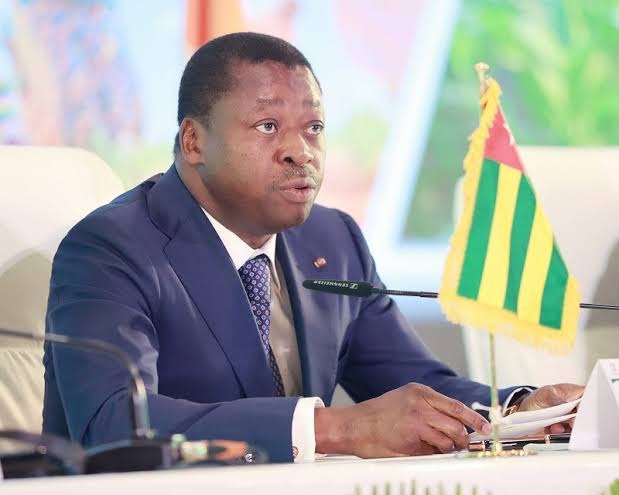
In response, government officials, including Gilbert Bawara, the Minister in charge of Relations with Parliament and Institutions, have defended the CPC as the appropriate venue for dialogue. Speaking on October 12, 2026, Bawara emphasized that the framework exists to facilitate discussions on national priorities, urging opposition parties to engage rather than withdraw.
From the government’s perspective, the crisis cannot be resolved by sidestepping existing institutions. Instead, they argue, all political actors must participate in the CPC to voice their concerns and contribute to finding solutions. This stance highlights a fundamental difference in approach: while the government sees dialogue as a way forward, the opposition insists that no meaningful progress can be made without first dismantling and rebuilding the institutional framework.
Not all opposition groups agree on strategy
While the four coalitions have taken a hardline stance, not all opposition factions share their position. Some political groups may still be open to engaging in the CPC, though under what terms remains uncertain. This divergence within the opposition camp raises concerns about the representativeness of any future negotiations and the potential for further fragmentation.
The lack of consensus on the framework for dialogue—whether to work within existing institutions or demand preconditions—threatens to derail any chance of compromise. With no shared roadmap, the risk of prolonged political deadlock looms large, leaving ordinary Togolese citizens caught in the crossfire of competing visions for the country’s future.
Civil society and public mobilisation enter the fray
The opposition’s rejection of dialogue has already taken on a more confrontational tone, with signatories announcing a “Patriotic Warning Day” scheduled for November 20, 2026. The event is intended to pressure the government and mobilise public support for their demands. However, the impact of this action—and its potential to escalate tensions—remains unclear, leaving observers to question how far either side is willing to go.
Where do Togo’s political tensions go from here?
The current standoff between the government and the opposition is no longer just about participation in talks—it reflects a fundamental clash over the very foundations of Togo’s political system. On one side, the government advocates for dialogue within existing structures, while the opposition demands sweeping institutional reforms before any negotiations can begin.
For Togo to emerge from this crisis, a middle ground must be found. This will require clarifying the implications of the ECOWAS Court’s ruling, addressing the legitimacy concerns surrounding the 2024 reforms, and ensuring that any transition process includes broad-based participation. Without these elements, the risk of prolonged instability grows, leaving the country at a critical crossroads where the outcomes could shape its democratic future for years to come.