Confronting colonial legacies without erasing complexity
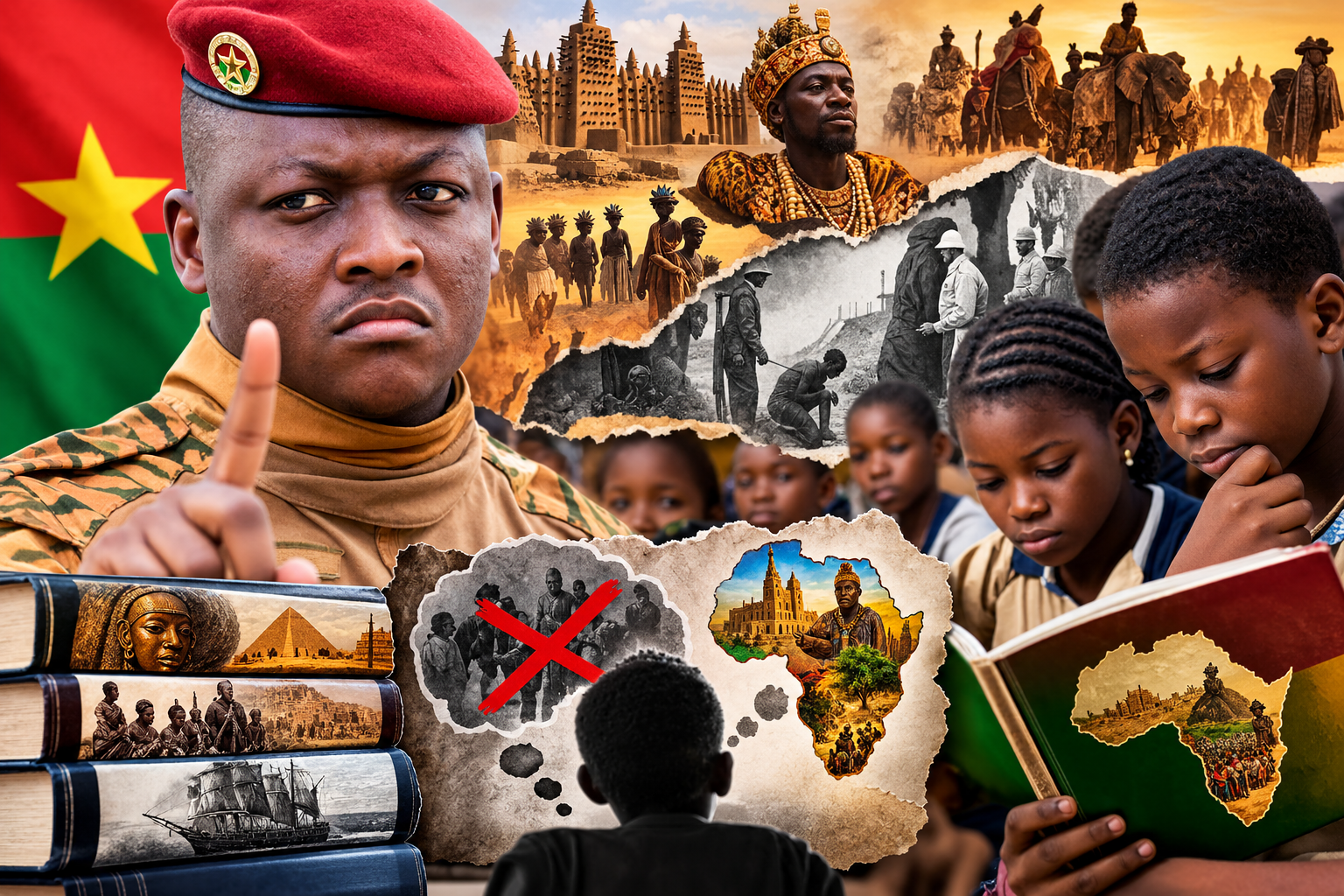
The Burkina Faso government’s push to reform history and geography curricula aimed at “decolonizing” textbooks has ignited a national debate over how the nation’s past should be taught to future generations. While the initiative addresses valid concerns about the underrepresentation of African narratives in education, it also raises critical questions: Can redefining school curricula truly correct historical injustices, or does it risk replacing one distorted lens with another?
The dangers of a one-sided historical narrative are clear. History is not a monolith shaped solely by colonialism, oppression, or conflict with the West. It encompasses empires, kingdoms, trade networks, scientific advancements, social transformations, and the interconnected fates of diverse peoples. A rigorous education system must acknowledge these complexities, ensuring that students grasp the full spectrum of their heritage not just its most painful fragments.
Reform with purpose: beyond correcting the past
Burkina Faso’s curriculum reform holds potential, but only if it avoids becoming a tool for ideological score-settling. Textbooks can and should highlight colonial injustices, celebrate long-overlooked African resistance figures, and restore pride in indigenous achievements. Yet they cannot single-handedly rewrite history or retroactively heal the wounds inflicted by colonial rule. Their true value lies in fostering a generation capable of critical thinking, not one trapped in a cycle of grievance or retaliation.
The reform’s success hinges on balance. A curriculum that fixates exclusively on colonial wrongs risks fostering a generation ill-equipped to engage with the broader world. Students must learn to situate Burkina Faso’s history within Africa’s diverse tapestry from the great empires of Mossi and Songhai to the intellectual exchanges of Timbuktu while also contextualizing its role in global events. Understanding one’s own nation does not mean ignoring the histories of others; it means recognizing how these histories intersect.
Lessons from regional neighbors: the peril of partisan narratives
Comparisons with neighboring countries underscore the importance of nuance. A balanced history curriculum does not mimic any single model whether African, European, or otherwise but adheres to a universal principle: education should illuminate, not indoctrinate. History must explain, not vilify; inform, not divide. The goal is not to replace a colonial narrative with an Afrocentric one, but to present a mosaic of facts that allows students to draw their own reasoned conclusions.
For instance, studies of colonization should include not only its horrors but also the mechanisms that enabled it the economic systems, political structures, and technological disparities that shaped power dynamics. Similarly, explorations of African civilizations must acknowledge their contradictions: their strengths, their flaws, their conflicts, and their evolution. Only then can students grasp the full story not as a series of grievances or triumphs, but as a living, evolving narrative.
A future forged in understanding, not erasure
The heart of the debate in Burkina Faso is not merely about textbooks; it is about the kind of citizens the country wishes to cultivate. Will future generations be raised on a diet of grievance, left to grapple with an identity defined solely by resistance to colonialism? Or will they be equipped with the intellectual tools to analyze history critically, debating its lessons while building a forward-looking society?
History’s wounds cannot be healed by hiding its pages from students. They can only be addressed by giving them the keys to read, interpret, and learn from every chapter good and bad alike. Only then can education serve its highest purpose: nurturing citizens who understand their roots without severing ties to the wider world. The path forward demands courage not to whitewash the past, but to confront it honestly, in all its richness and complexity.
By Ousmane Tandja — Journalist