Gabon’s pivotal role in shaping the future of Francophonie
Libreville, Monday, June 22, 2026 — The contest for leadership within the International Organisation of La Francophonie is no longer confined to Paris or Montreal. Now, its outcome is being decided in Nouakchott, Libreville, and other African capitals where governments are asserting greater influence over the future of an alliance encompassing nearly 90 member states.
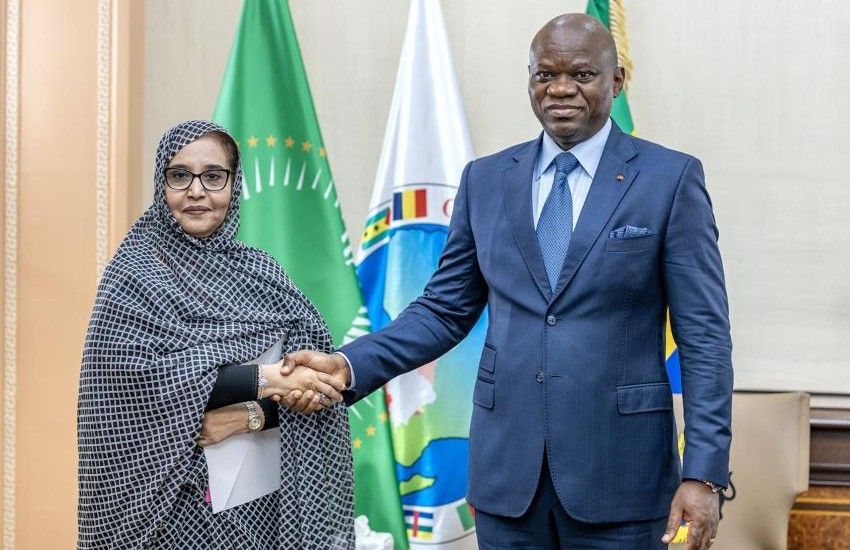
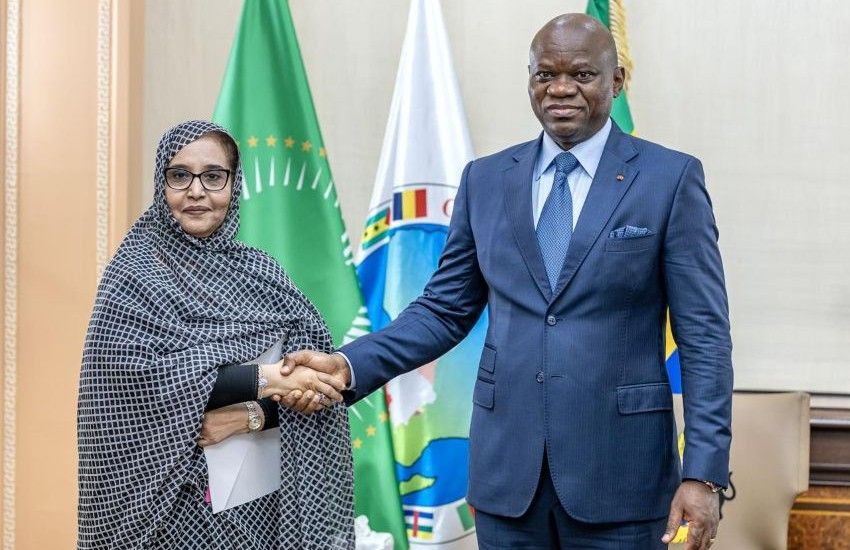
The visit to Libreville by Mauritania’s Minister of Environment and Sustainable Development, Messouda Baham Mohamed Laghdaf, bearing a personal message from President Mohamed Ould Cheikh El Ghazouani to her Gabonese counterpart Brice Clotaire Oligui Nguema, encapsulates this shifting dynamic.
While the meeting followed diplomatic protocol, it carried deeper significance. Two parallel agendas unfolded: strengthening bilateral ties between Mauritania and Gabon, and a strategic but low-profile campaign for the next Francophonie leadership.
Mauritania makes its move
During talks with Gabon’s president, the Mauritanian envoy formally presented the candidacy of Dr. Koumba Ba for the position of Secretary-General of the Organisation Internationale de la Francophonie (OIF).
This bid is anchored in three core principles: coherence, balance, and tangible utility for member states. It responds to a growing question within the Francophone world: what should be the true mission of La Francophonie in the 21st century?
Once viewed primarily as a cultural and linguistic influence tool, the organisation now faces urgent challenges: digital transformation, youth education, economic development, food security, climate action, artificial intelligence, and technological sovereignty.
For Mauritania, the goal is clear: to champion a Francophonie focused on measurable outcomes rather than symbolic gestures.
Gabon emerges as a regional diplomatic leader
Mauritania’s initiative is strategically timed. It comes at a moment when Gabon is reclaiming a stronger diplomatic profile across Africa.
Since taking office, President Brice Clotaire Oligui Nguema has pursued a foreign policy aimed at repositioning Libreville as a hub for dialogue, consensus-building, and regional cooperation. This approach has elevated Gabon’s standing as a sought-after partner in key continental matters.
In this meeting, the Gabonese leader reaffirmed his commitment to inclusive governance and consensus-based decision-making—values that align with the image Libreville seeks to project on both African and global stages.
Beyond the OIF leadership race, the encounter underscores both nations’ desire to deepen bilateral cooperation in critical areas such as environmental sustainability, renewable energy, education, and economic exchange.
Africa redefines the future of Francophonie
The significance of this diplomatic exchange extends far beyond Gabon and Mauritania.
Today, over 60% of French speakers worldwide reside in Africa—a share projected to rise to nearly 85% by 2050. This demographic shift is rewriting historical power balances and prompting African nations to demand greater representation in Francophonie’s decision-making bodies and a reorientation of its priorities.
The Mauritanian-backed candidacy reflects this continental push for a more responsive Francophonie, one aligned with the real needs of its people: economic growth, innovation, youth empowerment, and inter-state collaboration.
The meeting between President Oligui Nguema and Mauritania’s special envoy signals more than a routine diplomatic courtesy. It marks a quiet but decisive realignment of influence within the Francophone sphere.
Through this bid, Mauritania delivers a powerful message: the future of Francophonie cannot be shaped without Africa’s full participation. Meanwhile, Gabon—by hosting this initiative and pursuing a diplomacy rooted in dialogue—reinforces its ambition to shape the next chapter of continental cooperation.
In this subtle contest of influence, the central question is no longer whether Africa should play a leading role in Francophonie, but which vision of Africa will define its future direction.