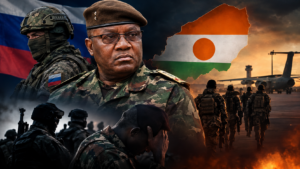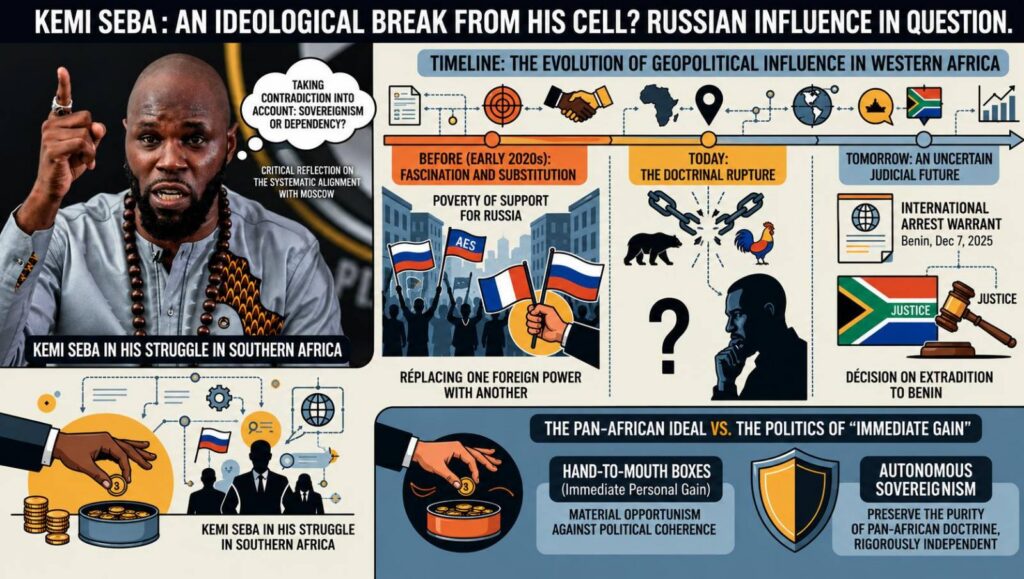
In recent years, the political landscape across several regions of the continent, particularly within the Alliance of Sahel States (AES), has been defined by highly symbolic demonstrations. During various protests centered on sovereignty, the presence of Russian flags and pro-Moscow rhetoric has become a common sight. For a vocal segment of activists, Russia is frequently portrayed as the essential alternative to historical Western influences.
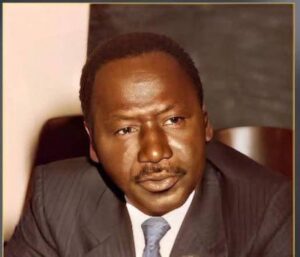
However, this growing alignment is beginning to face serious internal scrutiny, especially among movements that advocate for absolute independence. From his current place of detention in South Africa, the prominent pan-African figure Kemi Seba appears to be undergoing a significant doctrinal evolution, questioning the long-term implications of this geopolitical trend.
The paradox of substitution: sovereignty versus new dependencies
While establishing new international partnerships is a standard diplomatic objective for any political entity, the inclination to replace one foreign power with another is seen by many as a fundamental ideological contradiction. Transitioning from the historical influence of France to that of Russia does not inherently represent a move toward liberation; rather, it may simply shift the center of external dependency. This nuance is central to current discussions regarding African politics.
It appears that Kemi Seba is now confronting this inconsistency. The pan-African ideologue has adopted a critical stance on what he perceives as the dangers of systematic alignment with Moscow. He has expressed a refusal to endorse a new form of protectorate, even one framed as anti-Western, emphasizing that true autonomy requires standing alone.
Upholding pan-African ideals against opportunistic interests
This distancing highlights a growing rift within sovereignist movements. While some support for Russia is rooted in a genuine desire for geopolitical change, other motivations appear to be more transactional. This tension is a recurring theme in pan-African news today.
Kemi Seba has positioned himself firmly against such opportunism, which is often characterized as a focus on immediate material gain at the expense of long-term political integrity. By rejecting what some describe as a mercenary approach to activism, he seeks to maintain the doctrinal purity of a movement that demands rigorous self-reliance. This stance is crucial for those following the African economy today and its relationship with political stability.
A legal and political future hanging in the balance in Pretoria
This period of ideological reflection occurs during a particularly precarious moment for the activist. Following an international arrest warrant issued by the government of Bénin in connection with a coup attempt on December 7, 2025, Kemi Seba remains incarcerated in South Africa.
The activist’s future is no longer being decided solely in the realm of ideas, but within the judicial system. The South African courts are expected to rule shortly on the extradition request submitted by Cotonou. Whether this time in custody leads to a definitive rupture or a strategic rebranding of his discourse remains to be seen. The coming weeks will be pivotal for Kemi Seba and the future direction of the movements he continues to influence across West Africa news cycles.