Public debate intensifies over Mali’s security future after high-level talks
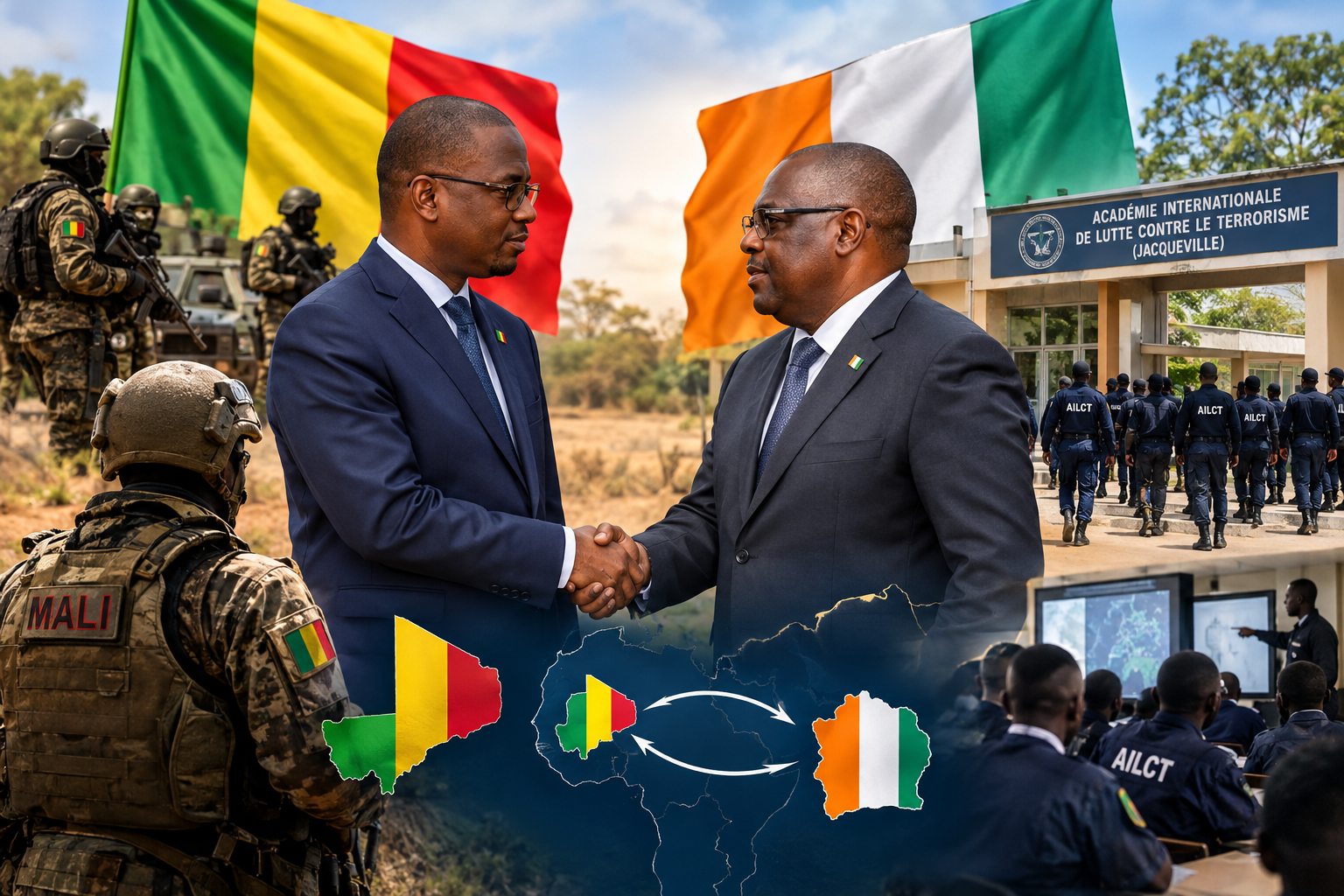
The arrival of Côte d’Ivoire’s intelligence chief in Bamako this October has triggered sharp discussions about Mali’s fight against terrorism. Vassiriki Traoré’s visit, hosted by Malian security chief Modibo Koné, comes as officials on both sides examine how shared expertise could reshape regional security strategies.
As Mali grapples with ongoing insecurity, the question isn’t just whether to collaborate but how to turn discussions into actionable solutions. With terror threats evolving across the Sahel, the timing of this visit couldn’t be more critical.
Côte d’Ivoire’s model: what Mali could adopt
The West African nation has become a reference point for counterterrorism preparedness, particularly in three key areas:
Intelligence-led operations: Côte d’Ivoire’s security apparatus has prioritized real-time threat detection and inter-agency data sharing.
Structured training pipelines: The International Counterterrorism Academy in Jacqueville serves as a hub for tactical, operational, and strategic instruction.
Cross-border coordination: Abidjan has formalized mechanisms for joint military-police-judicial responses to terror incidents.
Analysts note that Mali’s security vacuum marked by recurring attacks on civilians and military outposts mirrors challenges Côte d’Ivoire overcame through its current approach.
Measuring success: beyond diplomatic handshakes
Security experts warn that symbolic gestures won’t secure Mali’s future. The real test lies in whether Bamako can:
Integrate Ivorian intelligence best practices into its own operations
Expand Mali’s counterterrorism training capacity using Jacqueville’s academic model
Establish binding data-sharing protocols with Abidjan
By Ousmane Tandja — Journalist