From Wagner to Africa Corps: A critical turning point in Mali’s conflict
The transition from Wagner to Africa Corps in Mali was supposed to mark a fresh start for the country’s security landscape. Yet, a new report reveals a troubling continuity of alleged human rights violations, casting doubt on whether this shift has brought meaningful change. Civilian casualties, arbitrary detentions, and a pervasive climate of impunity persist, raising serious questions about accountability and the true impact of Africa Corps’ operations in Mali.
Civilians at the heart of escalating violence
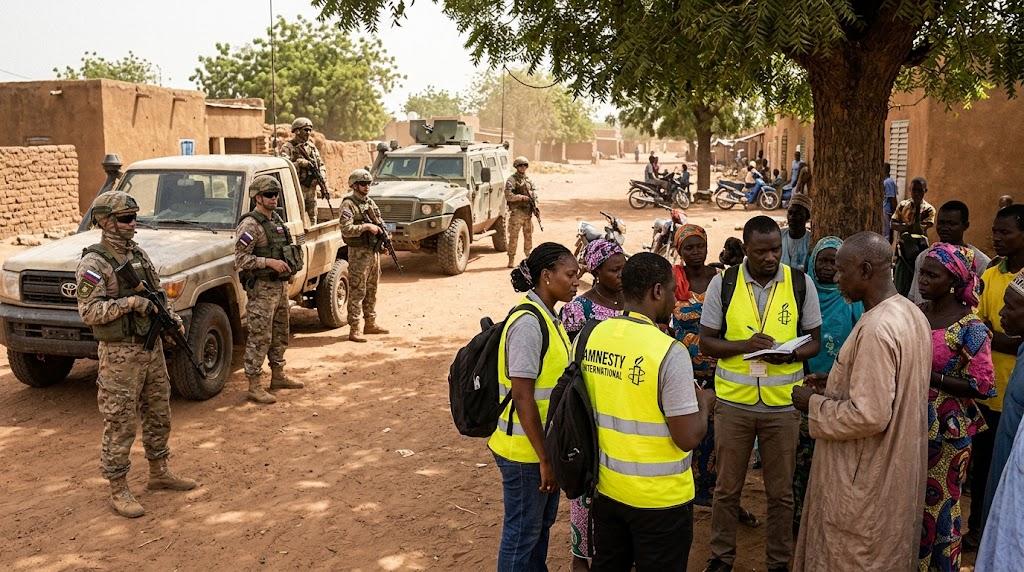
Between June 2023 and December 2025, at least 34 civilians lost their lives in seven localities along the Mali-Mauritania border during military operations involving the Malian Armed Forces (FAMa) and Wagner personnel. Survivors and witnesses describe executions reminiscent of war crimes, including shootings after arrests and during escape attempts. Some victims were allegedly slaughtered or burned alive. The report also highlights drone strikes that claimed civilian lives, such as the March 2025 attack on a market in Ejdeir, which killed 16 people, and a November strike in Tangata that resulted in seven deaths. Investigators found no evidence of armed targets at these sites, underscoring concerns about due diligence and accountability.
Patterns of abuse across key regions
The report examines operations in Ségou, Mopti, and Timbuktu, where civilians—particularly from Fulani, Arab, and Tuareg communities—have borne the brunt of violence. Accusations of collaboration with armed groups have led to targeted reprisals, including cattle theft, property destruction, and severe restrictions on movement and livelihoods. These communities, already grappling with displacement and economic instability, face an added layer of insecurity under the guise of counterterrorism efforts.
Torture and arbitrary detentions: A stain on Mali’s security operations
Amnesty International’s findings detail horrific accounts of torture and ill-treatment in detention centers and during military operations, particularly in Léré and Nampala. Survivors describe harrowing methods, including beatings with batons, iron rods, and rifle butts, as well as waterboarding, electrocution, and sexual violence. At least five detainees died as a result of these abuses, while others were held for months without access to legal counsel or communication with family members. Disturbingly, some Wagner personnel allegedly participated in these acts alongside Malian soldiers, raising questions about command responsibility and oversight.
Africa Corps under scrutiny: Can Moscow-backed forces break the cycle of abuse?
Africa Corps, under direct Russian oversight, officially replaced Wagner in June 2025, following its deployment in January of the same year. However, new allegations surfaced in July 2026 in Bombori, where approximately 80 Fulani men were reportedly beaten and interrogated about armed group activities. Six individuals attempting to flee were shot, and three were executed. These incidents challenge the narrative of a clean break from past practices and demand urgent scrutiny of the cooperation between Bamako and Moscow, as well as the accountability mechanisms in place for joint operations.
Impunity fuels a culture of fear
Despite the gravity of the allegations, no judicial proceedings have been initiated against government forces for civilian-targeted abuses since 2023. This gap in accountability not only emboldens perpetrators but also silences survivors and witnesses, who fear retaliation. Limited access to conflict zones further hampers independent investigations, leaving critical questions unanswered about the extent of the violations and the identities of those responsible. Authorities are urged to open transparent, impartial inquiries, prosecute perpetrators where evidence permits, and ensure victims have unimpeded access to justice.
A call for justice and reform in Mali’s security landscape
The findings underscore a harsh reality: the transition from Wagner to Africa Corps has not delivered the promised safeguards for civilians. While the fight against armed groups remains essential, it cannot justify collective punishments or community-based violence. For any counterterrorism strategy to succeed, it must prioritize human rights, hold perpetrators accountable, and restore trust in Mali’s institutions. The international community and local stakeholders must demand concrete actions to dismantle the cycle of impunity and ensure that the security shift translates into tangible protection for Mali’s most vulnerable populations.