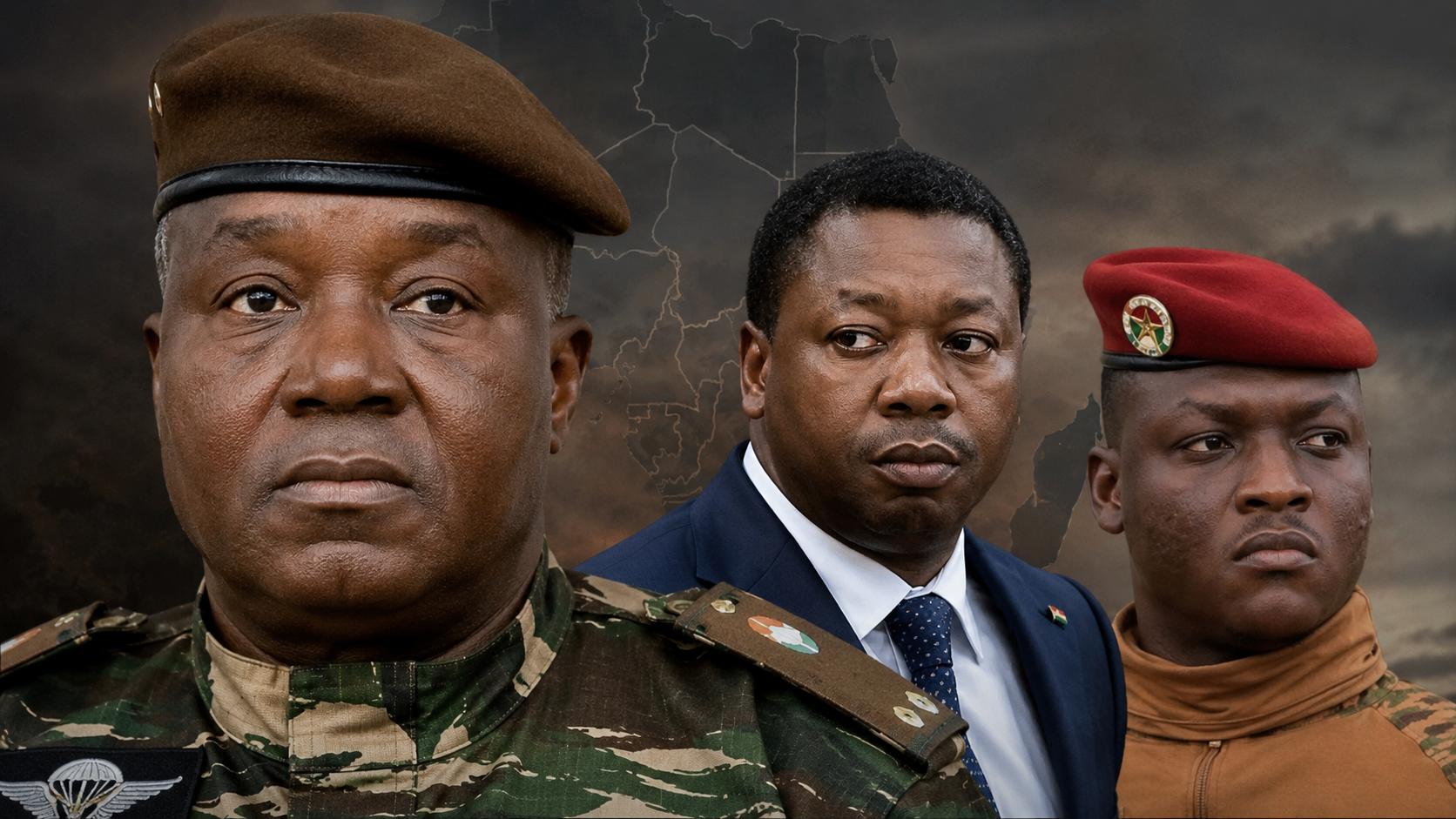
The recent upheaval in Niamey reverberates far beyond Niger’s borders, serving as a stark regional warning. Heavy gunfire and mounting tensions, which have shaken General Abdourahamane Tiani’s authority, have exposed a vulnerability previously masked by official narratives. This seismic event, however, is not confined to Niger; it casts a looming shadow over its two key regional allies: Captain Ibrahim Traoré in Burkina Faso and Faure Gnassingbé in Togo. Indeed, the shockwaves from Niger suggest their respective administrations have every reason to anticipate internal dissent, or even a potential coup attempt.
Burkina Faso: the perpetual barracks threat
For Ibrahim Traoré, the danger is far from theoretical; it constitutes a daily reality. The Burkinabé regime operates within a climate of constant suspicion. Having already thwarted multiple destabilization attempts from within the military, notably in early 2026 and during autumn 2023, the government in Ouagadougou rests upon an exceedingly fragile balance.
As Ibrahim Traoré observes Niamey descending into nightly gunfire, he undoubtedly sees a reflection of his own precarious situation. The elements threatening General Tiani are precisely those present in Ouagadougou:
- Troop morale: Despite pronouncements of national sovereignty, the security pressure on the front lines remains immense, and soldiers’ lives continue to be lost. The frustration among rank-and-file soldiers over unfulfilled pledges serves as a primary catalyst for mutinies.
- Factional fears: Repeated purges within the Burkinabé army and the extensive deployment of Volunteers for the Defense of the Homeland (VDP) have created a chasm between the core power structure and career officers. Just as in Niamey, the risk of dissident factions taking up arms has never been higher.
Faure Gnassingbé: the defensive reshuffle dilemma
While Togo’s situation appears outwardly calmer, the underlying anxiety within the state’s highest echelons is equally palpable. The timing of recent events is telling: in August 2026, Faure Gnassingbé urgently undertook a comprehensive reshuffle of the entire military high command and intelligence services (ANR), elevating new trusted individuals to critical positions.
This strategic rotation within the leadership of the Togolese armed forces was no mere coincidence but a calculated reflex for survival:
- Military apprehension: The perceived or alleged involvement of Togo in regional geopolitical maneuvers and the deteriorating security climate in the northern region (the zone of Operation Koundjoaré) are generating unprecedented tensions within the command structure.
- Leadership anxieties: When a leader precipitously reorganizes the heads of their army and intelligence, it signals an awareness that loyalty within the barracks is eroding. Faure Gnassingbé understands that the contagion of coups does not halt at the borders of military regimes and that the Togolese army, historically central to power, remains an unpredictable force in African politics.
The domino effect of instability
By engaging in regional destabilization efforts and betting on military force to advance their agenda, the Niamey-Ouagadougou-Lomé axis has been playing a dangerous game. The recent developments in Niamey clearly demonstrate that when the military is instrumentalized for political ends, the chain of command can fracture, rendering the institution uncontrollable. This phenomenon is a critical point of concern in West Africa news.
The lesson from August 29 in Niamey is unambiguous: force begets force. Ibrahim Traoré and Faure Gnassingbé now recognize that a countdown has begun. So long as legitimacy is derived solely from control over weaponry rather than institutional stability, every night in their respective capitals will carry the bitter taste of a potential mutiny, a constant worry across pan-African news circles.