Why a nation producing millions of barrels of oil still grapples with persistent fuel shortages
Niger finds itself in an unsettling paradox: despite exporting millions of barrels of oil annually and being a declared oil producer, the country now depends on foreign imports to meet domestic fuel demand. This growing crisis has sparked intense public debate over energy sovereignty, government accountability, and the future of the nation’s hydrocarbon sector.
For weeks, long lines at gas stations, sudden fuel shortages, and erratic distribution have disrupted daily life across Niger. The crisis has had a cascading effect slowing transportation, crippling small businesses, and forcing countless citizens to spend hours searching for available fuel. What should be a source of national pride has instead exposed deep structural weaknesses in the management of Niger’s oil resources.
From crude exports to domestic fuel shortages: the dissonance of Niger’s oil sector
The roots of this contradiction lie in the country’s oil value chain. Niger began commercial oil production from the Agadem Basin in 2011 through a joint venture with China National Petroleum Corporation (CNPC). The state-owned refinery, SORAZ in Zinder, was built to process 20,000 barrels per day part of the 110,000 barrels Nigeria produces daily, of which 90,000 are exported.
Yet despite these figures, the country struggles to maintain a steady supply of refined fuel for its own population. This disconnect raises critical questions: If Niger extracts and exports oil, why can it not consistently meet internal demand for petrol and diesel?
The answer is not a lack of infrastructure, but a breakdown in coordination. Production, refining, storage, and distribution are distinct operations that must function seamlessly. When one link fails whether due to financial disputes, logistical bottlenecks, or mismanagement the entire system falters. The result? A growing fuel deficit that the government can no longer ignore.
Official data reveals a worsening crisis
According to the latest figures released by the Ministry of Petroleum in October 2026, the shortfall in premium gasoline surged from 47.25 million liters in 2024 to 196.62 million liters in the first eight months of 2026. Diesel shortages followed a similar trajectory, with a deficit of 52.60 million liters recorded over the same period.
These numbers are not anomalies they reflect a chronic imbalance between national supply and domestic demand. While authorities continue to tout oil exports as a symbol of economic revival, the reality is that Niger’s citizens are paying the price for systemic failures in energy governance.
Algeria steps in: a strategic partnership or an admission of defeat?
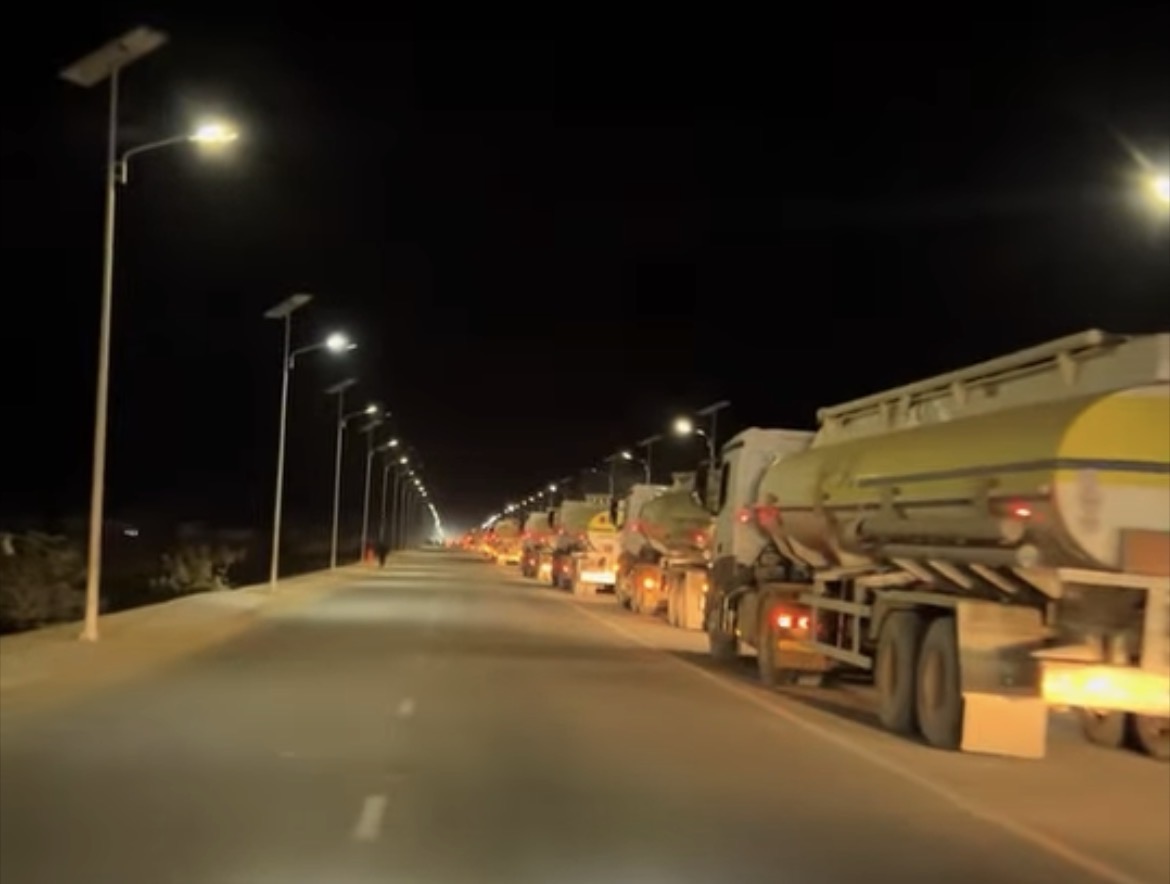
Faced with mounting fuel shortages, Niger turned to Algeria for support. In March 2026, the two nations signed a hydrocarbon cooperation memorandum. By June, agreements were finalized between Niger’s national oil company (SONIDEP) and Algerian state oil group Sonatrach, culminating in a November 2026 delivery of 1.65 million liters of fuel via 53 tanker trucks.
While such cooperation may provide temporary relief, it also raises pivotal questions: What financial commitments has Niger made? What are the agreed volumes and pricing mechanisms? Are there long-term supply guarantees or conditional clauses attached to these accords?
The absence of transparency fuels skepticism. A nation claiming energy sovereignty should not need to import fuel it claims to produce. While no country operates in complete autarky, the decision to seek external assistance must be justified with clear economic reasoning and strategic foresight. Without this clarity, Niger risks undermining public trust in its energy policy.
Financial turmoil in the oil chain: debts, delays, and opacity
An even more troubling dimension of the crisis emerged in October 2026, when authorities announced the formation of a technical committee to address cross-debts between key energy institutions SONIDEP, SORAZ, the national electricity utility (NIGELEC), and CNPC. The goal: to resolve payment delays and restore liquidity within three months.
This intervention reveals a harsh truth: despite oil’s potential as a revenue stream, poor financial management has crippled the sector. Unpaid invoices, delayed contracts, and opaque transactions have compromised the ability to maintain steady fuel supplies. When a strategic industry accumulates debt to the point of operational paralysis, the consequences are not merely economic they are felt in every household and business across the country.
Full financial audits must be made public. Identifying responsible parties, clarifying payment terms, and implementing corrective measures are not optional they are essential to restoring credibility and functionality to the oil sector.
What sovereignty means in practice: the human and economic cost of fuel scarcity
The impact of this crisis extends far beyond statistics and ministerial reports. Drivers unable to refuel miss work opportunities. Traders lose perishable goods due to delayed transport. Artisans and small-scale entrepreneurs halt operations when generators fail. The ripple effects are visible in market stalls, construction sites, and rural roads.
Oil wealth, in theory, should foster energy security and economic resilience. But in Niger, the reverse is happening: a country rich in resources is enduring preventable shortages that paralyze daily life. This is not just a technical or logistical failure it is a governance failure. The military-led administration under General Abdourahamane Tiani must confront this reality.
Can the Tiani regime turn the tide on energy governance?
Since assuming power in July 2023, General Tiani has positioned energy sovereignty as a cornerstone of national policy. Yet the ongoing fuel crisis challenges that narrative. It exposes not only a dysfunctional supply chain but also a lack of accountability in the management of Niger’s most lucrative sector.
Short-term fixes such as the recent Algerian fuel delivery can alleviate immediate pressure. But sustainable solutions require structural reforms: transparent financial systems, efficient distribution networks, and a coherent long-term energy strategy. Niger cannot claim energy independence while its people queue for fuel and its economy stalls due to preventable shortages.
For the regime, this is a moment of reckoning. Sovereignty is not declared it is demonstrated through results. Until the government can prove that Niger’s oil wealth translates into reliable energy access, the public debate over energy governance will continue to grow.
What comes next for Niger’s energy future?
Two paths lie ahead. One leads to deeper scrutiny, corrective action, and renewed public trust. The other perpetuates opacity, dependency, and disillusionment.
The choice is not just about oil it is about the future of Niger’s economy and its people. A nation that cannot keep its fuel pumps running cannot claim to be truly sovereign.
By Ousmane Tandja — Journalist