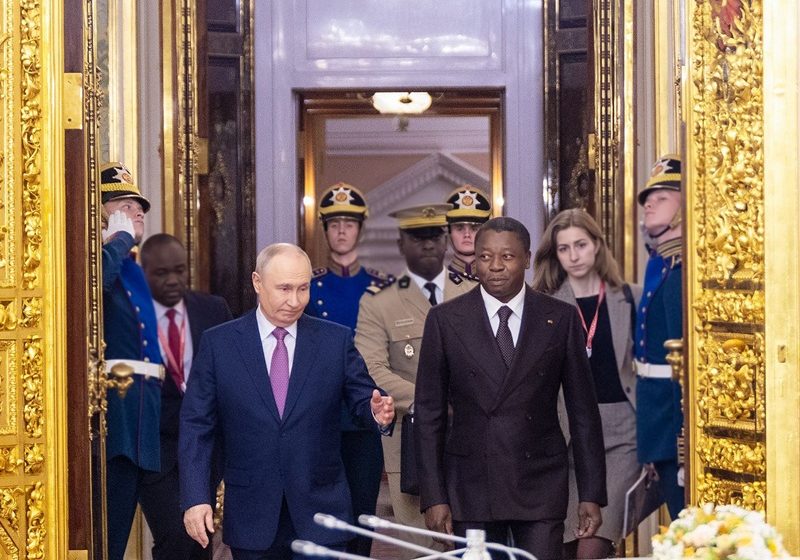
The Kremlin meeting between Togolese leader Faure Essozimna Gnassingbé and Russian President Vladimir Poutine on October 30, 2026, was more than a routine summit—it was a strategic exploration of the hidden mechanisms fueling bilateral ties that have quietly reshaped regional dynamics.
Behind the diplomatic curtain: the unseen forces shaping Togo-Russia relations
While the headlines focus on the public declarations of unity between Lomé and Moscow, the real story lies in the invisible threads pulling the two nations closer: rapid institutional adaptations, revived economic corridors, and a growing network of collaborative projects that have emerged since their November 2025 encounter.
The September 2026 ratification of the Foundational Relations Agreement wasn’t just a legal formality—it was the culmination of months of behind-the-scenes negotiations, logistical planning, and political alignment that most observers missed. Similarly, the August 2026 reopening of Russia’s embassy in Lomé marked the end of a period of reduced diplomatic presence, signaling Moscow’s renewed confidence in Togo as a stable partner in West Africa.
From political rhetoric to tangible progress
What began as a series of high-level discussions in Moscow has evolved into a structured framework of cooperation, culminating in seven memoranda of understanding signed within months. This accelerated pace reflects a deliberate strategy: transforming political dialogue into project-driven partnerships that deliver measurable benefits.
The creation of the joint intergovernmental commission—activated shortly after the November 2025 meeting—has acted as a catalyst for these developments. Its first session in Lomé facilitated the fast-tracking of initiatives across multiple sectors, proving that when political will is paired with institutional agility, concrete outcomes emerge rapidly.
Economics as the new frontier of collaboration
The surge in two-way trade, reaching $852 million in 2025, is no accident. It is the result of targeted investments in sectors where both nations see strategic advantage: energy infrastructure, transport logistics, geological exploration, and agricultural modernization. These aren’t isolated ventures but part of a coordinated push to diversify economic dependencies and create resilient trade routes that bypass traditional corridors.
The commission’s role extends beyond facilitation—it serves as an early-warning system, identifying bottlenecks before they derail momentum. Its regular meetings ensure that financial flows, regulatory hurdles, and logistical challenges are addressed in real time, allowing both parties to adjust strategies without public fanfare.
Education and soft power: the long-term investment
Russia’s growing appeal among Togolese students isn’t merely a cultural exchange—it’s a calculated soft power move. By offering scholarships and academic pathways, Moscow is cultivating a generation of Togolese professionals who will shape future bilateral decisions, from energy policy to trade negotiations. This investment in human capital ensures that the partnership transcends government administrations and becomes embedded in societal structures.
The geopolitical chessboard: where Togo fits in Russia’s African strategy
Moscow’s Africa policy, often analyzed through the lens of large-scale engagements in North and East Africa, is quietly gaining traction in West Africa—with Togo as a key facilitator. The country’s stable governance, strategic coastal position, and willingness to embrace non-traditional partners make it an ideal hub for extending Russian influence in the Gulf of Guinea.
Poutine’s repeated acknowledgment of Togo’s role in multilateral forums underscores this strategic recognition. By aligning with Lomé, Russia gains a reliable ally in international negotiations, particularly on issues where African voting blocs hold sway, such as UN resolutions or economic sanctions.
What’s next for Lomé and Moscow?
The next phase of cooperation will likely focus on three pillars: energy security, infrastructure resilience, and digital transformation. Expect accelerated talks on a Togo-Russia energy partnership, including potential joint ventures in solar and gas distribution. Transport corridors linking Lomé’s port to landlocked Sahelian markets could also move from feasibility studies to pilot projects in 2027.
Perhaps most significantly, the planned opening of Togo’s embassy in Moscow—long delayed by logistical and political considerations—now appears imminent. This reciprocal diplomatic presence will remove one of the last barriers to seamless collaboration, enabling real-time crisis management and deeper intelligence-sharing.
The October 30 summit wasn’t just about reaffirming commitments; it was about revealing the unseen machinery already propelling these two nations forward. The question now is whether this momentum can withstand external pressures, from global market fluctuations to regional instability—and whether Lomé and Moscow can turn their diplomatic dance into a lasting partnership.