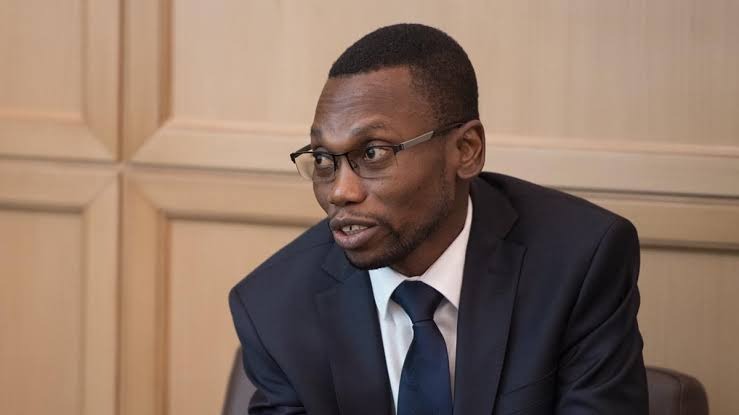
At a decisive crossroads, Niger’s transitional government has taken a major step that could reshape its economic trajectory. On Thursday, October 8, 2026, the International Monetary Fund (IMF) announced a staff-level agreement following a mission led in Niamey from September 28 to October 8 by Julia Bersch. This breakthrough marks a turning point: it seals the return of Washington’s teams to the heart of the state’s economic policy, even as leaders continue to champion national sovereignty and the rejection of external oversight.
A new 38-month program under Washington’s watch
Far from the rhetoric of self-reliance and rupture, Niamey has just approved the tenth and final review of its current program and is now entering a brand-new arrangement under the Extended Credit Facility (ECF). This fresh financial oversight, lasting 38 months, unlocks a total of 150.02 million SDR (about $203 million, or 114% of the country’s quota).
Subject to the IMF Executive Board’s approval expected in early December 2026, an initial disbursement of 26.3244 million SDR (roughly $36 million) will be released urgently to shore up public coffers and cover external financing needs.
Oil windfall not enough to offset economic realities
The administration led by Prime Minister Ali Mahaman Lamine Zeine projects impressive macroeconomic figures: GDP growth forecast at 7% in 2026, then 6.7% in 2027, and an average of 6.1% over the medium term, driven by agriculture and especially soaring crude oil exports. Inflation, estimated at -2.5% in 2026 before rising to 2.2% in 2027, masks a dramatic surge in transport costs linked to the diplomatic and security context, hitting the most vulnerable households hard.
Yet despite the oil bonanza and rising global prices, the national budget remains in deficit, projected at 3.4% of GDP for 2026. Burdened by post-disaster reconstruction spending, emergency subsidies, and crushing security costs, Niger cannot finance its ambitious “Program for the Refoundation of the Republic (2025–2029)” without approval from international financial institutions.
The paradox of refoundation
The IMF states it plainly: the new program will require continued deep structural reforms, ranging from strengthening tax capacity to public debt discipline and financial sector reforms.
This heavy reliance on the Extended Credit Facility mechanisms highlights a major political contradiction. While official messaging works to convince of the country’s regained sovereignty, daily Treasury management proves that Niger’s economy remains on life support from international financial orthodoxy. A budget reality that reminds us that true autonomy is not decreed from a podium but built on a state’s real capacity to self-finance its development.